



Mor Gabriel Monastery
A Journey Through History
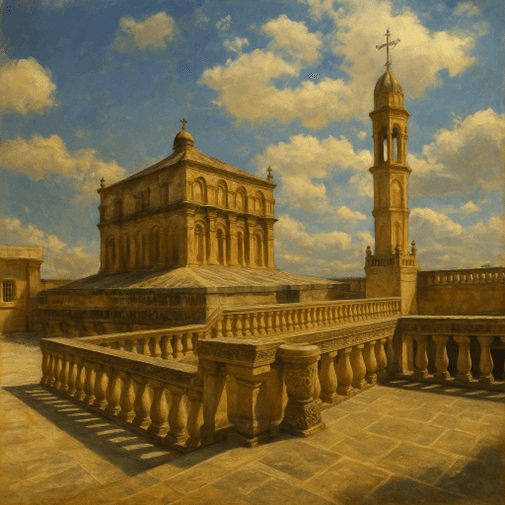
On a high hill covered with oak trees, 23 kilometers southeast of the Midyat district of Mardin, lies an ancient structure: Mor Gabriel Monastery. This monastery is one of the largest and most significant works of the Syriac Orthodox Church. Its foundations were laid in 397 AD by Mor Shmuel and Mor Shemun. Thus, this monastery was built over 1600 years ago.

(Generated by Artificial Intelligence.)
Why Is It Important?
Mor Gabriel Monastery is not only one of the oldest monasteries in Mardin but also among the oldest in the world. It predates the famous monasteries of Mount Athos in Greece by 400 years, the Mor Saba Monastery in Palestine by 80 years, and the Saint Catherine Monastery in Egypt by 150 years.
Special Structures Within
Over the centuries, the monastery has undergone numerous additions, preserving significant sections from different eras:
Church of the Virgin Mary
Church of the Apostles
Church of the Forty Martyrs
Shrine of Mor Shmuel
Theodora’s Dome (Built in memory of Theodora, daughter of Emperor Theodosius, upon her recovery.)
Shrine of Mor Shemun
These structures bear the traces of the people who worshipped, lived, and stayed here over the centuries.
Various Names
Throughout history, the monastery has been known by many names:
Mor Shmuel and Mor Shemun Monastery (after its founders)
Deyrulumur (derived from the Syriac phrase “Dayro d’Umro,” meaning “Abode of the Monks”)
Kartmin Monastery (after the nearby ancient village of Kartmin)
The current name, Mor Gabriel Monastery, comes from Mor Gabriel, the Metropolitan of Turabdin who lived in the 7th century.
Visit Information
The monastery remains active today and is open to visitors. During summer, it is accessible from 09:00 to 11:30 and 13:00 to 16:30; in winter, from 09:00 to 11:30 and 13:00 to 16:00.

(Generated by Artificial Intelligence.)