




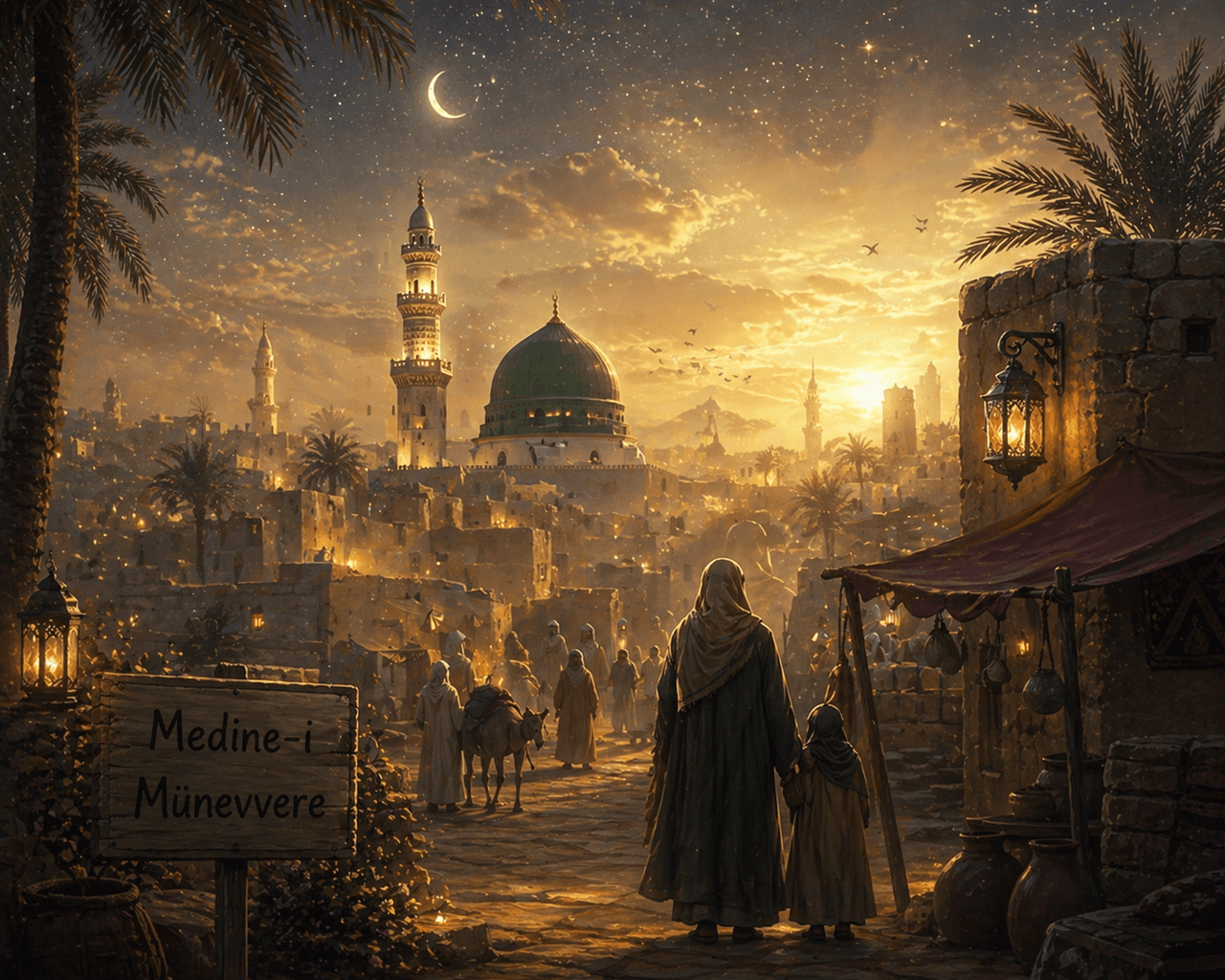
Medina al-Munawwara
Medina al-Munawwara, meaning "The Illuminated City", is a historic and serene oasis city located on the western side of the Arabian Peninsula, at an elevation of 619 meters above sea level. As the first capital of Islamic civilization, this unique place is among the most important cities in the world not only for its buildings but also for the profound spirit of brotherhood that permeates it.
📜 Its Former Name Was Yathrib, Its New Name Is Medina!
The earliest known name of the city before Islam was Yathrib. However, since this name carried negative connotations such as "to curse" or "to corrupt", the Prophet Muhammad, after the Hijrah, bestowed upon the city names with positive meanings such as Taybah, meaning "good and beautiful". Over time, it came to be known as Medina (The City), reflecting its status as a truly orderly community governed by justice. Out of deep affection for the city, more than ninety different names have been given to it throughout history.
🕌 The Heart of the City and Its Grand Puzzle: The Story of Masjid al-Nabawi
At the very center of Medina stands one of the most sacred structures in the world: Masjid al-Nabawi. When it was built in 622 CE, the mosque was extremely simple: its walls were made of sun-dried brick, its pillars from palm trunks, and its roof from palm fronds. The floor was covered only with sand and pebbles. Our Prophet and his companions built this structure together, as if in a collective act of mutual aid.
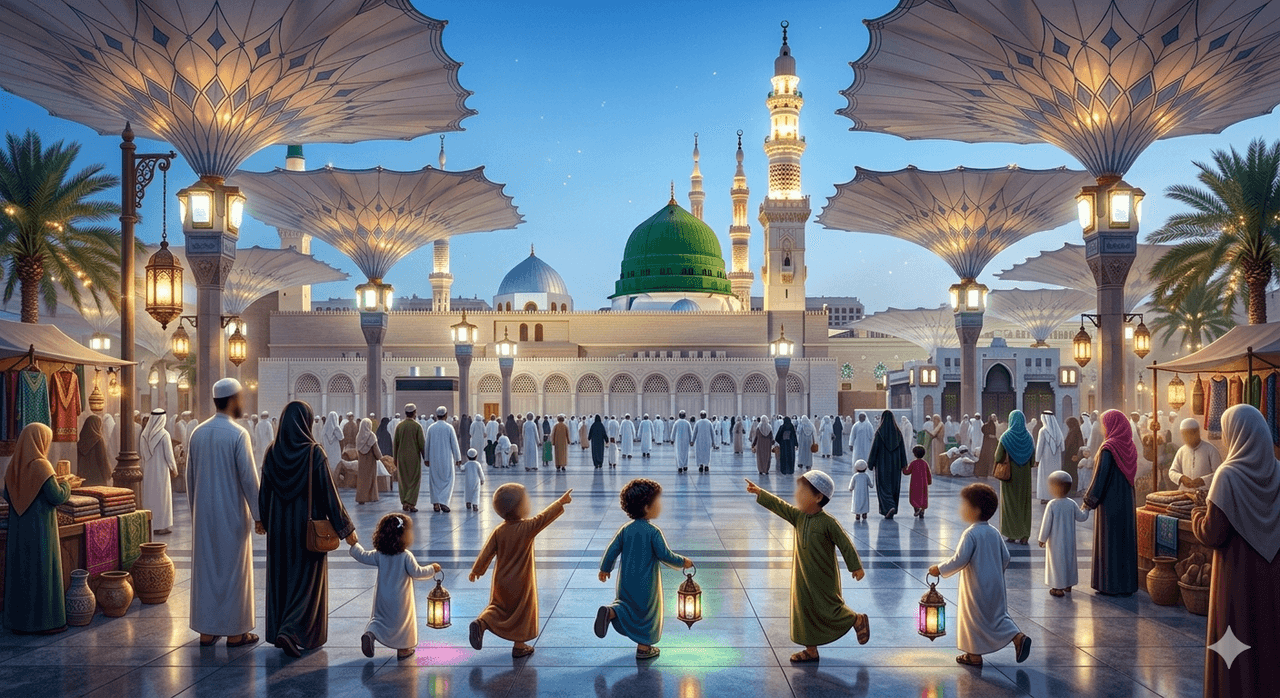
Masjid al-Nabawi (Green Dome) (Generated by Artificial Intelligence)
Over time, this modest structure grew through successive additions in every era. The Umayyads, Abbasids, and especially the Ottoman sultans added the finest stones and gold decorations to the mosque. What began as a space no larger than the courtyard of a single house has transformed into a "palace of peace" capable of accommodating hundreds of thousands of people simultaneously. The mosque’s famous Green Dome is a symbol of love visible from every corner of Medina.
🤝 The Heroes of Brotherhood: Ansar and Muhajirun
Those who left everything behind in Mecca and migrated to Medina are called Muhajirun, while the Medinans who opened their homes and tables to them are known as Ansar (Helpers).

Brotherhood of Ansar and Muhajirun (Generated by Artificial Intelligence)
This brotherhood has many celebrated heroes. For example, Abu Ayyub al-Ansari, who honored the Prophet by hosting him in his home for seven full months, stands as the greatest symbol of Medinan hospitality. Another companion, Sa'd ibn Ubada, demonstrated unparalleled generosity by offering his Meccan brother, Abdurrahman ibn Awf, half of all his possessions. Thanks to this unshakable bond of love, Medina is regarded as a city "conquered not by the sword but by the opening of hearts through the Qur'an".
🌋 Lava Rocks and Water Wells
Medina’s geography is remarkably distinctive. To the east and west of the city lie areas covered with black volcanic rocks known as "Harra". These lava remnants served as a natural fortress protecting the city from external attacks in ancient times. Despite being located in the middle of a desert, the city is blessed with abundant underground water sources. There are fourteen special wells that were used by the Prophet himself and for which he prayed for blessings. Thanks to water channels constructed during the Ottoman period, such as "Ayn al-Zerka", Medina’s famous green date groves remained fresh for centuries.
🏮 The Ottoman Legacy and Waqfs
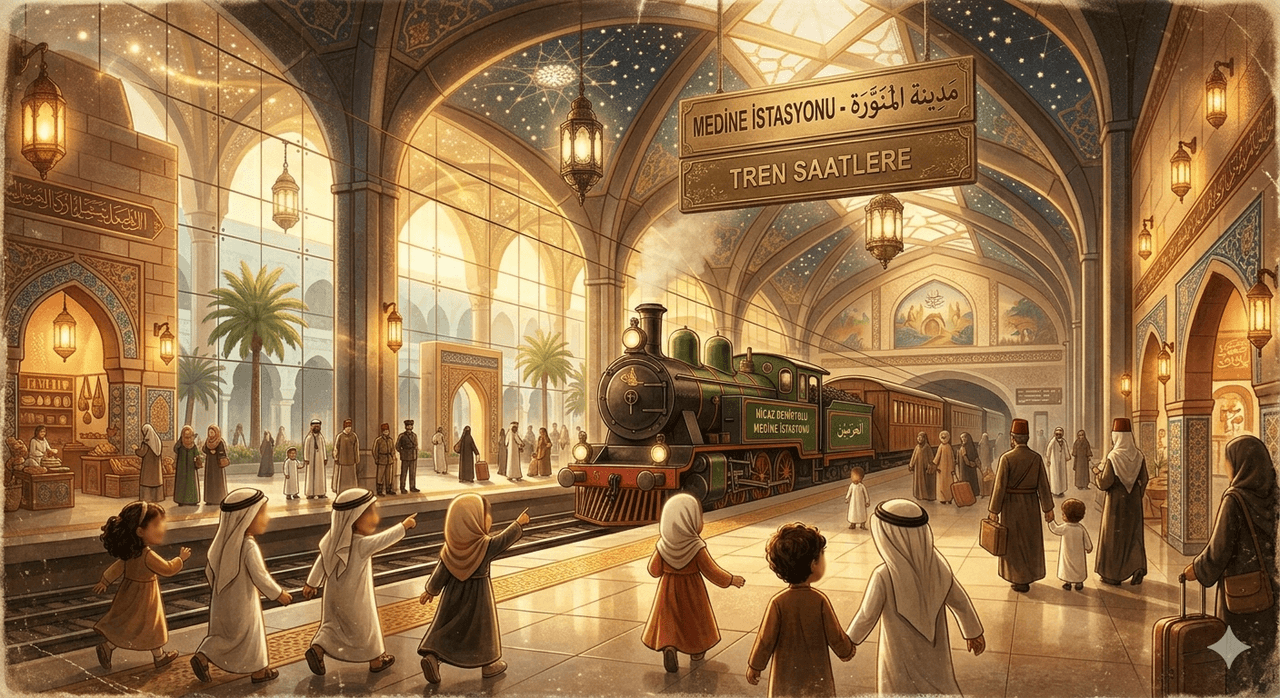
Medina Harem Train Station (Generated by Artificial Intelligence)
Ottoman sultans served Medina with great reverence. They built strong fortifications to protect the city and sent annual gifts, known as "Surre Alayları", from Istanbul, accompanied by prayers. Through the establishment of waqfs, charitable institutions were created not only for people but also for animals and birds living on the streets.