


This article was automatically translated from the original Turkish version.
+2 More
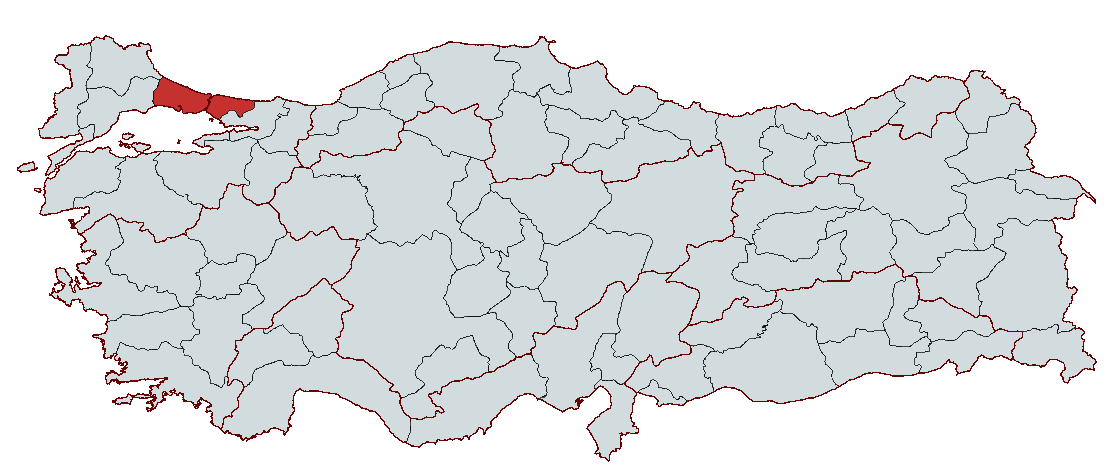
Istanbul
Country | Türkiye | ||||||||
|---|---|---|---|---|---|---|---|---|---|
Region(s) | Marmara Region | ||||||||
Area(s) | 5 343.1 km² | ||||||||
Location | 41° N latitude 29° E longitude | ||||||||
Districts | 39 districts (25 in Europe, 14 in Asia) | ||||||||
Elevation(s) | Average 40 m (highest point: Yuşa Hill 202 m) | ||||||||
Continents | Europe and Asia | ||||||||
Foundation | 7th century BC | ||||||||
Tourist Sites | Hagia Sophia, Topkapı Sarayı, Grand Bazaar, Süleymaniye Camii, Galata Tower, Dolmabahçe Sarayı, Maiden's Tower | ||||||||
Governor(s) | Davut Gül (2023–...) | ||||||||
License Plate Code | 34 | ||||||||
Telephone Code | +90 212 (European Side), +90 216 (Anatolian Side) | ||||||||
Istanbul is one of the world’s most remarkable cities, with an 8,500-year history, strategic location, and cultural richness. It served as the capital of the Roman, Byzantine, and Ottoman Empires and stands at the crossroads of East and West.
City, Hagia Sophia, Topkapı Sarayı, Süleymaniye Camii, and Kapalıçarşı carry the traces of the past through their historic structures, while districts such as Taksim, Ortaköy, and Galata offer a vibrant modern life. The Bosphorus Strait, linking Europe and Asia continents, is a vital water route and plays a central role in Istanbul’s transportation networks and infrastructure projects.
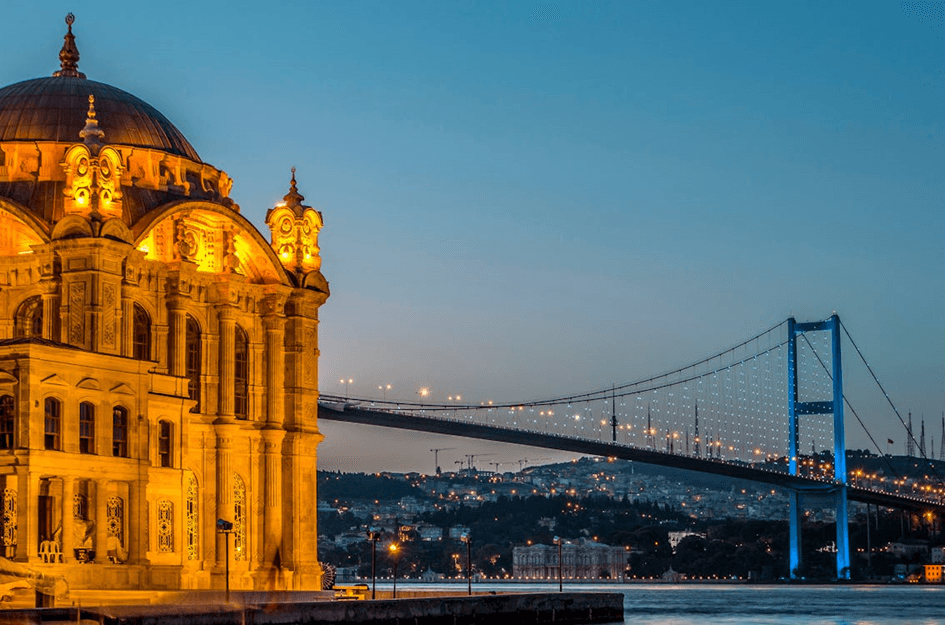
15 July Martyrs Bridge and Ortaköy Camii
The name Istanbul has been referred to in various ways by different civilizations throughout history. The city’s earliest known name, mentioned in Roman sources, was “Ligos” (Greek: Λύγκος), but insufficient information exists regarding this name.
In the 7th century BC, when founded by Megarian Greek colonists, the city was named “Byzantion”. This name is believed to derive from Byzas, the legendary founder of the city. In AD 330, Roman Emperor Constantine I made the city the capital of the Roman Empire and renamed it “Constantinopolis” (City of Constantine). This name remained in use throughout the Byzantine period.
During the Ottoman period, the official name used in documents was “Konstantiniyye”. Between the 15th and 17th centuries, the name “Istanbul” became commonly adopted. Some sources indicate that, particularly for religious reasons, the term “İslambol” was also used. The name İslambol is derived with religious connotations such as “full of Islam” or “find Islam”. According to an Armenian source, the name İslambol was given by Mehmed II after the conquest. Evliya Çelebi’s writings confirm the use of the name İslambol in the 17th century.
Due to its widespread adoption during this period, the word “İslambol” appears on Ottoman coins from the reign of Sultan Ahmed III to Sultan Mahmud II (1708–1807). However, experts note that this was not the original etymological root but a later popular derivation.
Linguists accept that the name Istanbul derives from the Greek phrase “εἰς τὴν πόλιν” (eis tin polin – “to the city” or “into the city”). This commonly used expression among the Byzantine populace gradually evolved into “Istanbul”. After the proclamation of the Republic, the city was officially renamed “Istanbul” in 1930 and has since been recognized internationally by this name.
Istanbul has been a significant center throughout history, a great city bearing the traces of multiple civilizations. The phases it has passed through since antiquity have made it one of the world’s largest cultural and historical centers.
The earliest known settlement of Istanbul began in the 7th century BC around the present-day Sarayburnu area, founded by Megarian colonists as the city of Byzantion. The city’s name derives from the Megarian King Byzas. Due to its strategic location, Byzantion was repeatedly contested by various civilizations and emerged as a crucial trade center between Asia and Europe.
Excavations at Yenikapı have pushed Istanbul’s history even further back, uncovering human settlements dating to the Neolithic Era period. These findings demonstrate that the area was an important settlement thousands of years before the founding of Byzantion.
In AD 330, Roman Emperor Constantine I moved the capital from Rome to Byzantion and named it “Nova Roma” (New Rome). However, this name did not gain widespread use, and the city gradually became known as Constantinopolis. From this date onward, Istanbul became the most important center of the Roman Empire. The city walls constructed in the 5th century are considered among the largest defensive systems of ancient Rome.
After the division of the Roman Empire in 395, the city became the capital of the Eastern Roman (Byzantine) Empire and retained this status for nearly 1,000 years. Major structures such as Hagia Sophia, Yerebatan Sarnıcı, and the Hippodrome were built during this period.
During the reign of Emperor Justinian I, the city experienced significant architectural and cultural development. Hagia Sophia, begun in 532 and completed in 537, was constructed as one of the greatest and most impressive masterpieces of Byzantine architecture. Originally built in the 4th century, Hagia Sophia was rebuilt under Justinian’s orders and became a symbol of religious and political power.
Throughout history, Istanbul was besieged by many state but never captured. In the 7th and 8th centuries, the Avars and the Umayyads laid siege to the city but failed to successful it. In 860, it was attacked by the Kievan Rus, and in the 10th century, it was target by the Rus. However, thanks to the strong walls and defense systems of Byzantium, Istanbul successfully withstood these sieges.
In 1204, during the Fourth Crusade, Istanbul fell into the hands of the Latin Empire and was looted. Many Byzantine treasures were taken to Europe during this period. However, in 1261, Byzantine Emperor Michael VIII Palaiologos recaptured the city from the Latins and restored the Byzantine Empire.
During the Fourth Crusade in 1204, the Latins captured Constantinopolis and established the Latin Empire. The city was plundered, and important art artifacts were West to Europe. In 1261, the Byzantines regained control of the city but never recovered their former power.
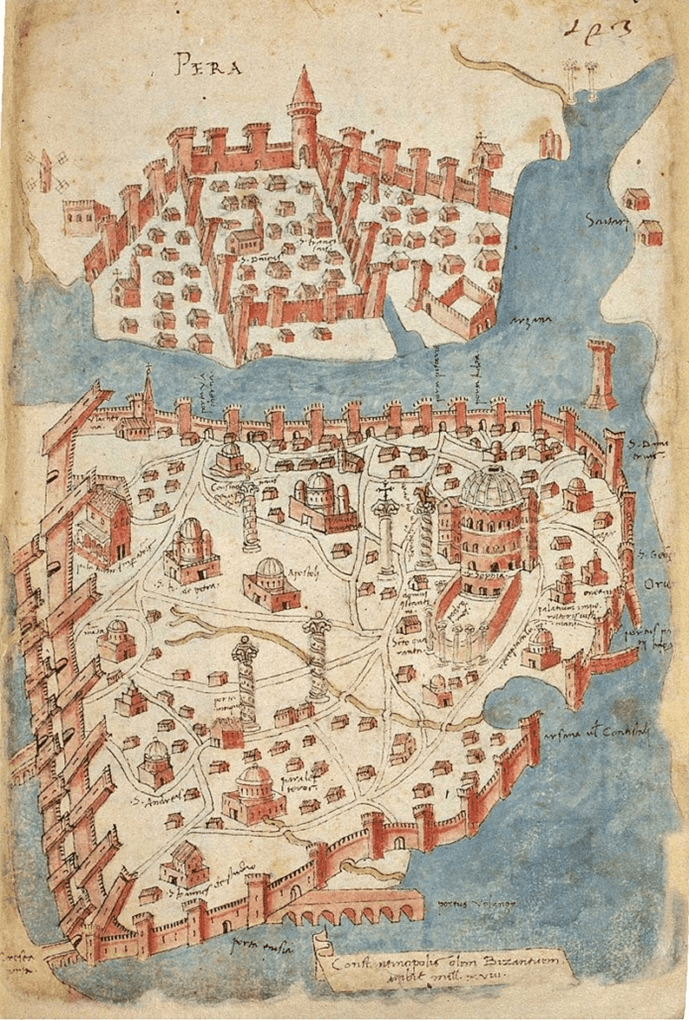
The Conquest of Istanbul (1453)
On 29 May 1453, Ottoman Sultan Mehmed II (Fatih Sultan Mehmed) conquered Istanbul and made it the capital of the Ottoman Empire. After the conquest, Hagia Sophia was converted into a mosque, Topkapı Sarayı was constructed, and the city became a major culture and trade center of the Ottoman realm.
Istanbul served as the political, economic, and cultural center of the Ottoman Empire for approximately five centuries. After the conquest, the Byzantine-era main structural framework was largely preserved but enriched by Ottoman architecture and urban planning.
Comprehensive efforts were initiated to rebuild and restore the city. Sultan Mehmed II established his first palace on the site of the present-day Istanbul University and muftiate building, on Theodosius Square (today’s Beyazıt Square). Later, with the construction of Topkapı Sarayı, the state’s administrative center was moved there.
During the Ottoman period, Istanbul’s population grew rapidly, and the city became a meeting point for people from all corners of the empire. Mosques, madrasas, baths, and other public structures were built, enriching the city’s architectural fabric. Particularly the works of Mimar Sinan left a defining mark on Istanbul’s skyline. Structures such as Süleymaniye Camii, Prince Camii, Rüstem Pasha Camii, and Mihrimah Sultan Camii hold significant places in the development of Ottoman architecture.
Economically, Istanbul became a major center during the Ottoman period. The Kapalıçarşı and Mısır Çarşısı served as meeting points for both local and international merchants. The ports along the Bosphorus and the Golden Horn greatly contributed to the growth of maritime trade.
Although Ankara was designated as the capital with the proclamation of the Republic, Istanbul continued to be one of Turkey’s most important cultural and economic centers. The city continued to develop as the hub of industrialization, trade, and cultural activity in the new era.
From the 1950s onward, Istanbul experienced a major population increase and became a metropolis through intense migration waves. The industrialization process gained momentum, and the city underwent significant economic and demographic transformation. From the 1970s, the construction of the Bosphorus Bridge and, at the end of the 1980s, the Fatih Sultan Mehmet Bridge facilitated transportation and strengthened the connection between the European and Asian sides.
From the mid-20th century, urbanization in Istanbul accelerated, with comprehensive infrastructure and development projects implemented. Homeland and Millet Caddeleri were opened, traffic regulations were introduced, and new residential areas were established. However, during this period, some historic structures suffered damage, and urban planning efforts led to some time uncontrolled growth.
Today Istanbul, with a population approaching 16 million【1】
In recent years, Istanbul has drawn attention through infrastructure and transportation investments. The Yavuz Sultan Selim Bridge, Marmaray, Eurasia Tunnel, and Istanbul Airport have strengthened the city’s global connectivity. Istanbul continues to thrive as one of Turkey’s largest and most dynamic cities, preserving its historical fabric, cultural diversity, and economic strength.
Istanbul is a unique city located in the northern hemisphere, in the northwestern part of Türkiye, connecting the continents of Europe and Asia. It lies between 41° N latitude and 29° E longitude. The Bosphorus Strait, which runs through the city, is a strategic waterway linking the Black Sea and Sea of Marmara.
Istanbul has a transitional climate between Mediterranean and Black Sea climates, resulting in mild and variable weather conditions.
Istanbul’s climate directly affects urban life. Due to heavy humidity and weather changes, atmospheric conditions play a crucial role in areas such as traffic, agriculture, maritime transport, and tourism.
Despite being a major metropolis, Istanbul is not particularly rich in natural resources. However, the city and its surroundings possess several important natural resources:
Water Resources: Important dam and lakes supply Istanbul’s water needs.
Forests and Green Spaces:
Mining:
Sea and Fishing:
Natural resources play a vital role in Istanbul’s economy in sectors such as water supply, ecological balance, tourism, and fishing. However, pressure on these resources is increasing due to intense urbanization and population growth.
Istanbul is Turkey’s most populous city, with a population reaching 15,701,602 as of 2024. This figure accounts for approximately 18.3% of Turkey’s total population. The city is home to 7.82 million men and 7.88 million women. In terms of population density, Istanbul, with approximately 3,000 people per square kilometer, is one of Turkey’s most densely populated cities. This density is even higher in central districts.
When examining the age distribution of the population, a predominantly young demographic is evident. The average age is around 33. Istanbul is a metropolis with a high concentration of individuals in the working-age group. Male and female populations are nearly balanced, with 50.5% female and 49.5% male. As one of the cities with the highest internal migration, Istanbul has a very high population growth rate.
Istanbul has a total of 39 districts. These districts are divided into two groups: European Side and Asian Side.
The European Side stands out as the region where historical and commercial centers are concentrated. Fatih and Beyoğlu contain remnants from the Byzantine and Ottoman eras, while Beşiktaş, Şişli, and Sarıyer are key points of modern city life and business. Districts such as Başakşehir, Esenyurt, and Bağcılar are rapidly growing due to heavy migration, while Silivri and Çatalca attract attention with their rural and tranquil character. Eyüpsultan and Zeytinburnu stand out for their historical and religious centers.
The Anatolia Side, with larger areas and more tranquil zones, is perceived as Istanbul’s livable and peaceful face. Üsküdar and Kadıköy stand out with their historical and cultural fabric, while Ataşehir and Ümraniye attract attention as modern business centers and financial hubs. Beykoz and Şile are notable for their natural beauty, while Tuzla, Pendik, and Kartal are among the districts with intense industry and port activities.
These figures are based on the results of TÜİK’s Address-Based Population Registration System as of the end of 2023.
Istanbul is Türkiye’s strongest economic city, generating approximately 30% of the national country economy. 48.2% of Turkey’s total tax revenues and 48.7% of total foreign trade originate from Istanbul. The city leads in sectors such as trade, industry, finance, and tourism.
Istanbul is Türkiye’s most important center in finance, industry, trade, logistics, technology, and service sectors. Banking, insurance, logistics, and textiles are prominent industries in the city.
Istanbul is Türkiye’s largest trade and industry center, accounting for nearly 50% of the country’s total exports.
Istanbul is a major tourism destination of global significance due to its historical, cultural, and natural attractions, with 35 out of every 100 foreign tourists visiting Türkiye choosing Istanbul.
Istanbul is a globally significant city due to its historical past, geographical location, and cultural diversity. Its position connecting two continents, its millennia-old historical heritage, and its modern structures attract millions of visitors annually. Below are some of Istanbul’s prominent sites:
Ayasofya-i Kebir Camii: Originally constructed in 537 by Byzantine Emperor Justinian I as a church, Hagia Sophia was converted into a mosque during the Ottoman period in 1453, became a museum in 1935, and regained its status as a mosque in 2020. Its conversion into a mosque after the conquest by Fatih Sultan Mehmed made it a symbol of Ottoman sovereignty and victory.
Sultanahmet Camii: Built in the 17th century by Ottoman Sultan Ahmed I, the mosque is notable for its six minarets and İznik tiles.
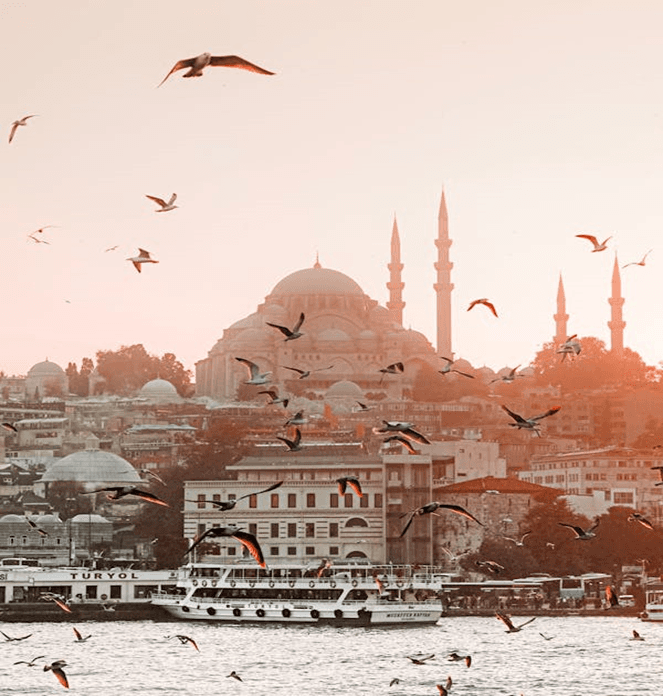
Sultan Ahmed Camii
Eyüp Sultan Camii ve Külliyesi: One of Istanbul’s oldest and most important religious structures, the Eyüp Sultan Camii and Külliyesi were constructed during the 15th century under Ottoman Sultan Mehmed II (Fatih Sultan Mehmed). The mosque is located on the site of the tomb of Abu Ayyub al-Ansari (Eyüp Sultan), one of the important companions of Islamic history. The külliye includes a madrasa, imaret, bathhouse, and other auxiliary structures. As one of the earliest examples of Ottoman architecture, the mosque has undergone various restorations over the centuries to reach the present day.
Fatih Camii ve Külliyesi: Built by Fatih Sultan Mehmed, this mosque is one of the first major külliyes of the Ottoman Empire and contains madrasas, library, and other social structures.
Yavuz Sultan Selim Camii ve Külliyesi: Built in the 16th century by Sultan Selim I in memory of his father, Yavuz Sultan Selim, the mosque is situated on a hill overlooking the Golden Horn. The building, one of the most straightforward and powerful examples of Ottoman classical architecture, includes a tomb, madrasa, and fountain among its auxiliary structures.
Süleymaniye Camii ve Külliyesi: Constructed in the 16th century by the Ottoman architect Architect Sinan, the mosque is considered one of the most important examples of Ottoman classical architecture. The külliye also includes a darüşşifa, madrasa, and library.
Hırka-i Şerif Camii: Built in the 19th century by Ottoman Sultan Abdülmecid to house the Hırka-i Şerif, believed to be the cloak of the Prophet Prophet Muhammad, the mosque in Fatih is a major pilgrimage site, especially during Ramadan month when the sacred relic is displayed.
Aziz Mahmud Hüdayî Camii ve Türbesi (Üsküdar): Built in the 16th century in Üsküdar in honor of the Ottoman Sufi saint Aziz Mahmud Hüdayî, the külliye consists of a mosque, türbe, and other auxiliary structures. It remains one of the religious and cultural structures of Ottoman architecture.
Kariye Camii (Former Kariye Museum): Originally constructed as a church during the Byzantine period in the 6th century, the Kariye Camii was converted into a mosque during the Ottoman era, used as a museum in the 20th century, and regained its status as a mosque in 2020. The structure, renowned for its Byzantine mosaic and frescoes, is considered one of Istanbul’s most important historical and artistic works.
Yeni Camii and Mısır Çarşısı: One of the important structures of the Ottoman period, Yeni Camii was constructed in the 17th century. Adjacent to it, the Egyptian Bazaar preserves traces of spice merchants and traditional Ottoman bazaar culture.
Beyazıt Camii ve Meydanı: Built in 1506 by Ottoman Sultan Bayezid II, Beyazıt Camii is one of Istanbul’s oldest sultanic mosques and among the early examples of classical Ottoman architecture. With its central dome, spacious courtyard, and elegant şadırvan, the mosque was inspired by Hagia Sophia. The surrounding Beyazıt Meydanı served as the center for official processions and social events during the Ottoman period and today remains a historical area surrounded by important structures such as Istanbul University, Beyazıt Tower, and the Kapalıçarşı.
Yahya Efendi Camii ve Türbesi (Beşiktaş): The Yahya Efendi Camii ve Türbesi in Beşiktaş was built in honor of Yahya Efendi, a member of the Ottoman ulema and the brother-in-law of Kanuni Sultan Süleyman. The structure, notable for its location along the Bosphorus, has survived as an example of Ottoman religious architecture.
Ortaköy Camii: This 19th-century Ottoman mosque, located on the shores of the Bosphorus, is notable for its architecture and location.
Telli Baba Camii ve Türbesi (Sarıyer): The Telli Father Camii ve Türbesi in Sarıyer is a religious structure dating to the Ottoman period. The türbe, visited by pilgrims performing various rituals and adak, is among Istanbul’s historic and cultural structures.
Şehzade Camii: One of Mimar Sinan’s early works, this mosque was built in memory of Şehzade Mehmed, the young son of Kanuni Sultan Süleyman.
Mihrimah Sultan Camii: Built by Mimar Sinan in honor of Mihrimah Sultan, daughter of Kanuni Sultan Süleyman, this mosque exists in two locations: one in Edirnekapı and another in Üsküdar.
Merkez Efendi Camii ve Külliyesi (Zeytinburnu): Built in the 16th century, the Merkez Efendi Camii ve Külliyesi is one of the Ottoman religious and educational structures. The külliye includes a mosque, türbe, madrasa, and other auxiliary buildings. The türbe, built in honor of Merkez Efendi, known for his work in medicine, is a significant part of the külliye.
İsmailağa Camii ve Külliyesi (Çarşamba): Located in the Çarşamba neighborhood of Istanbul’s Fatih district, the İsmailağa Camii was commissioned in the 18th century by Ottoman Grand Vizier İsmail Ağa. The mosque, reflecting classical Ottoman architecture, is part of a külliye that includes a madrasa, library, and other structures. Today, it remains one of the important religious centers serving both worship and educational activities.
Tophane Kasrı ve Nusretiye Camii: Tophane, once a major military and industrial center of the Ottoman period, is notable for the Nusretiye Camii and Topçu Kışlası.
Rüstem Paşa Camii: Built in the 16th century by Mimar Sinan, this mosque is renowned for its magnificent İznik tiles.
Sümbül Efendi Camii ve Külliyesi (Fatih): Built at the end of the 15th century, the Sümbül Efendi Camii ve Külliyesi is located in the Fatih district as one of the religious structures of Ottoman architecture. The külliye includes the mosque and the Sümbül Sinan Efendi Türbesi and has survived as an example of Ottoman religious and educational buildings.
Arap Camii: Located in Istanbul’s Galata district, the Arab Camii is reputed to have been built by Arabs during their sieges of Istanbul in the 8th century, though it originally functioned as a Gothic-style church during the Byzantine period. Converted into a mosque by the Ottomans in the 15th century, it is one of Istanbul’s oldest mosques and differs in architecture from other Ottoman mosques.
Nuruosmaniye Camii: Initiated in the 18th century by Ottoman Sultan Mahmud I and completed during the reign of Sultan III. Osman, the Nuruosmaniye Camii is one of the structures where the Baroque style is clearly evident in Ottoman architecture. Located near the Kapalıçarşı, the mosque, with its large dome, elegant decorations, and külliye, is among the important examples of late Ottoman mosque architecture.
Kapalıçarşı: Built in the 15th century, the Kapalıçarşı is one of the most important centers reflecting traditional Ottoman trade practices. Today, it remains one of Istanbul’s largest tourist bazaars.
Yerebatan Sarnıcı: Constructed in the 6th century during the Byzantine period, this underground cistern is notable for its columns and lighting. With its Medusa head sculptures and majestic atmosphere, it is one of Istanbul’s most significant tourist sites.
İstanbul Surları: Built during the Byzantine period for the city’s defense, the walls are partially preserved and open to visitors. In particular, Yedikule Hisarı served as a defensive and prison structure during the Byzantine and Ottoman periods.
Rumeli Hisarı: Built by Fatih Sultan Mehmed before the conquest of Istanbul in the 15th century, this castle is located at the narrowest point of the Bosphorus and is one of the important examples of Ottoman military architecture.
Dikilitaş (Theodosius Obelisk): Erected in the 15th century BC by Egyptian Pharaoh Thutmose III, the Dikilitaş was brought to Istanbul in the 4th century by Roman Emperor Constantine I and erected in Sultanahmet Square. Made of granite and adorned with hieroglyphs, the monument became one of the most important symbols of the square during the Byzantine and Ottoman periods.
Anadolu Hisarı: Built at the end of the 14th century by Ottoman Sultan Yıldırım Bayezid, the fortress is located on the Asian side of the Bosphorus and formed a strategic point for the conquest of Istanbul.
Dolmabahçe Saat Kulesi: Built in the 19th century in the garden of Dolmabahçe Palace, this tower is an example of Ottoman architecture under Western influence.
Kız Taşı (Markianos Column): Erected in the 5th century by Byzantine Emperor Markianos, the Kız Taşı is an ancient column located in Istanbul’s Fatih district. The structure, preserved through the Ottoman period and known by this name among the public, has survived to the present day.
Fener Rum Patrikhanesi ve Aya Yorgi Kilisesi: One of the important centers of the Orthodox world, the Fener Greek Patriarchate is located on the shore of the Golden Horn and contains Church of Saint George.
Samatya and Balat Historical Structures: The historic neighborhoods of Samatya and Balat, where Greek, Armenian, and Jewish communities lived during the Ottoman period, are notable for their churches, synagogues, and wood Ottoman houses.
Çemberlitaş and Constantine Column: Erected by Roman Emperor Constantine I, this column is one of the important monuments surviving from the Byzantine period to the present day.
Valens Aqueduct: Built during the Roman period to bring water to Istanbul, this arch continued to be used during the Ottoman period and has survived to the present day.
III. Ahmed Çeşmesi (Üsküdar): Built in 1729 by Ottoman Sultan III. Ahmed in Üsküdar, this fountain is one of the important examples of Ottoman Baroque architecture. Located at the quay square on the Asian side of Istanbul, the structure stands out with its elegant hat art decorations and broad, fringed design. It remains one of the symbols of Ottoman urban aesthetics.
Topkapı Sarayı (15th century): Used as the administrative center of the Ottoman Empire for nearly 400 years, palace now functions as a museum.
Dolmabahçe Sarayı (19th century): Built during the late Ottoman period and notable for its Western-influenced architectural style, the palace was commissioned by Sultan Abdülmecid.
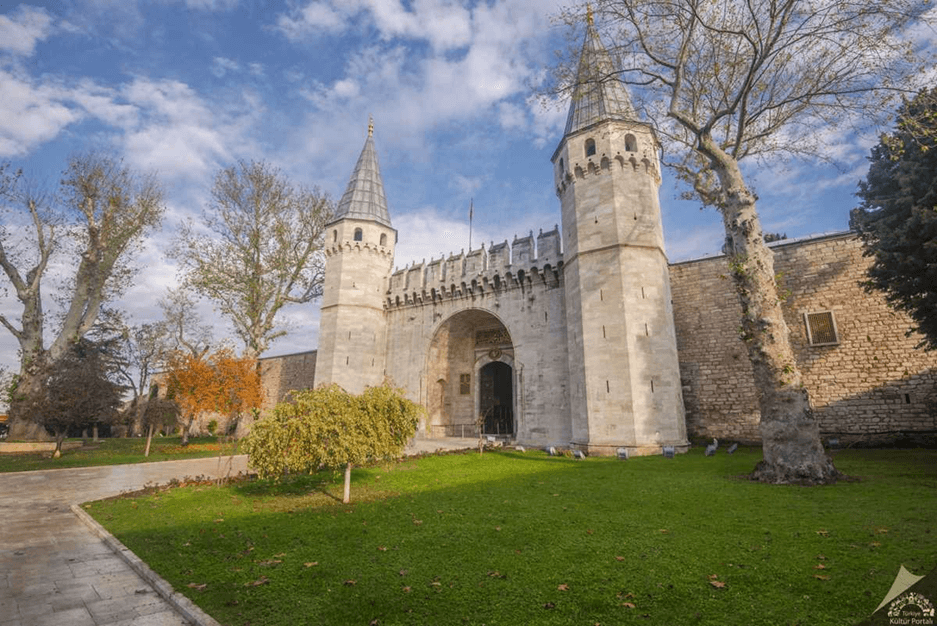
Topkapı Sarayı
Çırağan Sarayı (19th century): This palace, used by Ottoman sultans, now operates as a luxury hotel.
Yıldız Sarayı (19th century): The palace became the Ottoman administrative center during the reign of II. Abdülhamid and consists of various pavilions and gardens.
Beylerbeyi Sarayı (19th century): Located on the Asian side of the Bosphorus, this palace was used by Ottoman sultans as a summer residence.
İbrahim Paşa Sarayı (16th century): Built for İbrahim Pasha, the son-in-law and grand vizier of Kanuni Sultan Süleyman, the palace now serves as the Turkish and Museum of Islamic Arts.
Tekfur Sarayı (12th century): A Byzantine-era palace, used for various purposes during the Ottoman period and now restored and functioning as a museum.
Adile Sultan Sarayı (19th century): Built for Adile Sultan, a member of the Ottoman dynasty, the palace is now used for cultural events.
Istanbul Bosphorus: The Bosphorus Strait, connecting the Black Sea and the Sea of Marmara, is a natural waterway dividing the city into two continents. With its historic structures, yalıs, and bridges, it is one of Istanbul’s most important natural beauties.
Galata Tower: Built in the 14th century by the Genoese, the tower was used as an observation post during the Ottoman period. Today, it is a popular tourist site for viewing Istanbul’s panorama.
Yûşâ Tepesi ve Yûşâ Türbesi (Beykoz): Located in Beykoz, Yûşâ Tepesi is mentioned in various historical sources as a religious space. The Yûşâ Türbesi on the hill, situated within a vast area, is located among Istanbul’s highest points.
Kız Kulesi: The tower, located in the waters off Istanbul, has been used for various purposes throughout history and now functions as a museum and restaurant. One of Istanbul’s symbols, the tower is also renowned for its sunset views.
Pierre Loti Tepesi: This point, offering views of the Golden Horn, is favored by visitors as a panoramic observation spot. Named after the French author Pierre Loti, the hill is one of Istanbul’s most beautiful landscape viewpoints.
Emirgan Korusu: Known for its green spaces and annual tulip festival, the park is used as a recreation area. With its Ottoman-era köşks and rich plant cover, it is one of Istanbul’s most cherished breath spots.
Çamlıca Tepesi: One of Istanbul’s highest points, Çamlıca Tepesi attracts attention with its expansive views of the city and the Bosphorus. Located on the Asian side, the hill is both a natural and cultural center, featuring recreational areas, parks, and the Çamlıca Camii.
Büyükada: The largest of the Princes’ Islands, island is notable for its historic mansions and natural beauty. With no motor vehicles allowed on the island, bicycle tours and nature walks are popular.
Belgrad Ormanı: Located in northern Istanbul, the Belgrade Forest is one of the city’s largest forested areas. It is known for nature walks, sports activities, and picnic areas.
Polonezköy: A retreat nestled in nature outside the city, Polonezköy is known for its walking trails and green spaces. Founded by Ottoman Poland immigrants, the village attracts visitors with its cultural and natural beauty.
Ağva and Şile: Ağva, located on the Black Sea coast near Istanbul, is famous for its rivers. Şile is known for its coastline and historic lighthouse.
Otağtepe (Fatih Korusu): Otağtepe, with one of the most beautiful views of the Istanbul Bosphorus, offers a tranquil environment through its green spaces and natural setting.
Taksim Meydanı: One of the city’s key gathering places, the square is a symbol of modern Istanbul with its Republic Monument, Taksim Mosque, and surrounding structures.
İstiklal Caddesi: This pedestrian street is known for its shops, cultural events, and historic tramway. A cultural center filled with art galleries, theaters, and bookstores.
Ortaköy: The historic Ortaköy Camii, views of the Bosphorus Bridge, and surrounding restaurants make this area popular. It is also famous for its art galleries, cafés, and street food.
Rahmi Koç Müzesi: A museum with industrial, transportation, and technological history on collections. One of Istanbul’s most comprehensive private museums, it offers interactive exhibits that experience visitors with history.
Rami Kütüphanesi: Located in Istanbul’s Eyüpsultan district, the Rami Kütüphanesi was reactivated as a library after the restoration of the 18th-century Rami Kışlası. Opened in 2023, the structure is one of Turkey’s largest libraries, serving as a modern information center with an extensive book collection, research areas, and hosting cultural events.
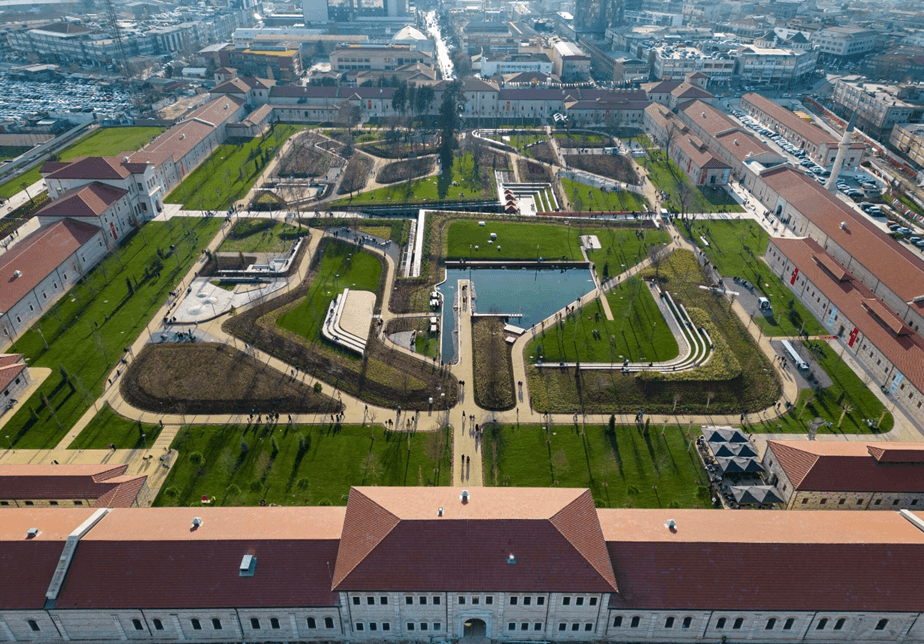
Rami Kışlası Library
Panorama 1453 Tarih Müzesi: Located in Istanbul’s Topkapı district, the Panorama 1453 History Museum is a panoramic museum depicting the Ottoman conquest of Istanbul. Opened in 2009, the museum uses 360-degree visuals and sound effects to bring the conquest to life and includes informative panels and exhibition areas describing historical events.
İstanbul Modern Sanat Müzesi: One of Turkey’s most important museums for contemporary art, Istanbul Modern appeals to art lovers through its exhibitions.
Sakıp Sabancı Müzesi: Located on the Bosphorus shore, the museum is known for its exhibitions of Ottoman calligraphy and modern art.
Santral İstanbul: Santralistanbul, converted from an old electricity power plant into a cultural center, is notable for its art galleries, design exhibitions, and student workshops.
Atatürk Kültür Merkezi (AKM): Located on Taksim Square, the AKM is one of the city’s central venues for opera, theater, and concerts.
Sadabad Osmanlı Arşiv Müzesi: Located in Kağıthane, this museum is one of the most important archival centers housing official documents of the Ottoman State. It possesses a rich collection related to the Ottoman administrative system, state documents, and diplomatic correspondence. The museum, displaying historical documents, is a vital source for researchers and visitors interested in Ottoman history.
Miniatürk: An open-air museum displaying Turkey’s important historical and cultural structures in miniature scale. Located on the shore of the Golden Horn, Miniatürk offers visitors the opportunity to see architectural masterpieces from across Turkey in a single location. The museum, featuring structures from the Ottoman, Seljuk, and Republican periods, is a popular domestic and foreign tourist gravity center.
Haliç Kongre Merkezi: Located on the shore of the Golden Horn, this large congress and event center hosts national and international events. With its proximity to the historic peninsula and modern infrastructure, it is an important venue for conferences, concerts, exhibitions, and various cultural events. Recognized as one of Istanbul’s most prestigious event venues, the Haliç Kongre Merkezi stands out with its expansive areas offering Bosphorus views.
Historic Peninsula: This area, protected by UNESCO, includes important structures such as Hagia Sophia, Topkapı Sarayı, Sultanahmet Camii, Hippodrome Square, and Süleymaniye Camii.
Zeyrek and Süleymaniye Neighborhoods: These areas, containing Ottoman-era wooden houses, preserve traditional urban fabric.
Rumelihisarı and Anadolu Hisarı: The fortresses, built by the Ottomans to control the Bosphorus, are visited today for their historical and touristic significance.
Istanbul holds a significant place in Turkish literature. The city’s streets, history, and social structure are explored in Ahmet Hamdi Tanpınar’s Huzur and Beş Şehir, Orhan Pamuk’s İstanbul: Hatıralar ve Şehir, Yahya Kemal Beyatlı’s Kendi Gök Kubbemiz and Aziz İstanbul, and Reşat Nuri Güntekin’s novel Çalıkuşu. Orhan Veli wrote poems such as İstanbul’u Dinliyorum and Galata Köprüsü, Necip Fazıl Kısakürek composed the poem Canım İstanbul, and Mehmet Âkif Ersoy included Istanbul in his work Safahat. Nazım Hikmet, Attilâ İlhan, and Sait Faik Abasıyanık portrayed Istanbul’s people and cultural fabric in their works.
Istanbul is Türkiye’s city with the largest transportation network, offering diverse options via air, road, sea, and rail.
Istanbul has two major international airports:
Istanbul Airport (European Side): Türkiye’s largest airport and one of the world’s busiest.
Sabiha Gökçen Airport (Asian Side): A major hub for domestic and European flights.
Istanbul connects Asia and Europe through bridges, tunnels, and highways. The 15 July Martyrs Bridge, Fatih Sultan Mehmet Bridge, and Yavuz Sultan Selim Bridge are the most important crossings over the Bosphorus. The Avrasya Tunnel, an underwater road tunnel, eases traffic between the two continents. Due to high population density and vehicle numbers, traffic remains one of Istanbul’s biggest challenges.
Public Transport: Istanbul’s advanced public transport system includes:
Due to its geographical location and position between two continents, Istanbul is a major city for maritime transport. Maritime transport is heavily used along the Bosphorus, the Sea of Marmara, and the Golden Horn.
Main Maritime Routes and Vessels
Bosphorus and Island Transport
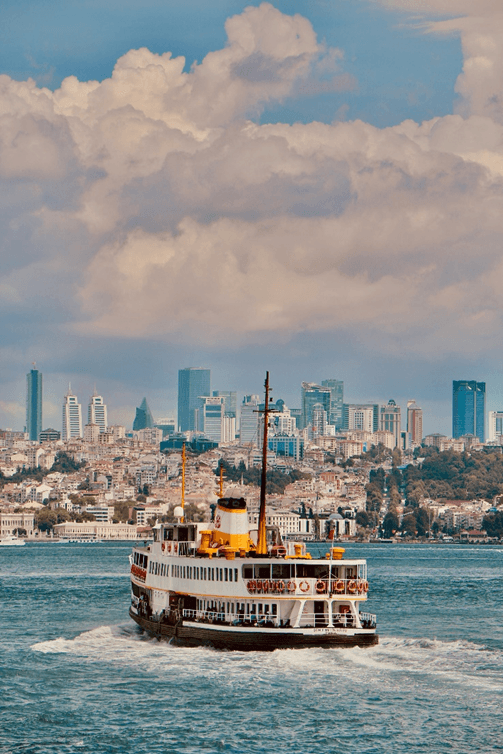
A Sea Journey in Istanbul
Istanbul’s administration is carried out through both elected local administrations (Istanbul Metropolitan Municipality and district municipalities) and the central government-appointed governorship.
"Beyoğlu Arşivi ve Haritalar." Istanbul Büyükşehir Belediyesi Şehir Planlama Müdürlüğü, Accessed February 8, 2025. https://sehirplanlama.ibb.istanbul/beyoglu-arsivi-haritalar/
"Istanbul Hakkında." MyNet, Accessed February 8, 2025. https://www.mynet.com/istanbul/hakkinda
"Istanbul Is More Populous Than 131 Countries With Its 15.7 Million Population." Anadolu Ajansı (AA), Accessed February 8, 2025. https://www.aa.com.tr/tr/ekonomi/istanbul-15-7-milyon-nufusuyla-131-ulkeden-daha-kalabalik/3474688
"Istanbul Tarihi." *Kutsal Kitap*, Accessed February 8, 2025. https://www.kutsalkitap.org/istanbul-tarihi/
"Istanbul Tarihçesi." Istanbul Büyükşehir Belediyesi (İBB), Accessed February 8, 2025. https://ibb.istanbul/istanbul/tarihce
"Istanbul's Districts." *İstanbul Tarihi*, Accessed February 8, 2025. https://istanbultarihi.ist/85-istanbulun-ilceleri
"Istanbul's Historical Areas." Kültür Portalı, Accessed February 8, 2025. https://www.kulturportali.gov.tr/portal/istanbuluntarihialanlari-1
"Istanbul's Name: Where Does It Come From?" Euronews Türkçe, June 3, 2019. https://tr.euronews.com/2019/06/03/istanbul-un-adi-nereden-geliyor
"Sultan Mehmed the Conqueror’s İstanbul." *İstanbul Tarihi*, Accessed February 8, 2025. https://istanbultarihi.ist/376-sultan-mehmed-the-conquerors-istanbul
"Üç İmparatorluğa Başkentlik Yapan Şehir: İstanbul." Istanbul Valiliği, Accessed February 8, 2025. http://www.istanbul.gov.tr/uc-imparatorluga-baskentlik-yapan-sehir-istanbul
"İstanbul Hakkında." *İstanbul'u Seyret - İBB*, Accessed February 8, 2025. https://istanbuluseyret.ibb.gov.tr/istanbul-hakkinda/
"İstanbul’un Etimolojisi." *Kampüste Ne Var?* Accessed February 8, 2025. https://www.kampustenevar.com/kategori-kultur-ve-sanat/istanbulun-etimolojisi-
Anadolu Ajansı. “Üç İmparatorluğa Başkent Olan İstanbul, 11 Mayıs 330 Yılında Konstantinopolis İsmiyle Kuruldu.” Anadolu Ajansı, May 11, 2024. Accessed February 10, 2025. https://www.aa.com.tr/tr/kultur/uc-imparatorluga-baskent-olan-istanbul-11-mayis-330-yilinda-konstantinopolis-ismiyle-kuruldu/3216508.
Istanbul Tarihi. "Bizans İstanbul’u: Topografya ve Yerleşim." Istanbul Tarihi. Accessed February 10, 2025. https://istanbultarihi.ist/20-bizans-istanbulu-topografya-ve-yerlesim.
İstanbul Tarihi. "İstanbul’un Modernleşme Öyküsü." İstanbul Tarihi. Accessed February 10, 2025. https://istanbultarihi.ist/7-istanbulun-modernlesme-oykusu.
İstanbul Tarihi. "İstanbul’un Uzun Asrı: Dünya ve Türkiye Ölçeğinde." İstanbul Tarihi. Accessed February 10, 2025. https://istanbultarihi.ist/11-istanbulun-uzun-asri-dunya-ve-turkiye-olceginde.
[1]
【3】, has become Turkey’s largest city and one of the world’s most important metropolises. Maintaining its position as a

Istanbul
Country | Türkiye | ||||||||
|---|---|---|---|---|---|---|---|---|---|
Region(s) | Marmara Region | ||||||||
Area(s) | 5 343.1 km² | ||||||||
Location | 41° N latitude 29° E longitude | ||||||||
Districts | 39 districts (25 in Europe, 14 in Asia) | ||||||||
Elevation(s) | Average 40 m (highest point: Yuşa Hill 202 m) | ||||||||
Continents | Europe and Asia | ||||||||
Foundation | 7th century BC | ||||||||
Tourist Sites | Hagia Sophia, Topkapı Sarayı, Grand Bazaar, Süleymaniye Camii, Galata Tower, Dolmabahçe Sarayı, Maiden's Tower | ||||||||
Governor(s) | Davut Gül (2023–...) | ||||||||
License Plate Code | 34 | ||||||||
Telephone Code | +90 212 (European Side), +90 216 (Anatolian Side) | ||||||||
No Discussion Added Yet
Start discussion for "Istanbul (Province)" article
Etimology
History
Ancient Period and Foundation of Byzantion (7th century BC – 4th century AD)
Roman Period (4th–5th century) Foundation of Constantinopolis
Byzantine Period (5th–15th century)
Sieges of Istanbul
Latin Empire and Restoration of Byzantine Rule (1204–1261)
Ottoman Empire Period
Istanbul as the Ottoman Capital
Republican Period and Modern Istanbul (1923–Present)
Capital Relocated to Ankara (1923)
Industrialization and Population Growth (1950–2000)
Istanbul Today
Geographical Structure
Location and Boundaries
Neighbors and Natural Boundaries:
Climate
Natural Resources
Population
Districts
Districts on the European Side (25 Districts)
Districts on the Asian Side (14 Districts)
Economic Structure
Main Industries
Trade and Industry
Tourism
Important Places in Istanbul
Historic Mosques and Külliyes
Historical and Cultural Sites
Historic Palaces
Natural Scenic Sites
Modern and Artistic Areas
UNESCO World Heritage Sites
Literature
Istanbul’s Infrastructure
Transportation
Air Transport:
Road Transport and Traffic:
Maritime Transport:
Istanbul’s Governance
Istanbul Governorship
Local Administration