


Middle Play
Orta oyunu is a traditional Turkish theater performed on a circular stage surrounded by spectators, with live actors. There is no written script; dialogues and movements are improvised improvisation. Music, song, and dance are integral parts of the performance.
In this play, actors speak directly to the audience, amusing and surprising them. Children who watch learn about different character types and life in earlier times. Orta oyunu is significant because it entertains while teaching culture.
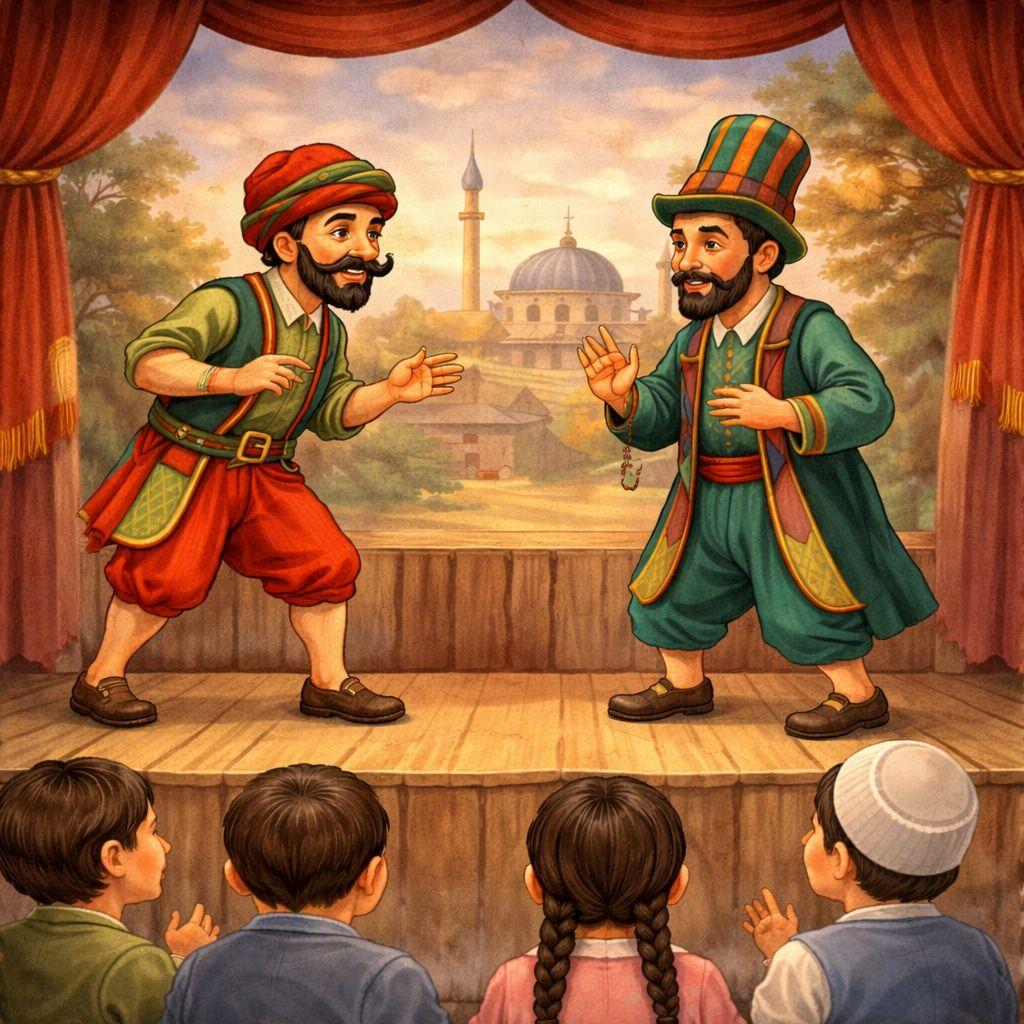
(Generated by artificial intelligence)
When Did It Emerge?
The earliest document mentioning the name The middle play's dates from 1834. However, the play was performed in earlier periods as well and was referred to by different names in historical sources.
The play took its current form in the 19th century and became widespread after that period. It shares similarities with Karagöz theater.
Where Is It Performed?
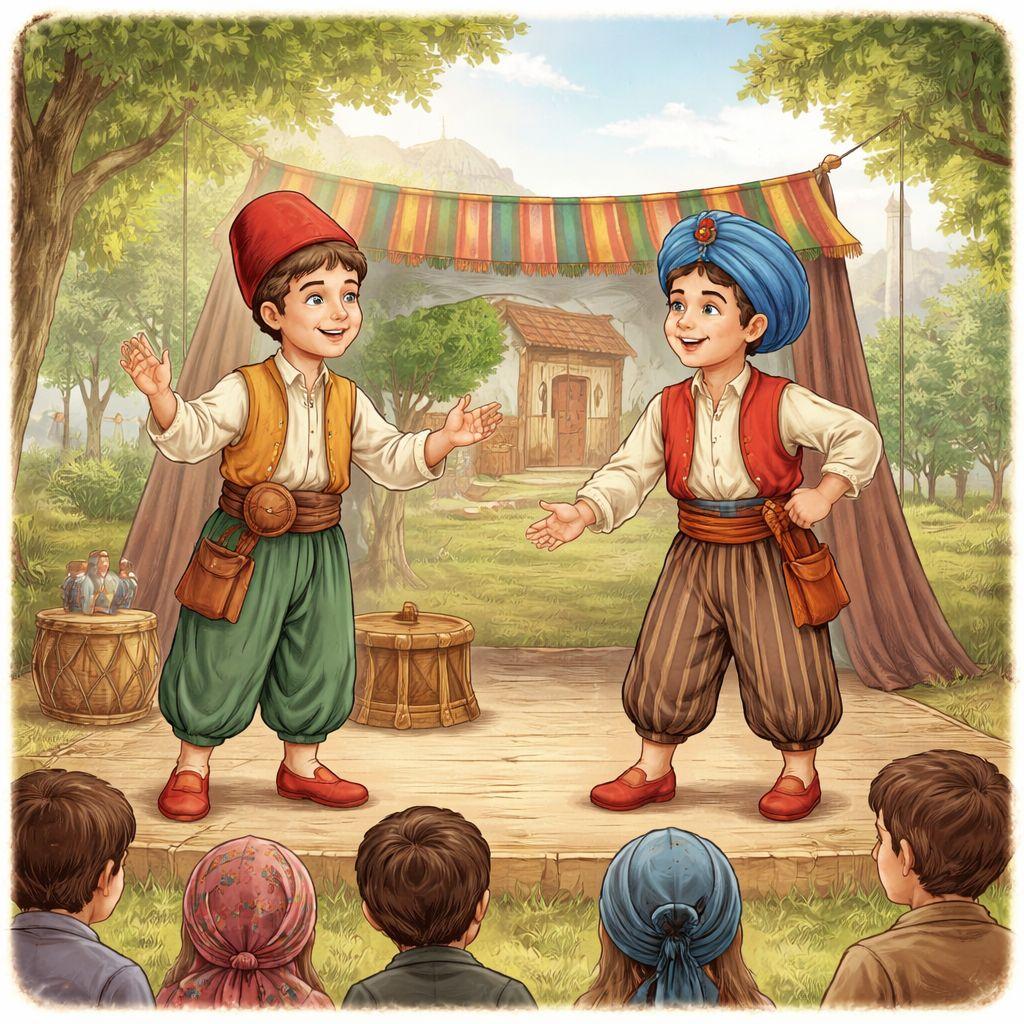
Orta oyunu is typically performed in open spaces such as squares and promenades. It has also been staged in hans and coffeehouses. The circular area where the play takes place is called a palanga, and spectators gather around it.
(Generated by artificial intelligence)
Stage and Setting
The setting of Orta oyunu is very simple. The most important set piece is the yeni dünya, which represents a house or a bathhouse. Another common set is the dükkân, used as a shop or workplace. Actors’ costumes are stored in a chest called a pusat. A few props appropriate to the performance are also used.
Who Are the Characters?
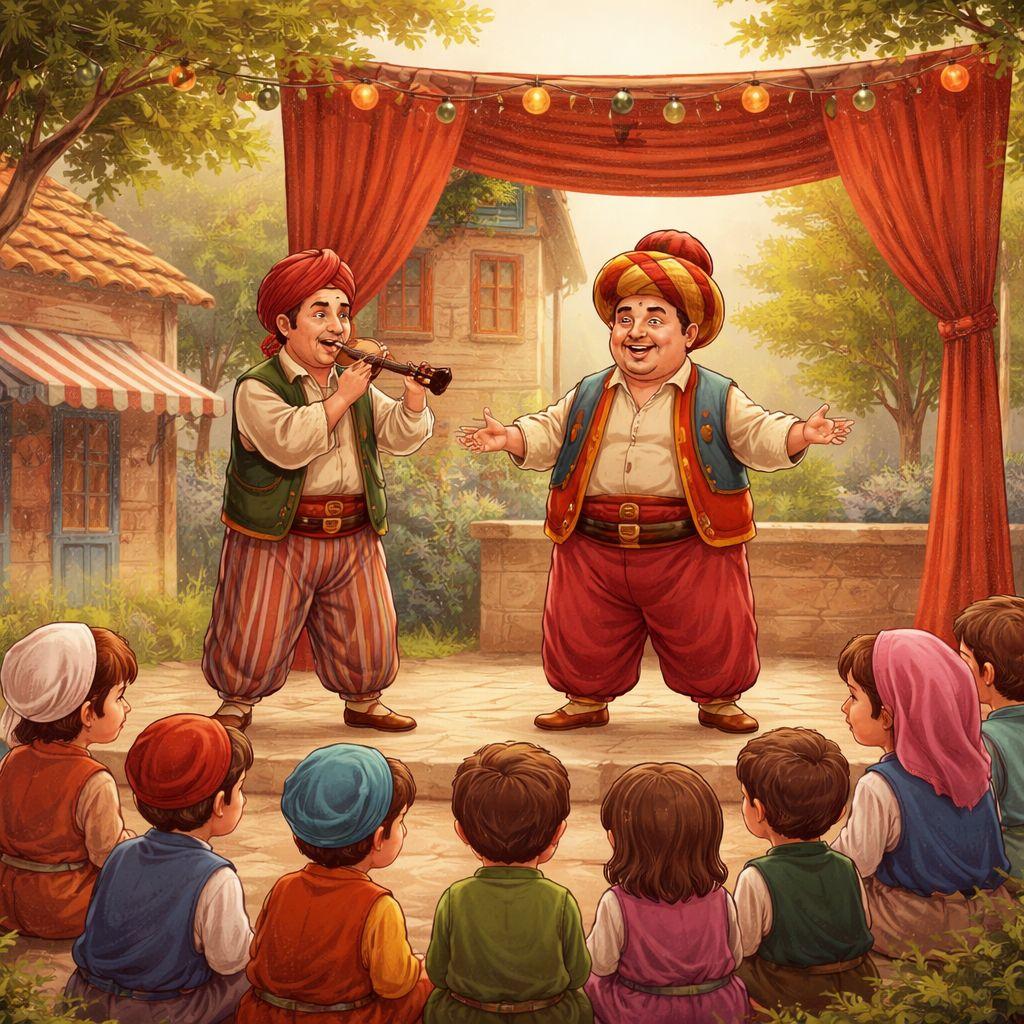
The two main characters of Orta oyunu are Pişekâr and Kavuklu. Pişekâr initiates and directs the play, while Kavuklu is the comic figure. The play includes characters representing various regions, such as Laz, Kayserili, Kurd, and Arab. The male actor who plays a female role is called a zenne.
Sections of the Play
Orta oyunu consists of four sections. In the introduction, Pişekâr greets the audience and announces the title of the play. In the muhavere section, Pişekâr and Kavuklu engage in dialogue, creating humor through misunderstandings. In the fasıl section, the main plot unfolds. The play concludes in the finale section.
How Is the Play Performed?
Orta oyunu does not rely on a written script. Actors know the general subject of the play and improvise their lines on the spot. Movements are as important as words. Actors speak directly to the audience, and the performance is conducted in an open, interactive style.
(Generated by artificial intelligence)
Why Is Orta Oyunu Important?
Orta oyunu portrays the daily life of the people and brings their behaviors to the stage. This play is an important part of traditional Turkish theater's. It helps children become familiar with their cultural heritage.
Famous Orta Oyunu Artists
Orta oyunu was traditionally taught from master to apprentice. Actors performed primarily during the summer months. Kavuklu Hamdi and Kavuklu Naşit are well-known artists. The urban form of Orta oyunu ended with the death of İsmail Dümbüllü in 1973. Village Orta oyunu performances continue in some regions to this day.