



Mors
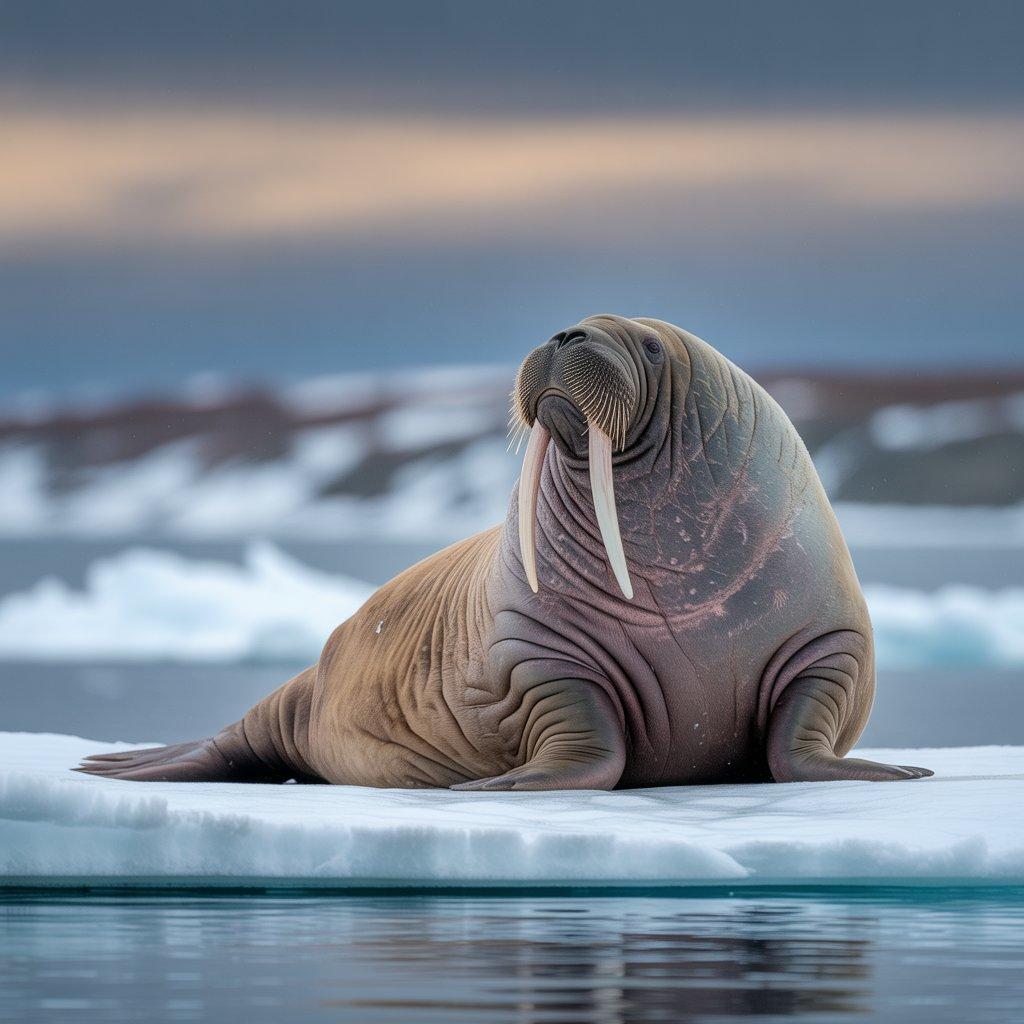
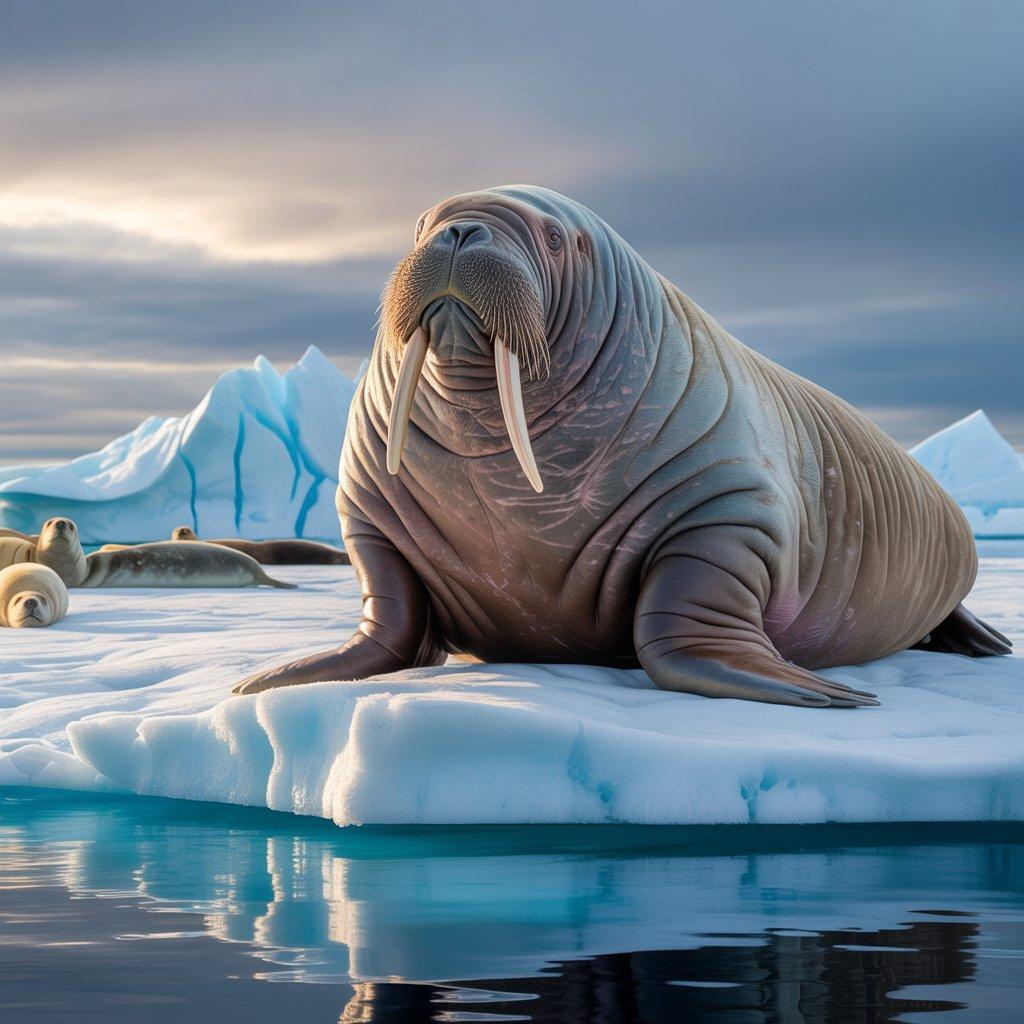
The walrus (Odobenus rosmarus) is one of the powerful and charismatic giants of the cold Arctic seas. The most distinguishing features that set them apart from other marine mammals are their long tusks and sensitive whiskers on their faces. Thanks to these whiskers, they can easily locate mussels and other shellfish on the seafloor. They use their tusks and strong bodies both to move across ice and to defend themselves.
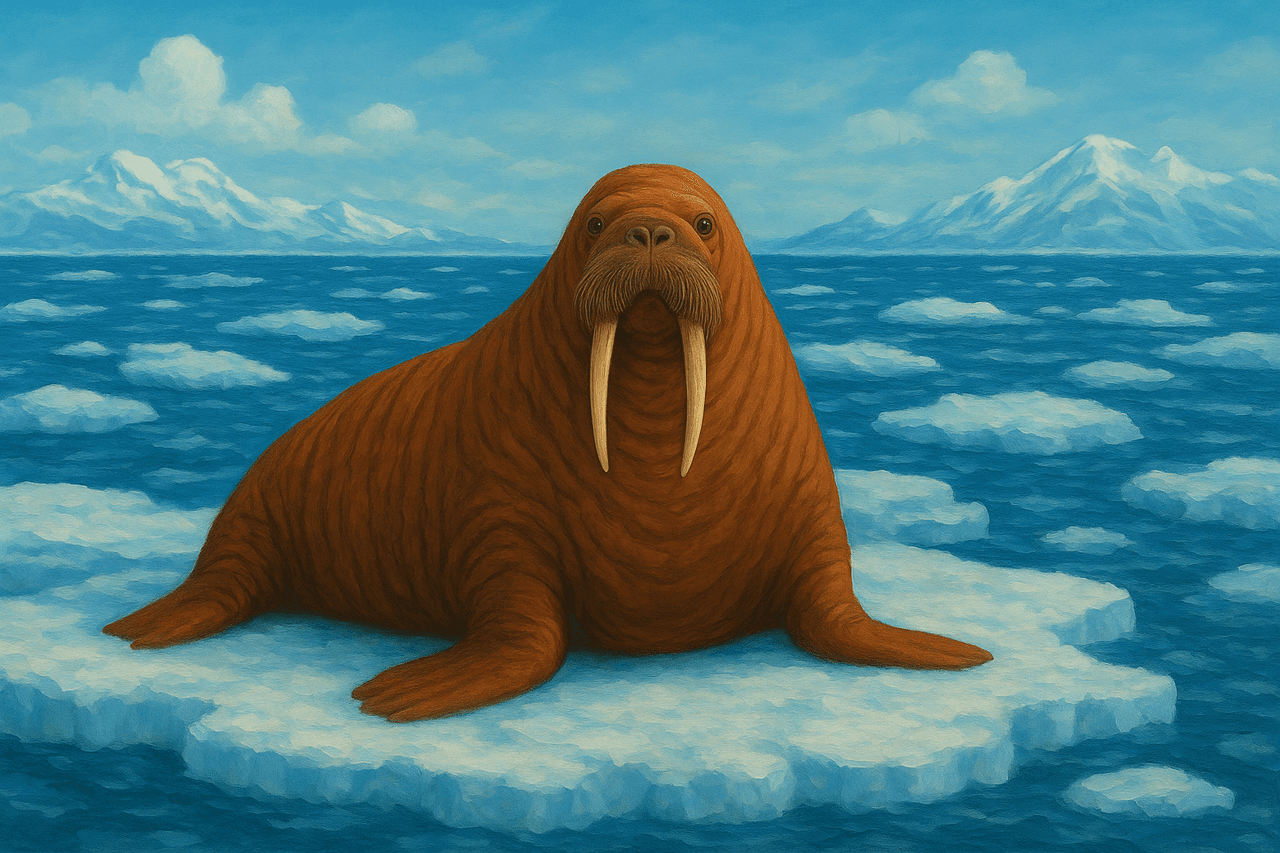
Walruses (Generated by Artificial Intelligence.)
What Colors Do They Have?
The skin and fur of polar walruses can vary in shade depending on their habitat and age. Their skin is generally gray-brown to light brown; some individuals may display pinkish or yellowish tones.
Older walruses have darker and more wrinkled skin compared to younger ones. Their undersides are typically lighter in tone, sometimes even whitish. These colors help them blend into their icy and marine environment.
How Large Do They Grow?
Walruses are among the largest marine mammals. Their body length can reach up to approximately 3.5–4 meters. Their weight ranges from 1–1.5 tons. Males are generally larger and heavier than females.
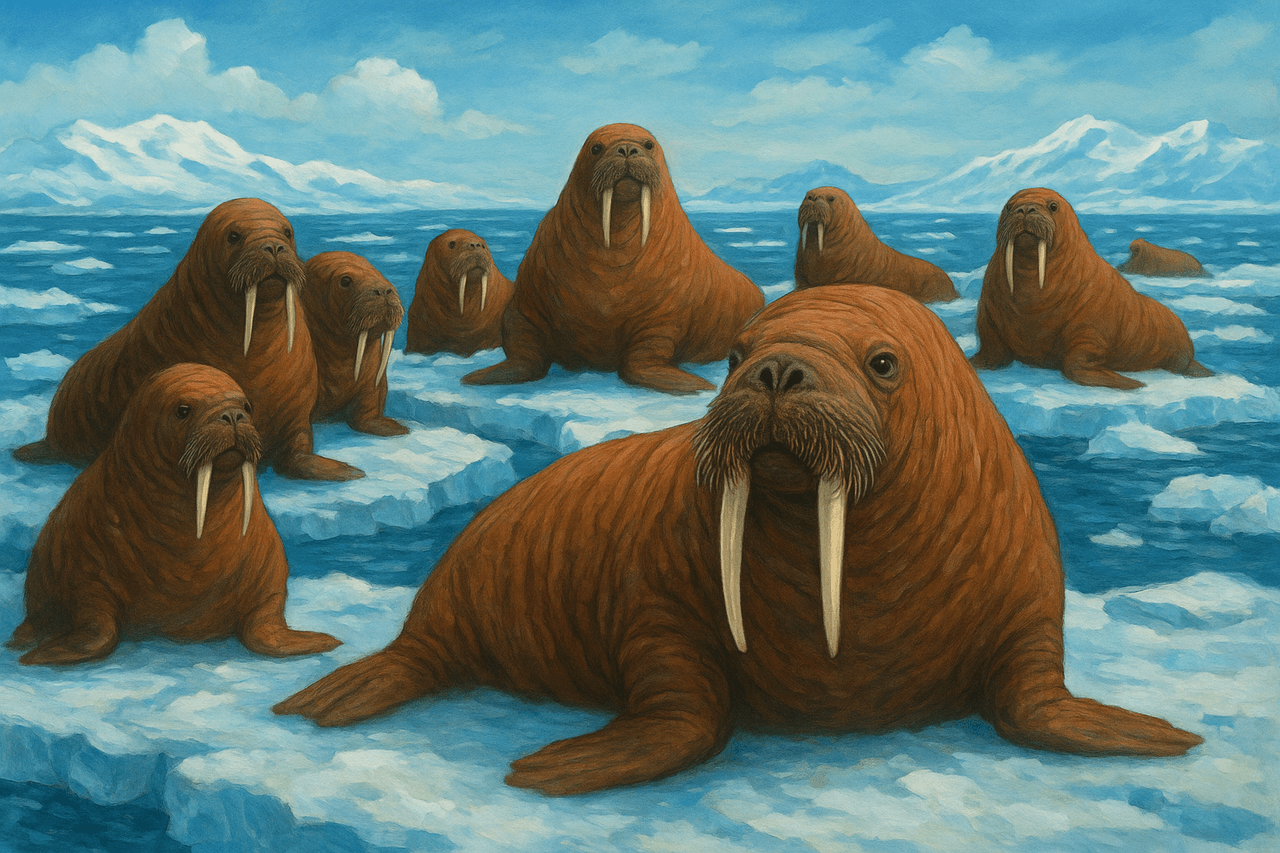
Walruses (Generated by Artificial Intelligence.)
What Do They Eat?
Walruses primarily feed on mussels, clams, and other shellfish. They use their whiskers to scan the seafloor like a detector, locating their prey. Occasionally, small fish and marine worms are also included in their diet.
Where Do They Live?
Walruses typically inhabit cold seas and icy coastlines in the Arctic region. They are most commonly found around the northern coasts of Canada, Alaska, and the Arctic waters of Russia. Glaciers and rocky coastlines are their preferred habitats for resting and protecting their young.
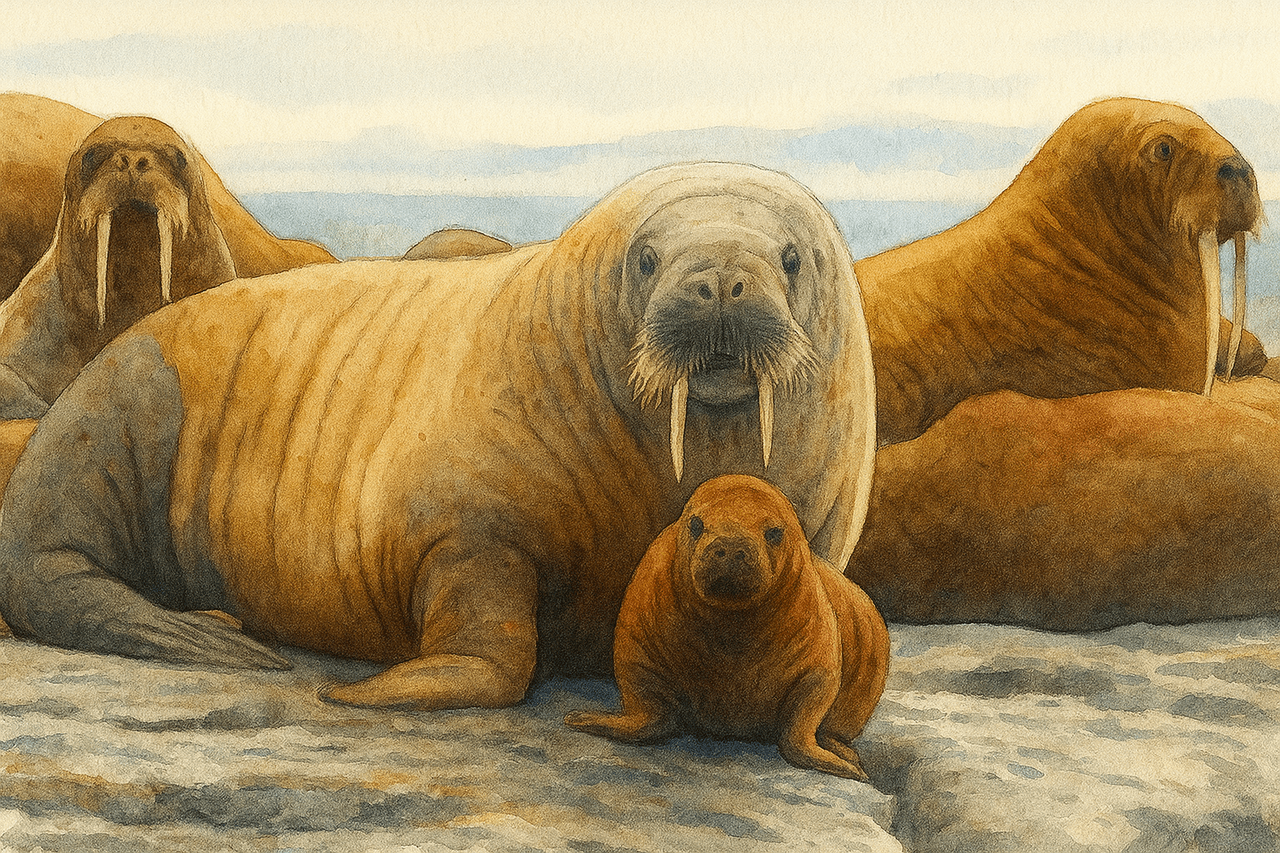
Walruses (Generated by Artificial Intelligence.)
Contributions to the Ecosystem
Walruses are an essential part of the marine ecosystem. By feeding on shellfish on the seafloor, they help maintain the balance of the ocean floor.
In addition, their movements and activity patterns in areas where they live in herds also shape the habitats of other marine species. This contributes to the healthy functioning of the Arctic ecosystem.
Conservation Status
Walruses are classified as Vulnerable. The melting of sea ice and climate change threaten their habitats. In the past, hunting also contributed to population declines. Today, conservation programs aim to protect their populations.