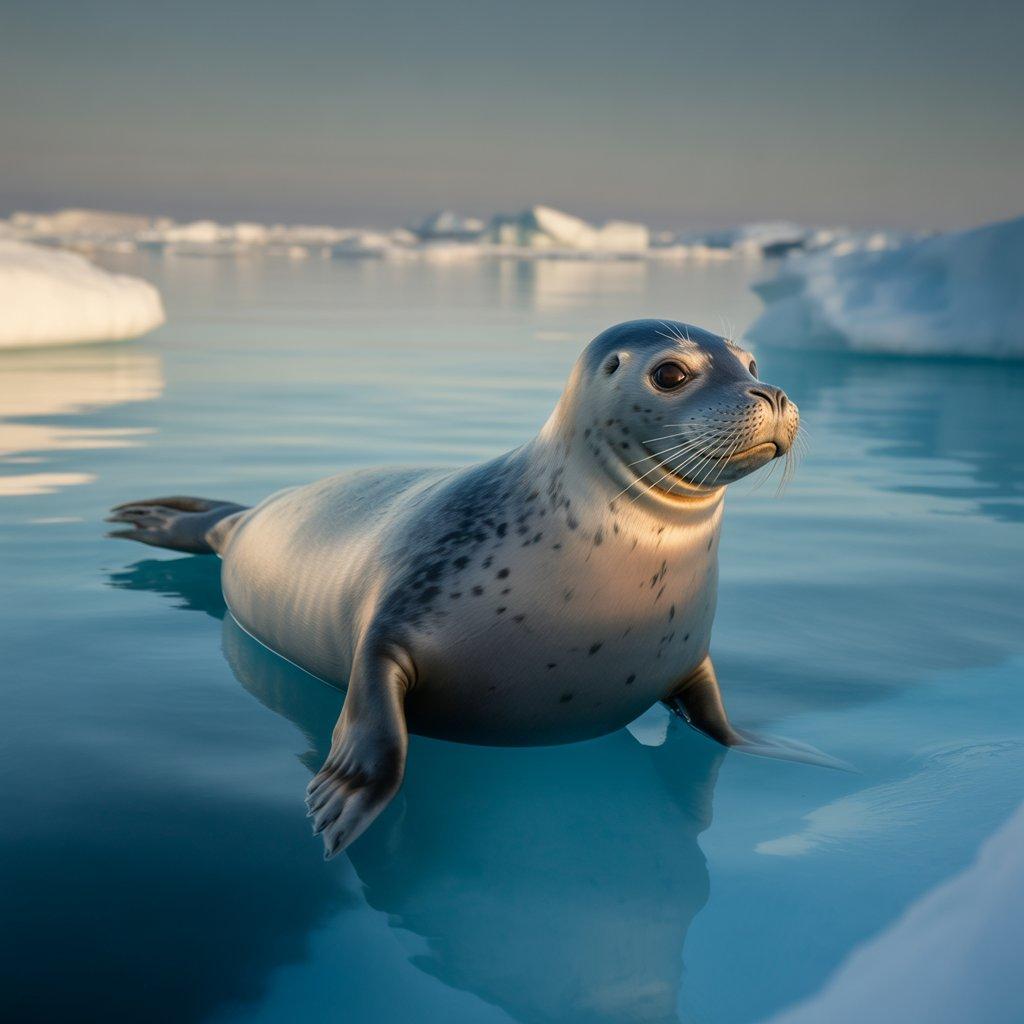




Seal
Seals (Phocidae) belong to the family Phocidae. They are among the charming and intriguing creatures of the oceans. One of their most distinguishing features from other marine mammals is their ability to thrive in cold waters thanks to thick layers of blubber.
Additionally, their rounded bodies and flipper-like limbs are notable. They use these flippers to swim and dive swiftly through the water.

Seal (Generated by Artificial Intelligence.)
What Colors Do They Have?
The color of seal fur varies depending on the sea they inhabit and their species. Some seals have fur in gray or brown tones, while others exhibit dark colors close to black or spotted patterns.
Newborn seal pups are typically born with white, fluffy fur, which helps them blend easily into ice surfaces. The undersides of adult seals are generally lighter in color.
How Large Do They Grow?
Seals vary by species but generally reach lengths of 1.2 to 2.5 meters. Their weight ranges from 60 to 300 kilograms. Newborn pups are much smaller at birth, weighing only a few kilograms.

Seal (Generated by Artificial Intelligence.)
What Do They Eat?
Seals typically feed on fish, squid, and shrimp. Some species may also consume small crustaceans and marine plants. They hunt their prey by diving underwater and are excellent swimmers.
Where Do They Live?
Seals usually inhabit coastal areas, rocky shores, and sometimes sandy beaches. In Türkiye, Mediterranean seals can occasionally be seen along the Aegean and Mediterranean coasts. These charming marine mammals, which enjoy swimming underwater and coming ashore, prefer safe caves or coastal crevices as nesting sites.

Seal (Generated by Artificial Intelligence.)
Contributions to the Ecosystem
Seals help maintain the health of marine ecosystems by keeping fish and other marine life populations in balance. They prevent certain species from overpopulating and preserve biodiversity in the ocean. Additionally, when seals come ashore to nurse their young, they make small but significant contributions to coastal ecosystems.
Conservation Status
Some seal species are at risk. For example, the Mediterranean seal is classified as “Critically Endangered” by the International Union for Conservation of Nature (IUCN). This means their numbers have declined drastically and everyone must remain vigilant to ensure their protection.