




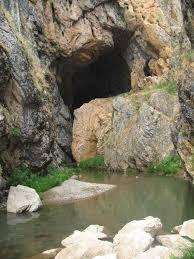
Muş Kunav Cave
Kunav Cave is located in eastern Türkiye, near the district of Varto in Muş Province. Caves are voids formed by underground water dissolving rocks, and Kunav Cave is a significant natural structure formed in this way. This cave is of considerable interest for both earth sciences (geology) and environmental biology. Have you ever imagined a vast chamber hidden beneath the earth?
Where Is Kunav Cave Located?
The cave lies within the boundaries of Varto district in Muş Province. Geographically, it is concealed within a deep valley (canyon). The region where the cave formed consists primarily of limestone. Limestone is a type of rock that water can easily dissolve.
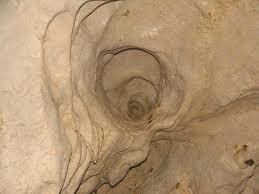
Muş Kunav Cave (Culture Portal)
How Was the Cave Formed?
The formation of caves results from the long-term interaction between water and rock. As rainwater passes through soil, it absorbs carbon dioxide (CO2) from the air, becoming a weak acid. This acidic water slowly dissolves the limestone underground, creating voids and tunnels. Kunav Cave was formed through this natural dissolution process, known as karstification.
What Is Inside the Cave?
Kunav Cave consists of two levels and is approximately three kilometers long. It contains natural bridges, stalactites (formations hanging from the ceiling made of ice or limestone), and stalagmites (upward-growing formations rising from the floor). A river-sized stream flows through the lower level of the cave. Additionally, large chambers connected by irregularly shaped natural tunnels are found within the cave.
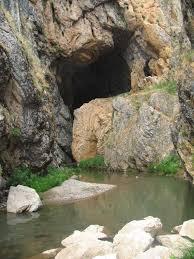
Muş Kunav Cave (Culture Portal)
Who Lives There?
Caves typically host unique species adapted to life without light. The most commonly observed creatures in Kunav Cave are bats (Chiroptera). Bats use the cave’s dark and quiet environment as a roosting site.