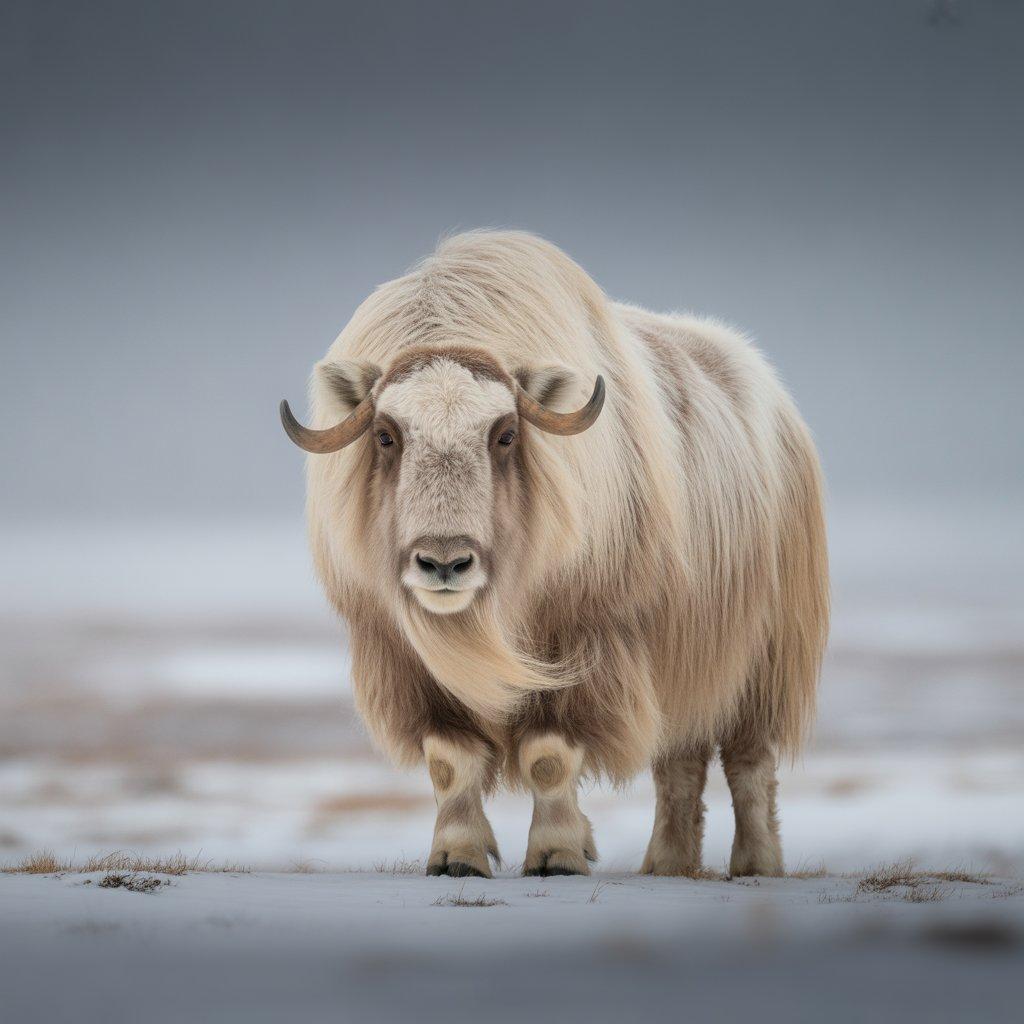




Musk Ox
The musk ox (Ovibos moschatus) is a strong and resilient mammal that lives in the cold tundras of the north and is related to goats and sheep. It is distinguished by its powerful, curved horns, which are present in both males and females. When threatened, musk oxen gather their young in the center and form a circular defensive line.
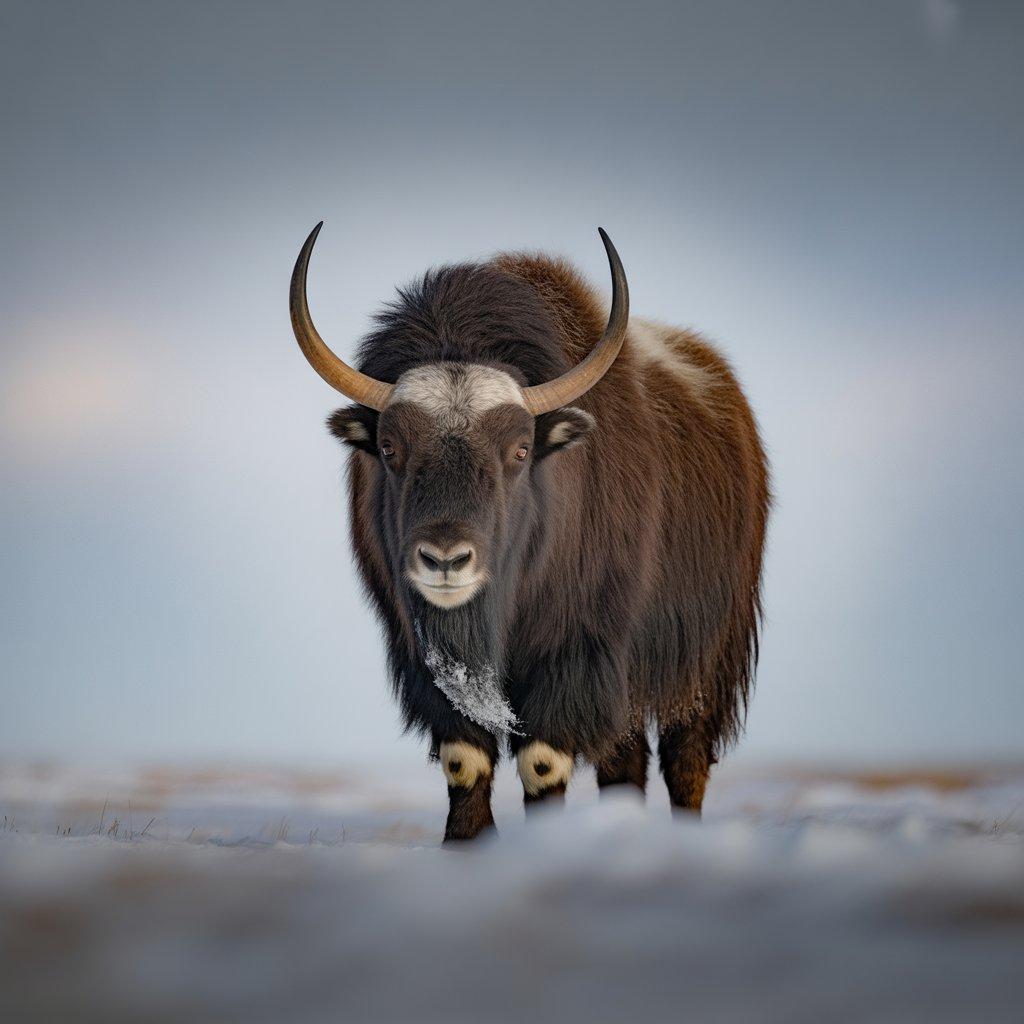
Musk Ox (Generated by Artificial Intelligence.)
What Does It Look Like?
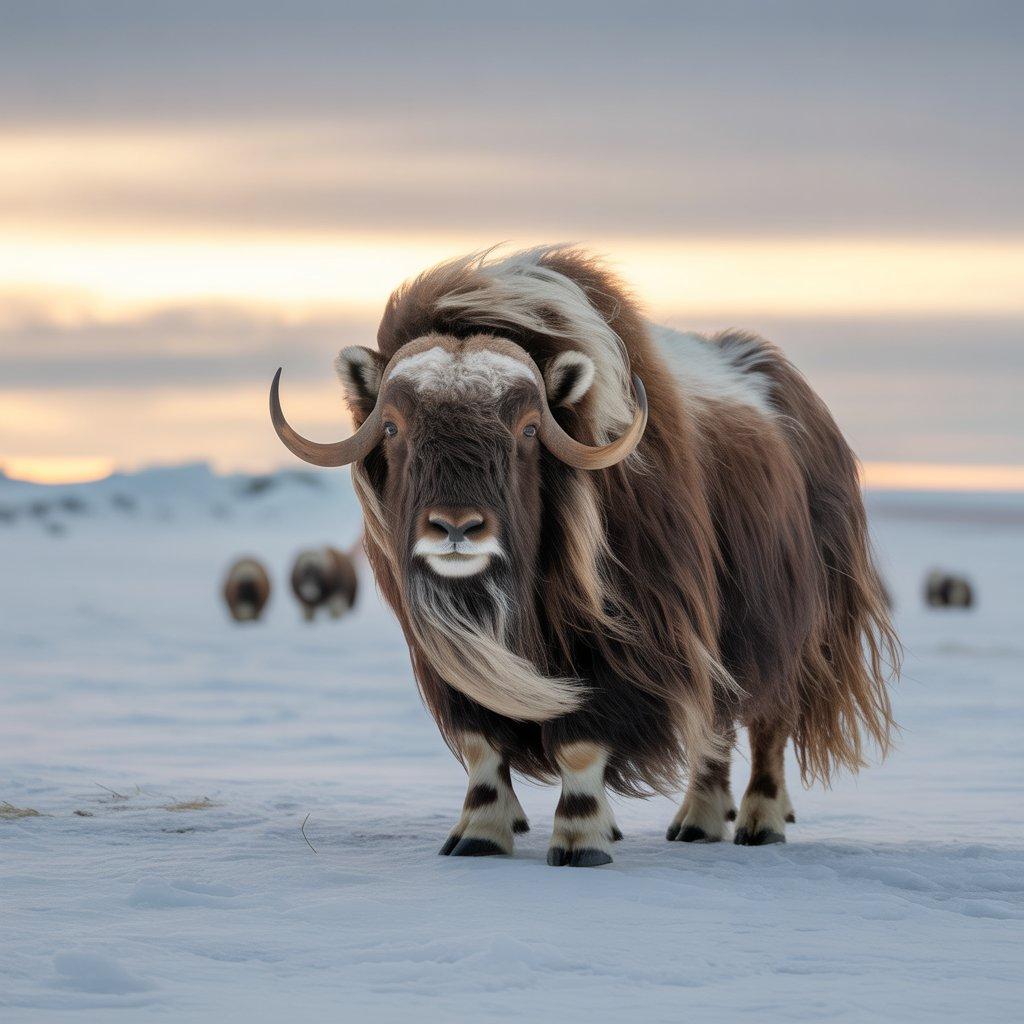
The appearance of musk oxen is imposing due to their thick, ground-length fur. Their coat color typically ranges from dark brown to black, though lighter, sometimes yellowish-brown tones may be seen on the shoulders and back.
The inner layer of fur, called qiviut, provides insulation against the cold and is finer and warmer than wool. The fur becomes thicker and more voluminous in winter and slightly thins during summer. Both males and females have strong, curved horns on either side of their heads.
How Large Do They Grow?
The shoulder height of musk oxen typically ranges from 1.2 to 1.5 meters. Males can weigh between 350 and 450 kilograms, while females weigh between 200 and 300 kilograms. Thanks to their long, thick fur, they appear larger and more imposing than they actually are.

Musk Ox (Generated by Artificial Intelligence.)
What Do They Eat?
In the wild, musk oxen feed on grasses, leaves, willow and birch branches, mosses, and lichens that grow in the tundra. During winter, they use their hooves to dig through snow to reach plants beneath the surface.
Where Do They Live?
Musk oxen are primarily found in the Arctic regions of northern North America, including Greenland and the tundras of Canada. Populations have also been introduced to Alaska and certain areas of northern Europe. Open, windy tundras and subarctic grasslands constitute their natural habitats.

Musk Ox (Generated by Artificial Intelligence.)
Contributions to the Ecosystem
Musk oxen help maintain the balance of tundra vegetation through grazing. They aid in seed dispersal through the plants they consume, and by digging through snow to expose underlying vegetation, they make these food sources accessible to other animals. In this way, they support the biodiversity of the tundra ecosystem.
Conservation Status
Musk oxen are classified by the International Union for Conservation of Nature (IUCN) as “Least Concern.” This indicates that their overall population is currently not at risk. However, climate change, habitat loss, and hunting pressure in some regions could negatively affect the species’ numbers in the future.