



Open the Door, Bezirgânbaşı Game
Have you ever thought that the fun game you played as a child, holding hands to form a bridge, actually takes us back to the marketplaces and palace gates of centuries past? Known by various names such as Bezirgânbaşı, Hankervan, Kapan Kale, or Çürük Elma, this game is one of our most cherished traditions, passed down from generation to generation across every corner of Anatolia. Let us embark together on this mysterious caravan journey!
How Is the Game Played?
This game is typically played by children aged 7 to 12, with at least four participants. The more players involved, the more enjoyable the game becomes. It can be played comfortably both in open areas and indoors.
Preparation: Merchants and Secret Names
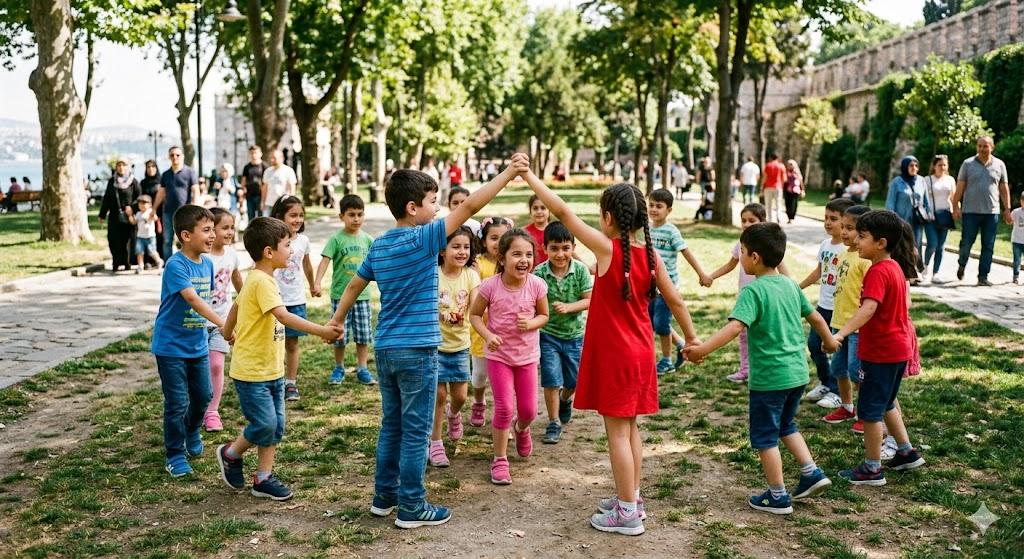
First, two players are chosen as “ebe” through a counting-out rhyme; these two become the “merchants” of the game. The other players take on the role of “caravan members,” lining up one behind the other like a caravan. The merchants withdraw to a corner where the others cannot hear and select secret names for themselves, such as “apple-orange,” “rose-begonia,” or “fish-butterfly.” They then join hands to form a symbolic palace gate or bridge.
Passing Through the Bridge and Capture
The caravan members hold each other by the waist to form a train and begin passing under the bridge while singing this famous verse:
“Open the gate, merchant chief, merchant chief... What toll will you give, what toll will you give? Let what lies behind me be a memory, a memory...” As soon as the song ends, the merchants lower their arms and capture the player passing through at that moment. The captured player is then asked questions using the secret names, such as “Do you want blue or red?” The player’s choice determines which group they join.
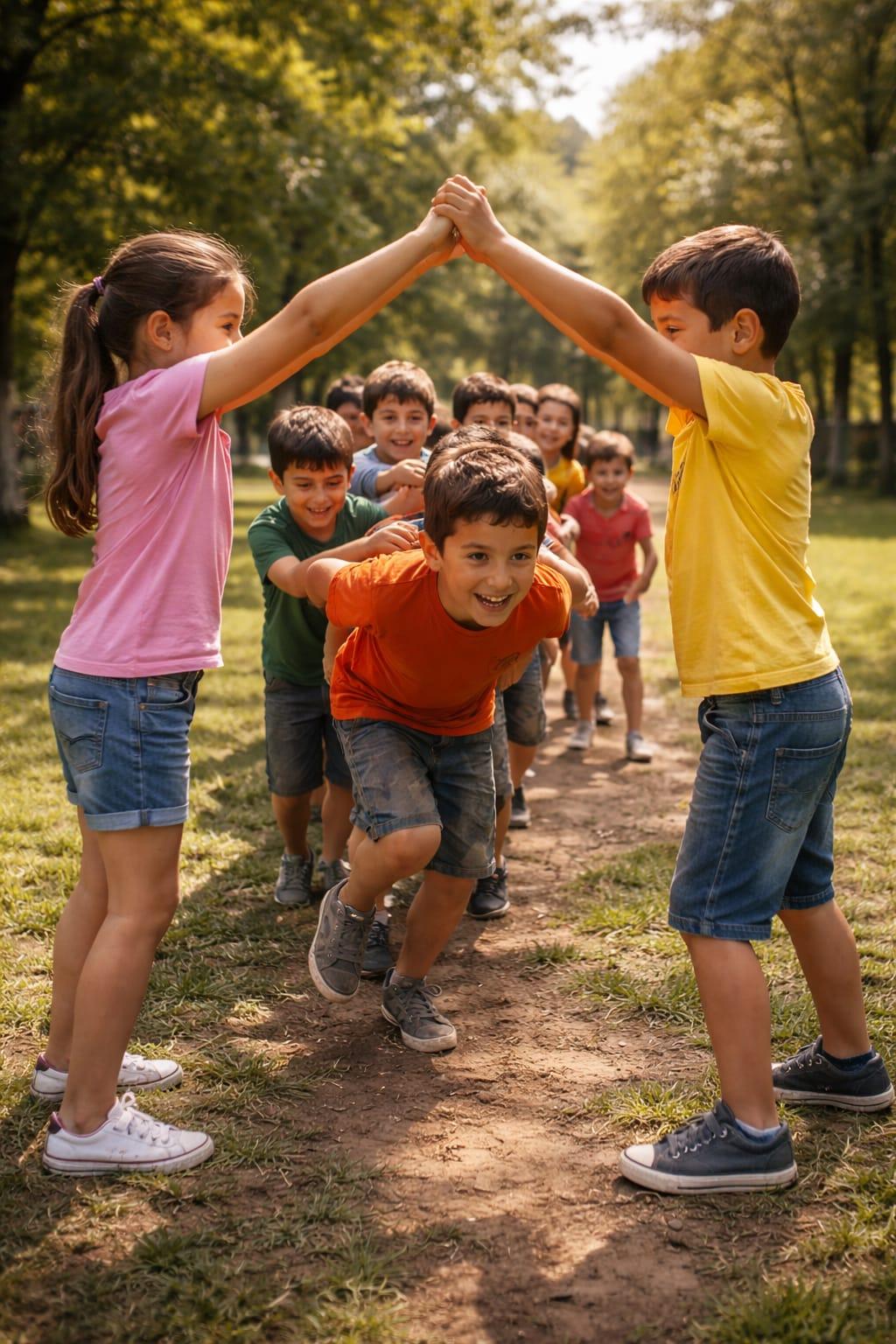
Children Playing Aç Kapıyı Bezirgânbaşı Game, Representative Image (This Image Was Generated by Artificial Intelligence.)
The Grand Finale: Strength Contest
Once all caravan members have been captured, the game enters its most exciting phase. A line is drawn on the ground, and the two groups link together and begin pulling against each other. The team that succeeds in pulling the opposing group across the line wins the game. The winners shout “Çürük elma!” at the losing group.
The Hidden History of the Game
This game has a history stretching back to the 15th and 16th centuries of the Ottoman Empire. Some of the terms used in the game reflect this historical legacy:
Bezirgânbaşı: An official responsible for acquiring valuable goods for the palace.
Kapı Hakkı: The tax or gift paid by caravans at the city gates.
Kapan: Large marketplaces in the Ottoman era where goods such as flour, oil, and honey were weighed.
A Journey Through Time
Around 500 years ago, caravans were thought to transport goods to the palace through the narrow streets of Istanbul. Children mirrored these scenes in their play, giving rise to this enduring tradition.