




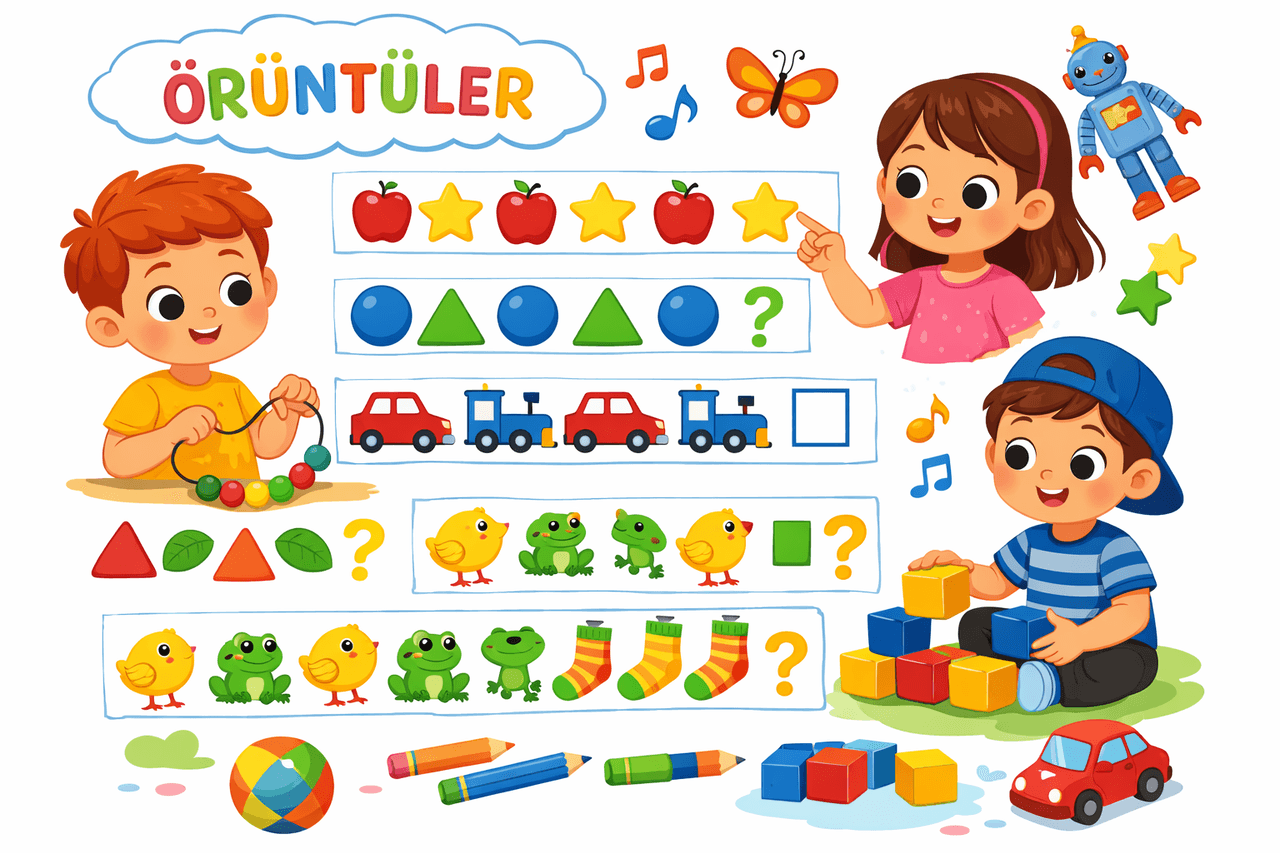
Pattern
Pattern is a sequence of shapes or numbers that repeat or expand according to a specific rule. When you look around you, you can see patterns everywhere; the consistent order of the days of the week or the arrangement of petals on a flower are both examples of patterns. Let us explore this mysterious order of mathematics together!
How Does a Pattern Form?
The most important element in forming a pattern is its "rule." This relationship between the steps of the pattern is called the "general rule." If you can determine the rule of a pattern, you can easily predict what will come in the next step.
In mathematics, we sometimes use letters to represent patterns. For example, the letter "n" is a representative number that indicates which step of the pattern we are on. This allows us to determine what number will appear at the 100th step without even writing anything down.
Games with Shapes and Numbers
Patterns are divided into two main categories: shape patterns and number patterns. Shape patterns are formed by arranging similar polygons or objects according to a specific rule. For example, a sequence such as one square, two circles, then another square is a wonderful shape pattern.
Number patterns are sequences of numbers arranged according to a specific relationship. Some number patterns increase by the same amount at each step; these are called "arithmetic expanding patterns." Others grow much more rapidly and are known as "geometric patterns."
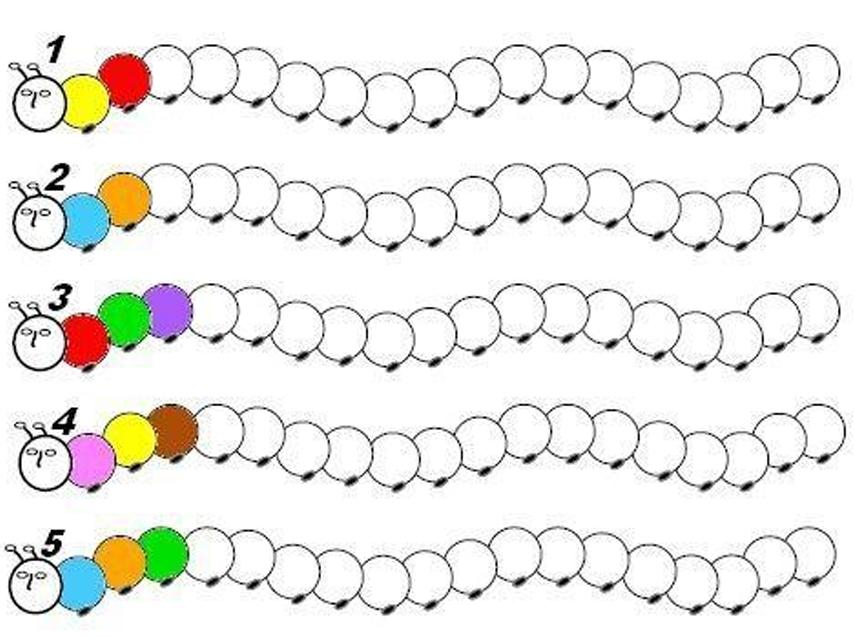
Patterns-OMÜ
Same Rule, Different Materials
Even if the rule of a pattern remains the same, the materials used can change. For example, using the rule "one large, two small," you can create patterns that look different—one made of apples and another of triangles—but share the same underlying logic. What matters is not the shapes themselves, but how the relationship between them progresses.
🕰️ Time Travel
Italian mathematician Fibonacci discovered a very special number sequence bearing his name about 800 years ago. In this pattern, each number is the sum of the two preceding numbers: 0, 1, 1, 2, 3, 5, 8, 13... You can observe this magical sequence in nature, from the reproduction of rabbits to the arrangement of pine cones.