



Polar Bear
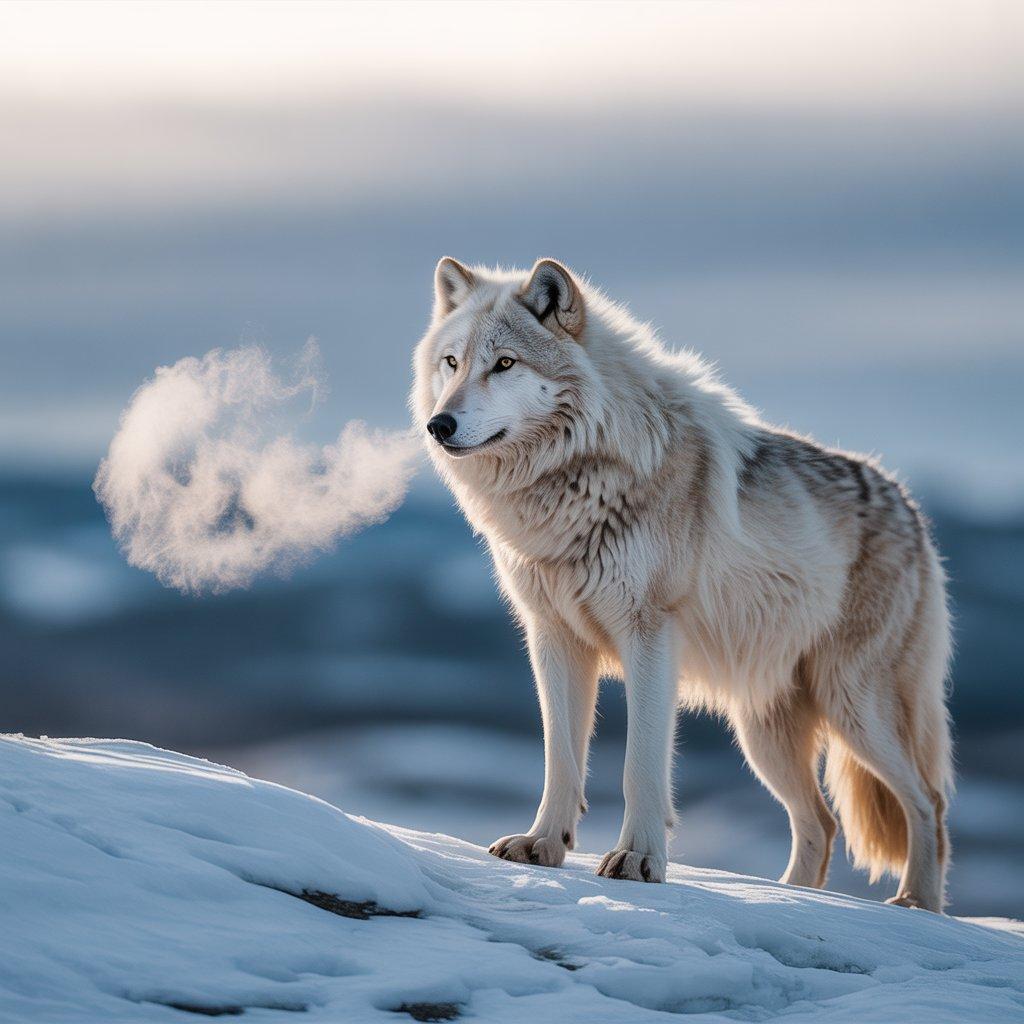
The Arctic wolf (Canis lupus arctos) belongs to the dog family. It is a bold and agile animal that lives in cold regions covered in ice and snow.
One of the most distinguishing features that set it apart from other wolves is its thick, pure white fur. This fur helps it blend into snowy environments. Additionally, its strong and long legs enable it to move easily across snow and ice.

Arctic Wolf (Pexels)
What Color Are They?
The fur of Arctic wolves is mostly pure white, allowing them to disappear among snow and ice. Sometimes, light gray or cream tones can be found around the nose, ears, and paws. Their thickened winter fur protects them from the cold and helps them remain hidden in snow-covered terrain.
How Large Do They Grow?
Arctic wolves are quite large animals. Their body length, including the tail, ranges from approximately 1 to 1.8 meters. Their weight typically falls between 45 and 70 kilograms. Thanks to their powerful legs and long bodies, they can move easily across snowy regions and catch their prey.

Arctic Wolves (Pexels)
What Do They Eat?
Arctic wolves are carnivores, meaning they primarily consume meat. Their main food sources include Arctic hares, caribou, muskoxen, and occasionally birds and small animals. When hunting, they usually move in packs and assist one another. This cooperation makes it easier to find food in snow-covered regions.
Where Do They Live?
Arctic wolves inhabit extremely cold and snow-covered areas. They typically make their homes in places such as the northern islands of Canada, northern coasts of Alaska, and Greenland. In these regions, trees are scarce, and they roam in packs across vast snowy landscapes.

Arctic Wolf Family (Unsplash)
Families and Contributions to Nature
Arctic wolves generally live in small groups. At the head of each pack are a pair of leader wolves known as the “alpha pair,” while other adult wolves help with hunting and protecting the young.
They play a vital role in nature: by keeping the populations of their prey in balance, they contribute to the stability of the ecosystem. In other words, Arctic wolves are the “guardians of balance” in icy and snowy regions.

Arctic Wolf (Pexels)
Conservation Status
Arctic wolves are currently classified as a species that is not at risk in terms of population numbers. Scientists categorize them as “least concern”. However, climate change and certain human activities—such as road construction, mining, and settlement expansion—can impact their habitats. Therefore, protecting the habitats of Arctic wolves is of great importance.