



Polar Bear Habitat
Polar bears are powerful, large-bodied carnivorous mammals that live exclusively in the cold, icy regions surrounding the North Pole. These animals are among the rare species that depend on sea ice for survival and hunting.
Sea Ice: The Foundation of Their Lives
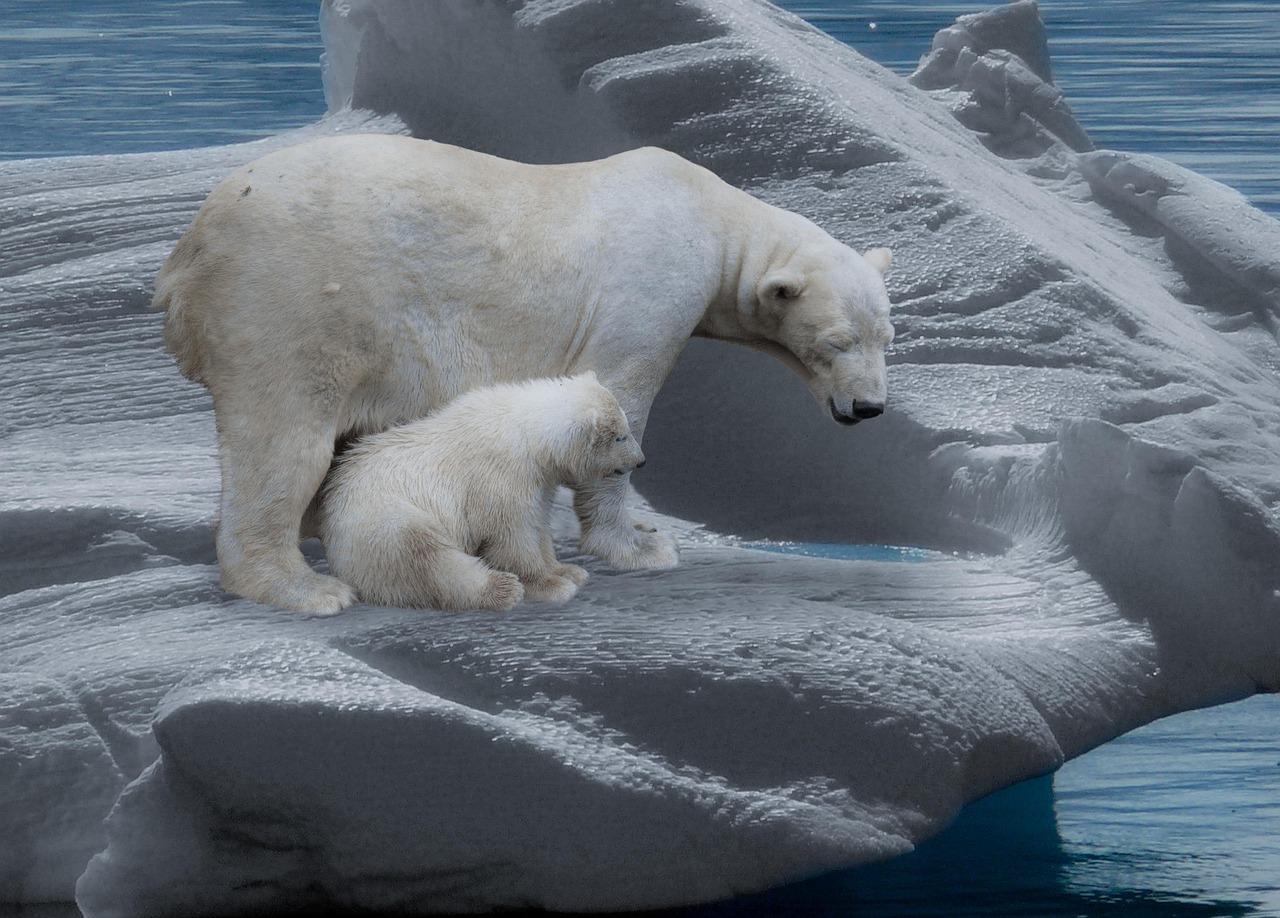
Most of a polar bear’s life is spent on sea ice, as this is where they hunt their primary food source—seals. Sea ice enables bears to travel long distances, allows them to follow their prey, and provides a safe surface for resting.
If the sea ice is not thick or extensive enough, bears struggle to find food and to raise their cubs safely.
Geographic Range
The natural habitat of polar bears is limited exclusively to the regions around the North Pole. These animals inhabit Alaska, Canada, Greenland, Norway’s Svalbard Islands, and northern regions of Russia.
These areas border the frozen waters of the Arctic, where the seasonal extent of sea ice dictates the bears’ movements. Bears spend the majority of the year on the ice, but during summer months, when the ice melts, they come ashore to find temporary refuge.

Image of a Polar Bear and Her Cub (Pixabay)
Cub Safety and the Winter Denning Period
Female polar bears dig dens in snow-covered areas or within the ice during winter to protect their cubs from the cold and to give birth safely. These dens are typically located in sheltered, quiet areas, and the cubs remain with their mothers inside for several months.
During this time, female bears do not hunt for food and rely entirely on fat reserves accumulated prior to denning.
Global Warming and the Threat of Ice Loss
Rising global temperatures are causing Arctic sea ice to melt earlier each year and form in lesser amounts. This reduces the bears’ habitat and shortens the time available for hunting.
Bears unable to remain on the ice long enough are forced to come ashore in search of food. However, terrestrial food sources are far less productive than marine prey, leading to significant energy loss. This directly affects their health, reproductive rates, and the survival chances of their cubs.