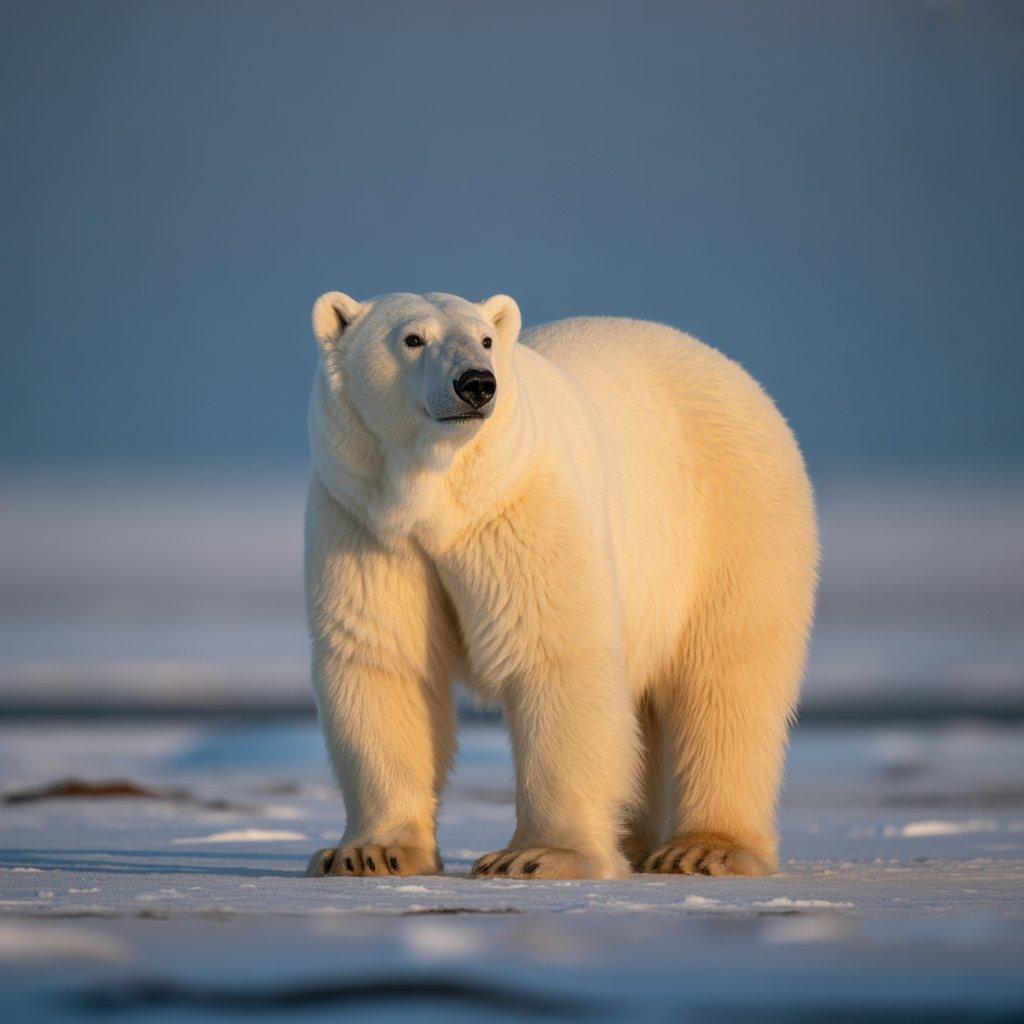




Polar Bear
The polar bear, scientifically known as Ursus maritimus, is a beloved and powerful inhabitant of the Arctic region. The name, meaning “sea bear,” reflects its adaptation to life on sea ice. It is one of the largest terrestrial carnivores in the world and is exceptionally strong.

Polar Bear (generated by artificial intelligence)
What Do They Look Like?
The polar bear’s fur appears white but is actually transparent. This allows them to blend seamlessly into snow and ice. Beneath the fur, their skin is black, which helps absorb sunlight and convert it into heat.
They have a large, robust body. Their front paws act like paddles for swimming, and the soles of their feet are covered in fur and have deep textures that enhance grip on slippery surfaces.

Polar Bear Family (generated by artificial intelligence)
What Is Their Family Life Like?
Polar bears are typically born as twins. Females build a small “den” under the snow during winter months and emerge with their cubs in March or April. The cubs stay with their mother for about two to three years, learning how to survive.
How Large Do They Grow?
In the wild, they live for 25–30 years, though some individuals have lived longer. Adult males typically weigh 300–800 kg and measure 2–2.5 m in length. Females are generally about half the size, weighing 150–450 kg and measuring 1.8–2 m in length.

Polar Bear Catching Fish (generated by artificial intelligence)
What Do They Eat?
Their preferred prey is seals. They hunt by waiting in ambush on the ice, or by stalking at breathing holes or cracks in the ice. In rarer cases, they may feed on whale carcasses, fish, plants, and other food sources.
Where Do They Live?
In cold, snowy regions! They share their habitat with populations in Canada, Norway, Alaska, Russia, and Greenland—specifically along Arctic coastlines and on sea ice.

Polar Bear (generated by artificial intelligence)
How Do They Contribute to the Ecosystem?
The polar bear occupies the top of the Arctic food chain and plays a vital role in maintaining ecological balance. They are also one of the clearest indicators of climate change: as sea ice diminishes, hunting becomes more difficult and their populations decline.
Conservation Status
Polar bears are classified as vulnerable by the IUCN (International Union for Conservation of Nature). This means their survival is at risk, but they have not yet reached the point of imminent extinction.
One of the greatest threats is the melting of sea ice. As ice retreats, the bears’ hunting grounds shrink. In addition, pollution (such as waste dumped into oceans), energy resource development (including oil and gas exploration), and human-bear encounters further endanger their survival. Moreover, certain toxic substances that enter the ocean accumulate in their bodies and are stored in fat tissues, gradually compromising their health.
What Is Being Done to Protect Them?
Since 1973, an agreement to protect polar bears has been in place between the United States, Canada, Norway, Russia, and Denmark (Greenland). This agreement aims to prevent unregulated hunting.