



Recycling Bins
If we look around us, dozens of waste items are generated every day: empty milk cartons, empty water bottles, paper, glass bottles… Should all of these wastes end up in the trash? No! Recycling bins collect these materials separately to enable their reuse. This way, nature is protected and unnecessary consumption of resources for new products is avoided.
The Importance of Recycling
- Thanks to recycling, resources such as forests, water, minerals and oil can be used for a longer time. For example, recycling one ton of paper prevents the cutting down of 17 trees and conserves natural resources.
- Materials that are recycled require less energy than producing them from scratch. The energy obtained from recycling one metal can is enough to produce 20 new metal cans, resulting in energy savings.
- Reduced use of natural resources, energy savings, creation of new job opportunities and lower raw material costs all contribute to the national economy.
How Is Recycling Done?
Paper / Cardboard
Paper is separated into small pieces, turned into paper pulp, and used to make products such as notebooks, books and boxes.
Glass
Glass is sorted by transparency and color, broken into small pieces, cleaned, melted in furnaces, and used to produce new glass products.
Plastic
Plastics are sorted by type, shredded, washed, and transformed into new plastic products.
Metal
Metal packaging is separated using magnets, melted, and turned into new metal items such as bicycles.
Wood
Fruit crates are turned into wood chips, converted into particleboard, and used to manufacture new furniture.

Color Scale
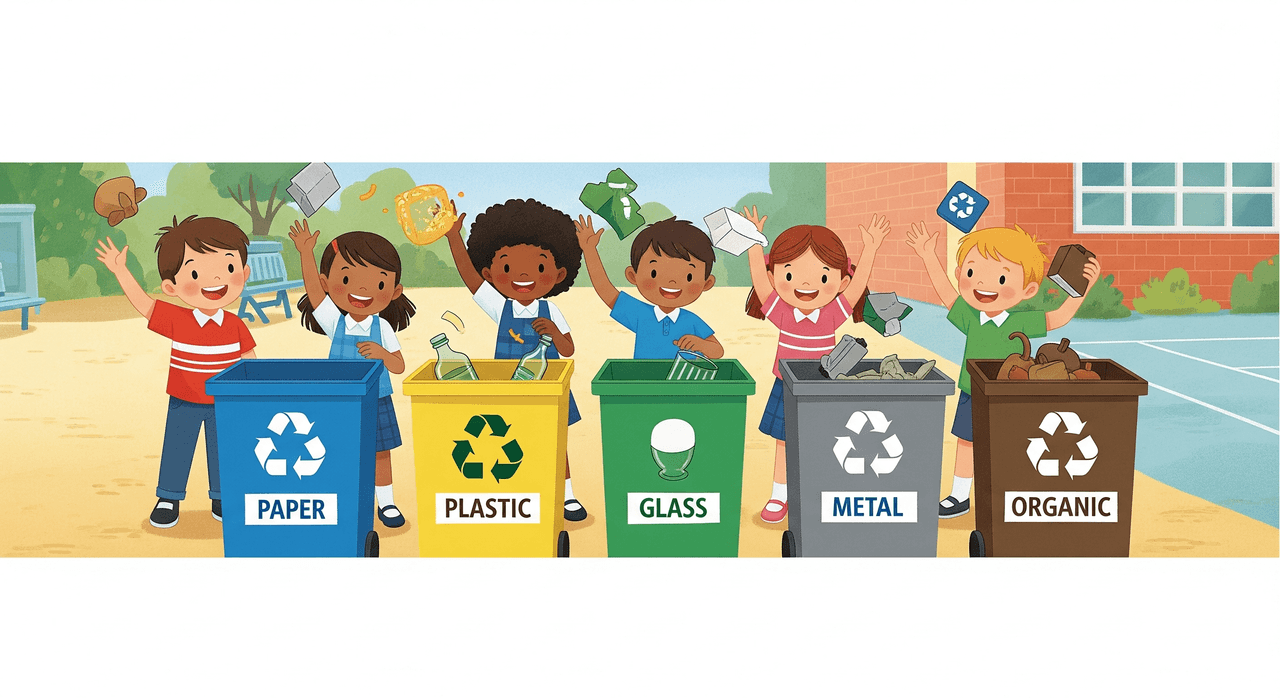
To maintain order in recycling, waste bins are color-coded:
-Blue: Paper and cardboard waste
-Yellow: Plastic waste
-Green: Glass waste
-Gray: Metal waste
-Brown: Organic waste
-Black: Non-recyclable waste
-Orange: Medical waste (red bags, orange bins)
-Transparent: Hazardous and electronic waste
These colors make it easier for us to dispose of waste in the correct bins.

Color-Coded Recycling Bins (generated by Artificial Intelligence)
What Can I Do?
- At home and at school, dispose of waste in recycling bins, not in the trash.
- Explain the importance of recycling to your friends and family.
- If there are no recycling bins in your neighborhood, request them from the municipality.
- Learn and use the bins according to their correct colors.
Small steps lead to big changes!