



Red Flycatcher
The hummingbird, despite being one of the smallest birds in the world, is among its most courageous travelers. This tiny bird holds the record for the longest migration relative to body size. Known for its aggressive nature, it does not hesitate to fly as far north as the northernmost regions of North America. Let us take a closer look at this fascinating bird!
What Does It Look Like?
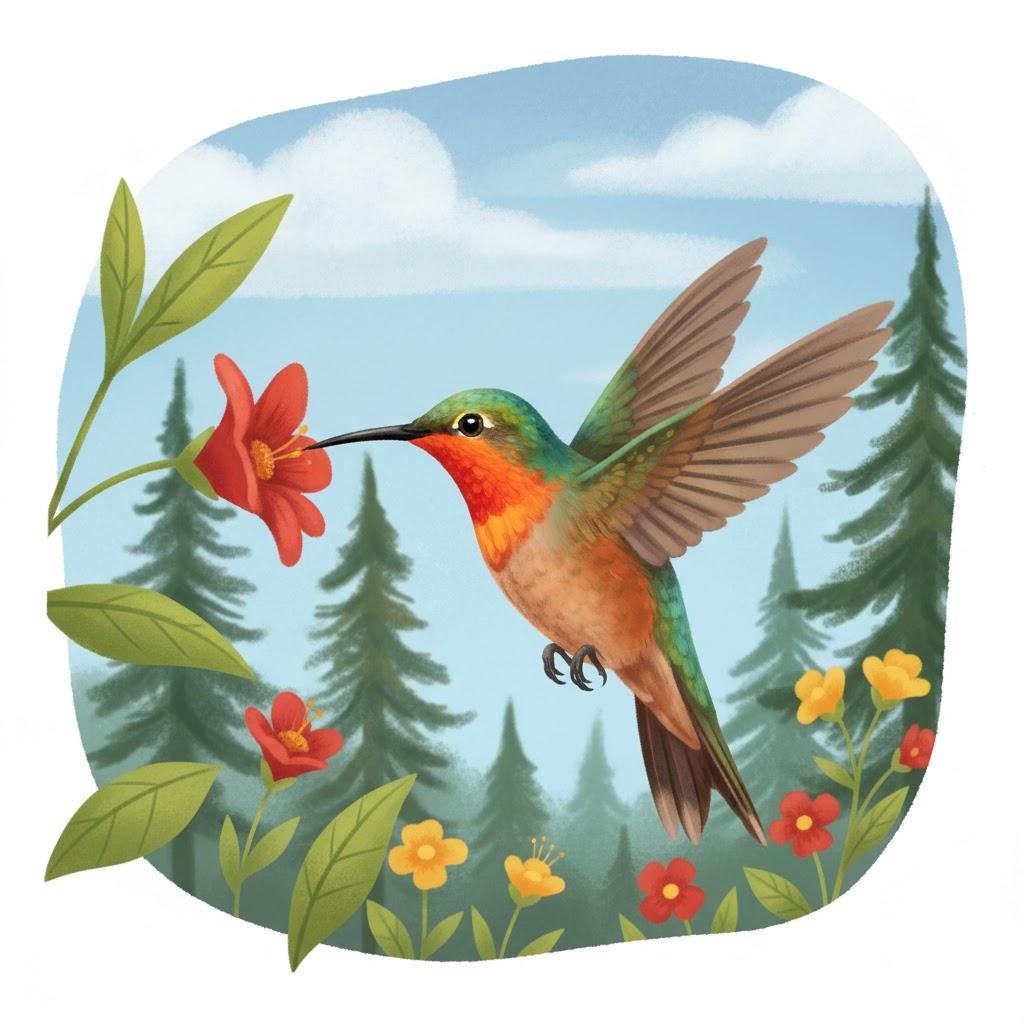
The hummingbird is approximately 9.5 centimeters in length and weighs less than a ping pong ball. Males are striking in appearance, with bright orange-red throats and metallic green backs. Females are more subdued, with green and bronze speckles on their throats. Their beaks are slender and elongated, allowing them to easily reach the sweet nectar inside flowers.

Hummingbird (Generated by Artificial Intelligence.)
Where Does It Live?
These birds are constantly on the move. During the summer months, they spend their time in the cool, green areas of North America, such as parks, gardens, and forests, for breeding. When winter arrives, they embark on a long journey toward warmer regions, traveling as far as the mountainous areas of Mexico and southern California.
What Does It Eat?
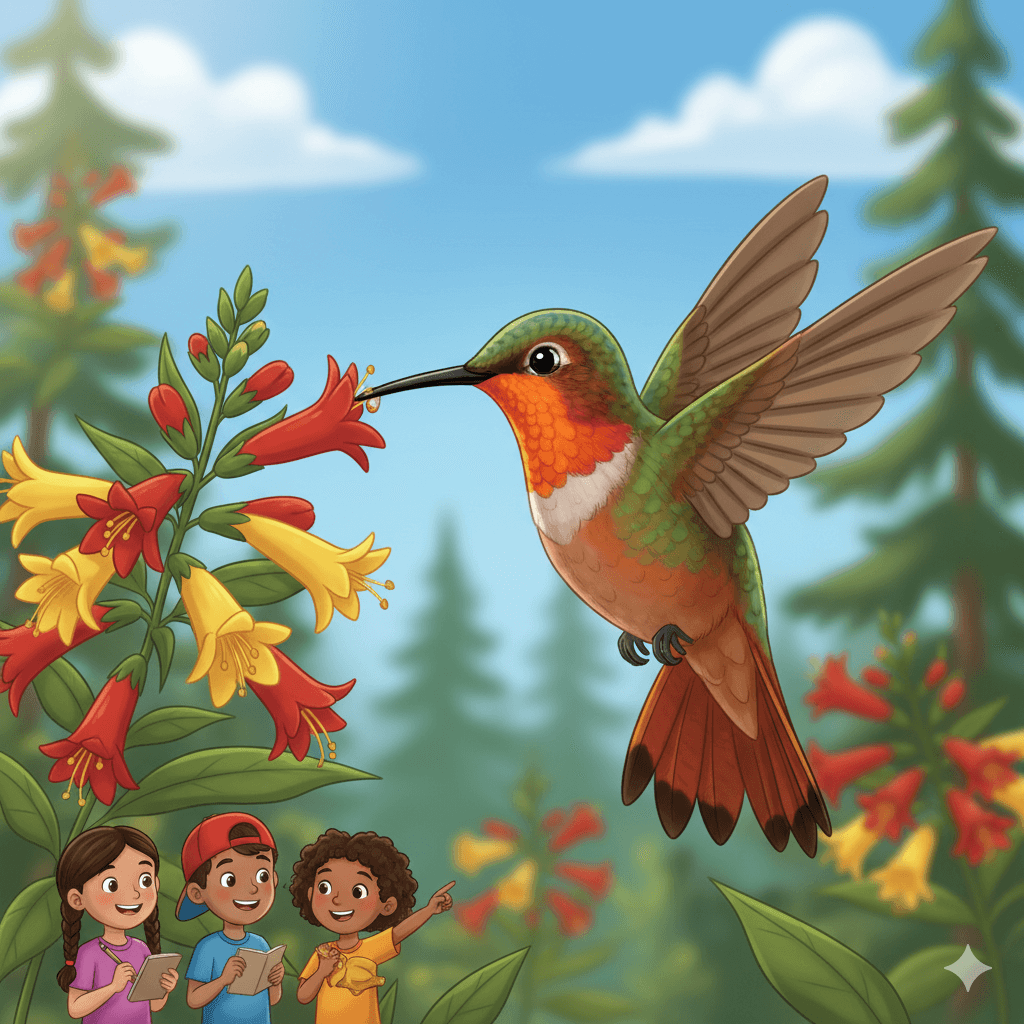
The hummingbird’s favorite food is nectar, the sweet liquid found inside flowers. Due to their rapid wing beats, they must consume up to half their body weight in food each day. In addition to nectar, they hunt small insects to gather energy. It is well known that they are especially attracted to red and yellow flowers.
How Does It Make Sound?
Hummingbirds do not sing beautiful songs. They are generally quiet but emit sharp, warning chirps such as “chip chip” when they sense danger or wish to defend their territory. Males attract females not by vocalizing but by performing acrobatic dives in midair, tracing the shape of a “J” with their flight path.

Hummingbird (Generated by Artificial Intelligence.)
How Does It Reproduce?
When spring arrives, the female hummingbird builds a tiny, well-hidden nest on low tree branches or among plants. She constructs it using spider silk, moss, and soft plant fibers. She typically lays two tiny eggs. After about 15 to 17 days, the chicks hatch and are fed by their mother. By the time they are 15 days old, the young birds have grown large enough to fly from the nest.
Why Must It Be Protected?
Hummingbirds help plants reproduce by carrying pollen from flower to flower as they move, making them nature’s small gardeners. In recent years, their numbers have begun to decline due to factors such as deforestation. Protecting these hardworking birds and their natural habitats is vital for maintaining the balance of plant and ecosystem life. For this reason, they are protected under the Migratory Bird Treaty Act in the United States.