




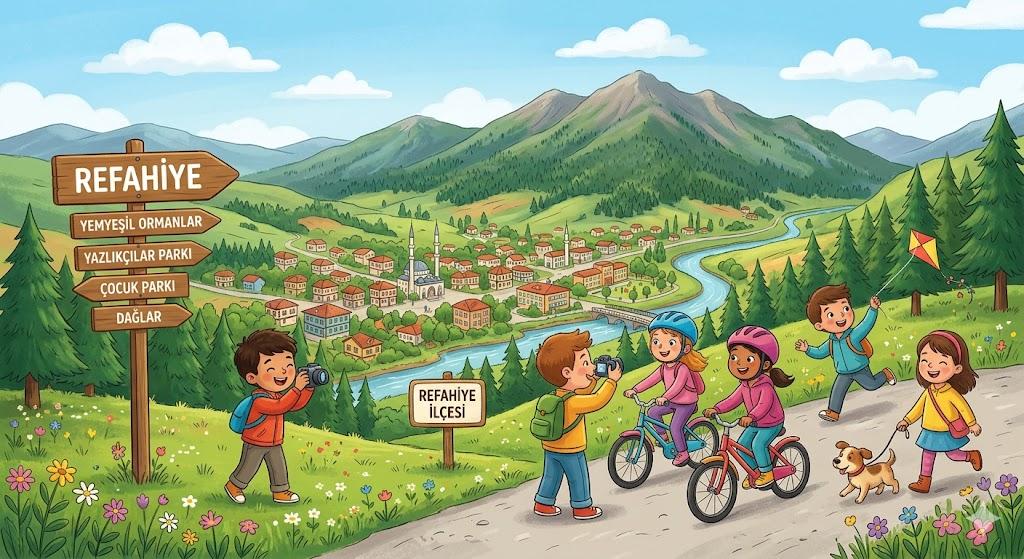
Refahiye (District)
Refahiye is a peaceful haven nestled in nature, known for its lush green forests, crystal-clear streams, and famous medicinal honey. Erzincan province’s beautiful district derives its name from the word “refah,” meaning abundance, prosperity, and happiness. If you love walking in fresh air and discovering the mysteries of nature, Refahiye is waiting for you!
The Meeting Point of Three Regions
Refahiye occupies a uniquely strategic position on the map of Türkiye. It lies precisely at the convergence point of the Black Sea, Eastern Anatolia, and Central Anatolia regions. The district is situated at a high elevation of 1,580 meters above sea level. Thanks to this altitude, winters are blanketed in pure white snow, while summers offer refreshing alpine air that rejuvenates visitors.
Dumanlı Meadows and Pine Forests
One of the district’s most famous attractions is the Dumanlı Meadows, located at approximately 2,000 meters above sea level and covered in towering pine trees. The air here is so pure that walking through the forest feels like stepping into a fairy tale. In summer, you can enjoy picnics among wildflowers, and in winter, you can ski at the facilities in the Sakaltutan area and savor the snow.
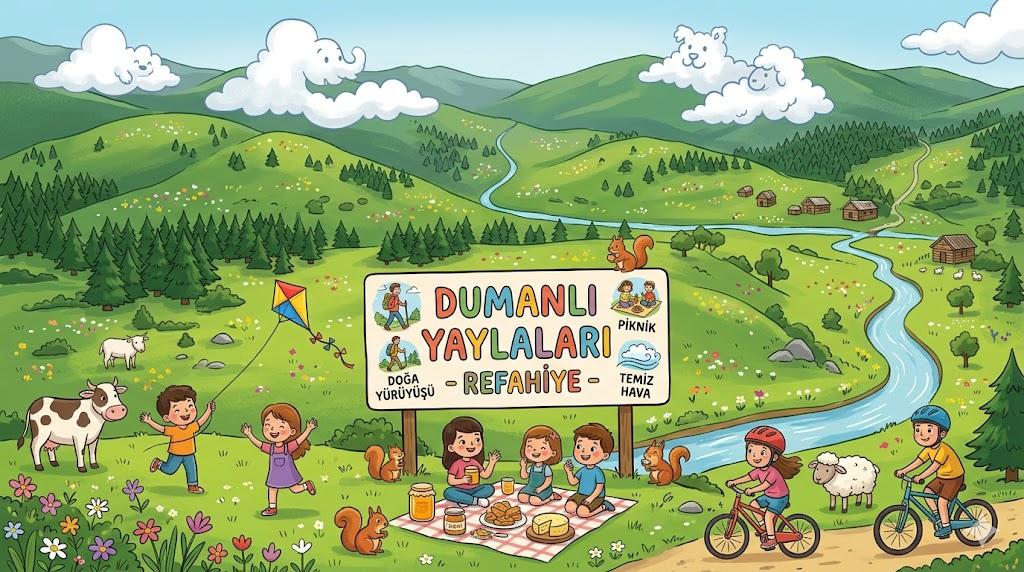
Image representing the Dumanlı Meadows (generated by artificial intelligence).
Legends and Mysterious Rocks
Refahiye holds many intriguing sites waiting to be explored. One of them is the Köroğlu Cave in the Altköy area. According to legend, the famous hero Köroğlu visited this cave with his loyal horse Kırat. Inside the cave, stone seating areas are said to exist, along with marks believed to be the hoofprints of Köroğlu’s horse.
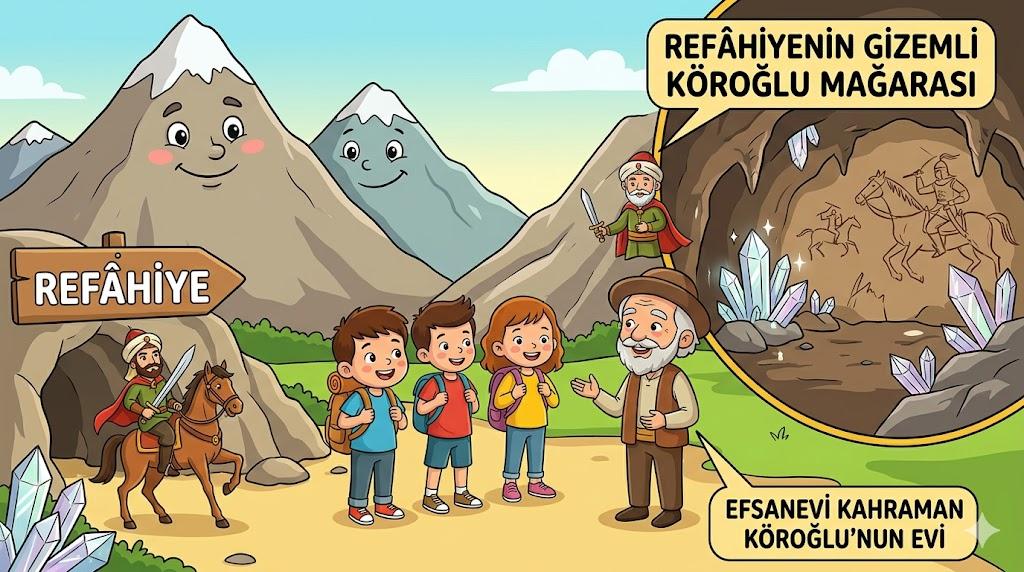
Image representing the Köroğlu Cave (generated by artificial intelligence).
A Sweet Tradition: The Honey Festival
When you think of Refahiye, the first thing that comes to mind is undoubtedly its honey! The bees here collect the finest nectar from thousands of wildflowers across the meadows. Due to the vast quantity of honey produced, a joyful Honey Festival is held every August. Each year, between 350 and 630 tons of honey—equivalent to thousands of jars—reach our tables.