




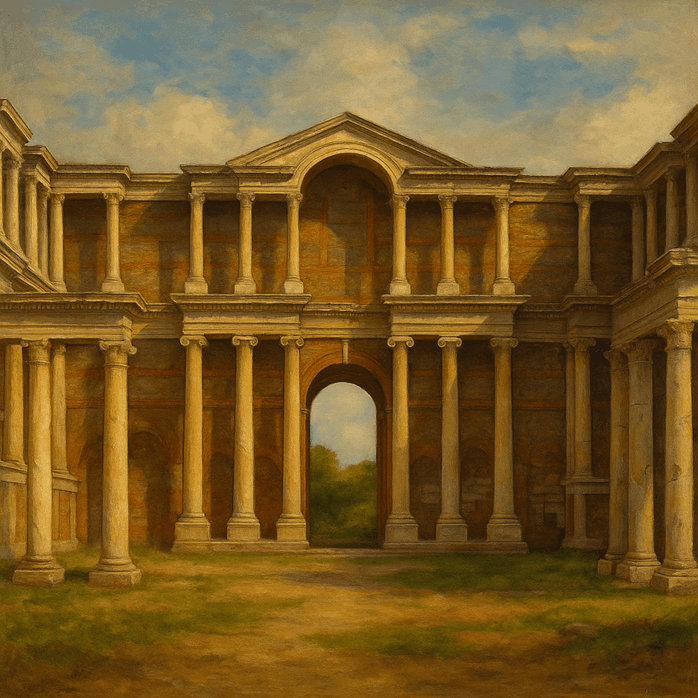
Sardis Ancient City
The ancient city of Sardis is located in the village of Sart, within the Salihli district of Manisa. Historically, it is known as the capital of the Lydian Kingdom. This region, which has hosted various civilizations for approximately 5,000 years, also served as an important center during the Roman and Byzantine periods. Sardis gained its fame as the place where coinage was first minted under state authority. This innovation enabled the city to become extremely wealthy through agriculture, animal husbandry, trade and gold mining in the Pactolus River (Sart Stream).

Generated by Artificial Intelligence
Where and When Was It Founded?
Sardis is located 82 kilometers from İzmir and 9 kilometers from the center of Salihli. Founded in the 9th century BCE, the city served as the capital of Lydia until the 6th century BCE. The Greek historian Polybius described it as “the strongest place in the world.” The city is renowned for its walls, which were up to 20 meters thick. Today, sections of these walls still stand up to 10 to 14 meters high, demonstrating the strength of ancient Sardis.
Why Is It Important?
- First Minting of Coinage: The Lydians minted the world’s first metal coins here. This innovation quickly spread to neighboring regions and transformed trade.
- Starting Point of the Royal Road: Sardis was the starting point of the famous Royal Road, which extended to Susa, the capital of the Persian Empire.
- Religious Significance: One of the seven churches mentioned in the Book of Revelation in the Bible was located here.
- Unique Structures: The largest synagogue of the ancient world, the magnificent Temple of Artemis in the Ionic order, and a vast bath-gymnasium complex are all located here.

Generated by Artificial Intelligence
The Thousand Hills of Lydia Tumuli
Approximately five kilometers north of Sardis lies a vast necropolis known as the “Thousand Hills.” This site contains the tombs of Lydian kings and nobles. Covering an area of 7,500 hectares, it is one of the largest tumulus burial regions in the world. More than 119 tumuli have been identified.
Sardis Today
Today, Sardis is preserved through ongoing excavation and restoration efforts. Visitors can see the ancient bath, gymnasium, synagogue, Temple of Artemis, houses, and tombs. Additionally, quartz and gold mining continue in the region.

Generated by Artificial Intelligence