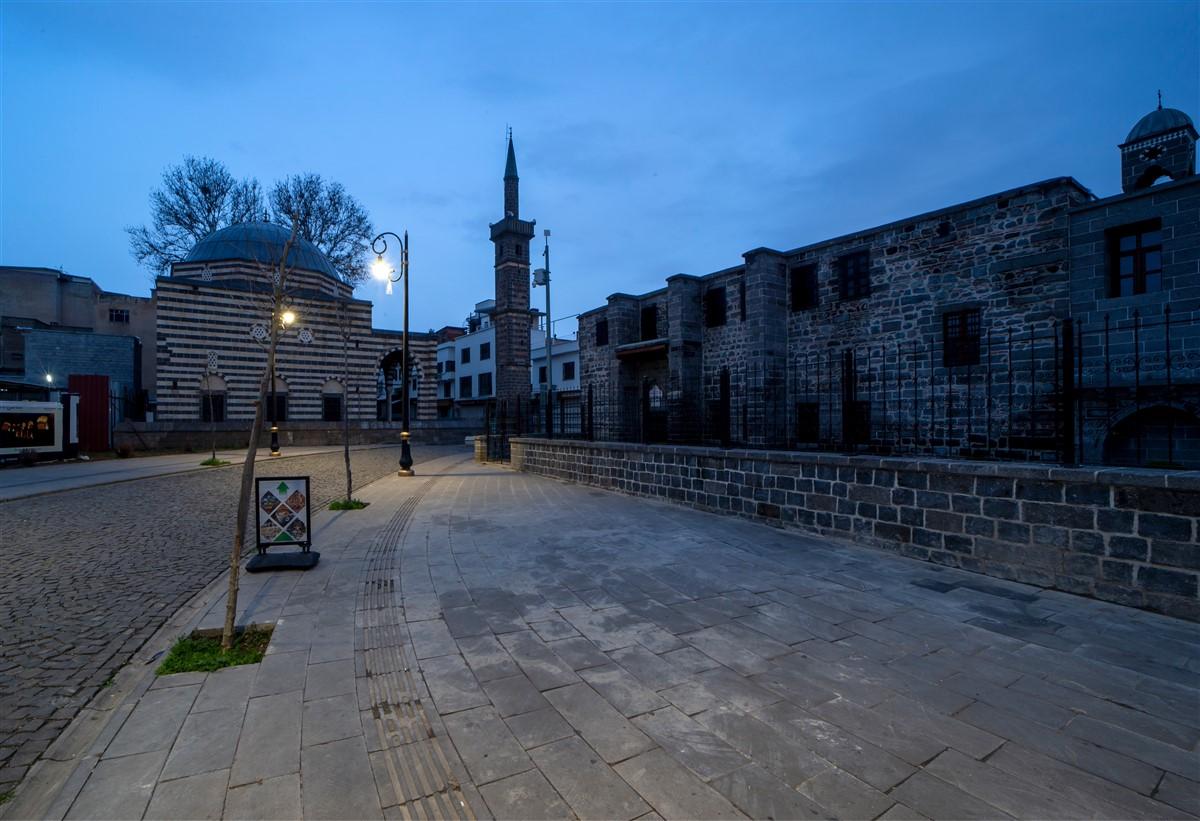




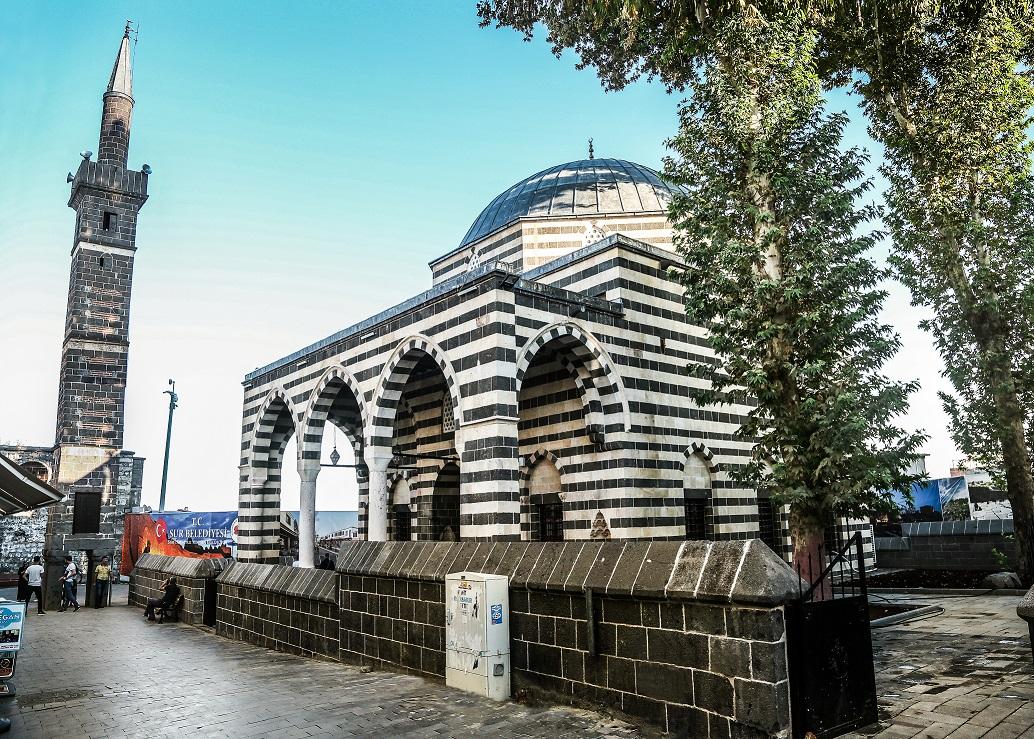
Sheikh Mutahhar Mosque
Have you ever imagined a minaret with four massive legs? This remarkable structure, which appears to rise as if supported by the legs of a giant, is the Şeyh Mutahhar Camii, one of the most famous landmarks in Diyarbakır. Locally, it is also known as the “Four-Legged Minaret.” Let us explore this mysterious mosque together!
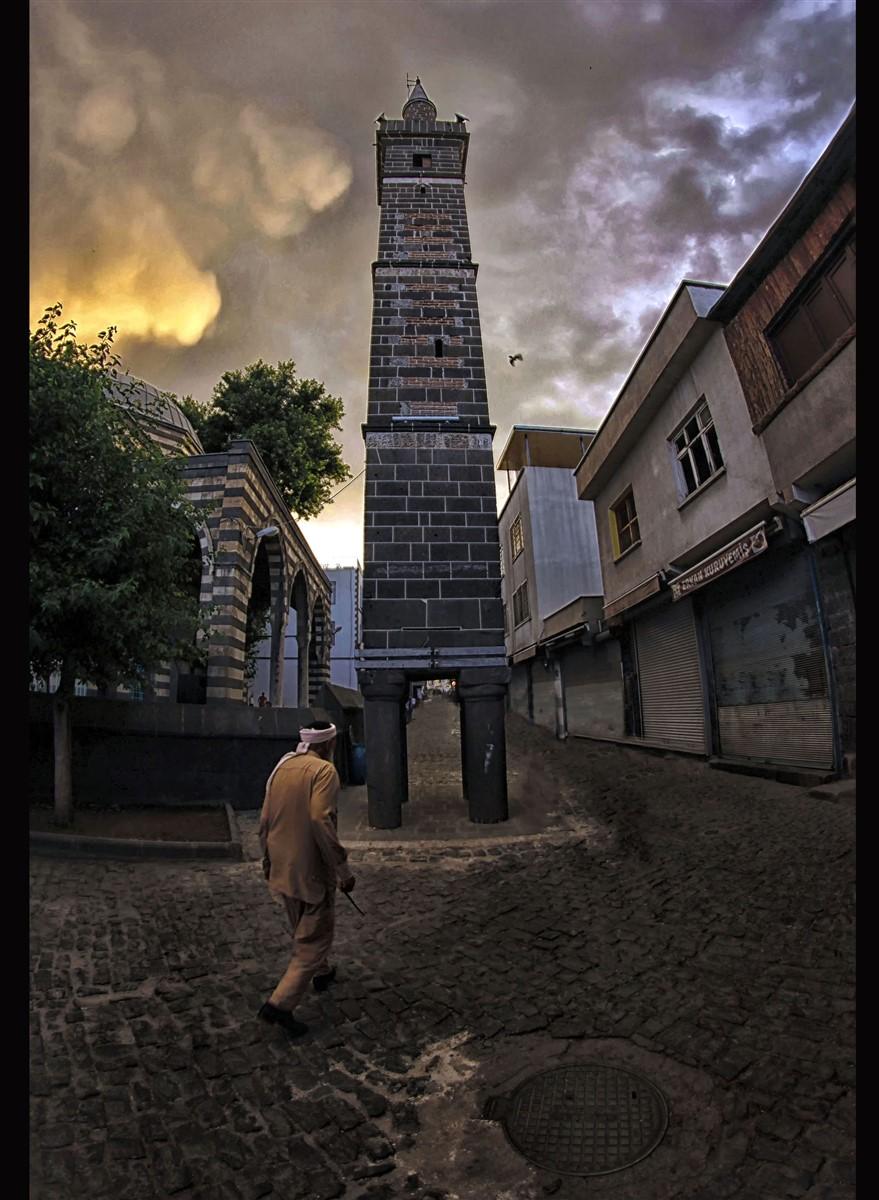
Şeyh Mutahhar Camii(Diyarbakır Governorate)
The Secret of the Four-Legged Minaret
The most distinctive feature that sets this mosque apart from others around the world is that its minaret stands completely separate from the main building. The minaret rises on four enormous, single-piece stone pillars. This makes it the only example of its kind ever constructed in Anatolia. Why does it have four legs? People believe these pillars carry a profound symbolic meaning. According to a widespread belief, the four legs represent the four major schools of thought within Islam.
The Dance of Black and White Stones
Upon closer inspection, you will notice that the walls of the mosque are built in alternating rows of black and white stones. These colorful stones lend the structure an elegant and refined appearance. Inside the mosque’s body, beautiful ornamental inscriptions and prayers written in Arabic script adorn the surfaces.
The Şeyh Mutahhar Camii is not merely a place of worship; it is also an extraordinary feat of ancient engineering. For hundreds of years, these four pillars have borne the weight of the towering minaret without faltering, becoming one of the city’s most important symbols.
Structures Living in Harmony
Diyarbakır has been a city of peace for centuries, where people of different faiths have lived side by side. Immediately beside the Şeyh Mutahhar Camii stand churches belonging to the Chaldean and Armenian communities.
These structures standing side by side whisper to us the importance of love and respect. Exactly 526 years ago, in the year 1500, Sultan Kasım of the Akkoyunlu commissioned this mosque.
Since that day, these four pillars have stood tall, continuing to tell the stories of the past.