



Shuayb Ancient City
Have you ever wondered about an ancient city lying buried beneath the earth? There are places that, like a time machine, transport us hundreds of years into the past. One such special site is the Ancient City of Şuayb, located in Şanlıurfa. Its stone walls and mysterious structures whisper the secrets of the past. It is said that the city derives its name from the prophet Şuayb, who is believed to have lived here.
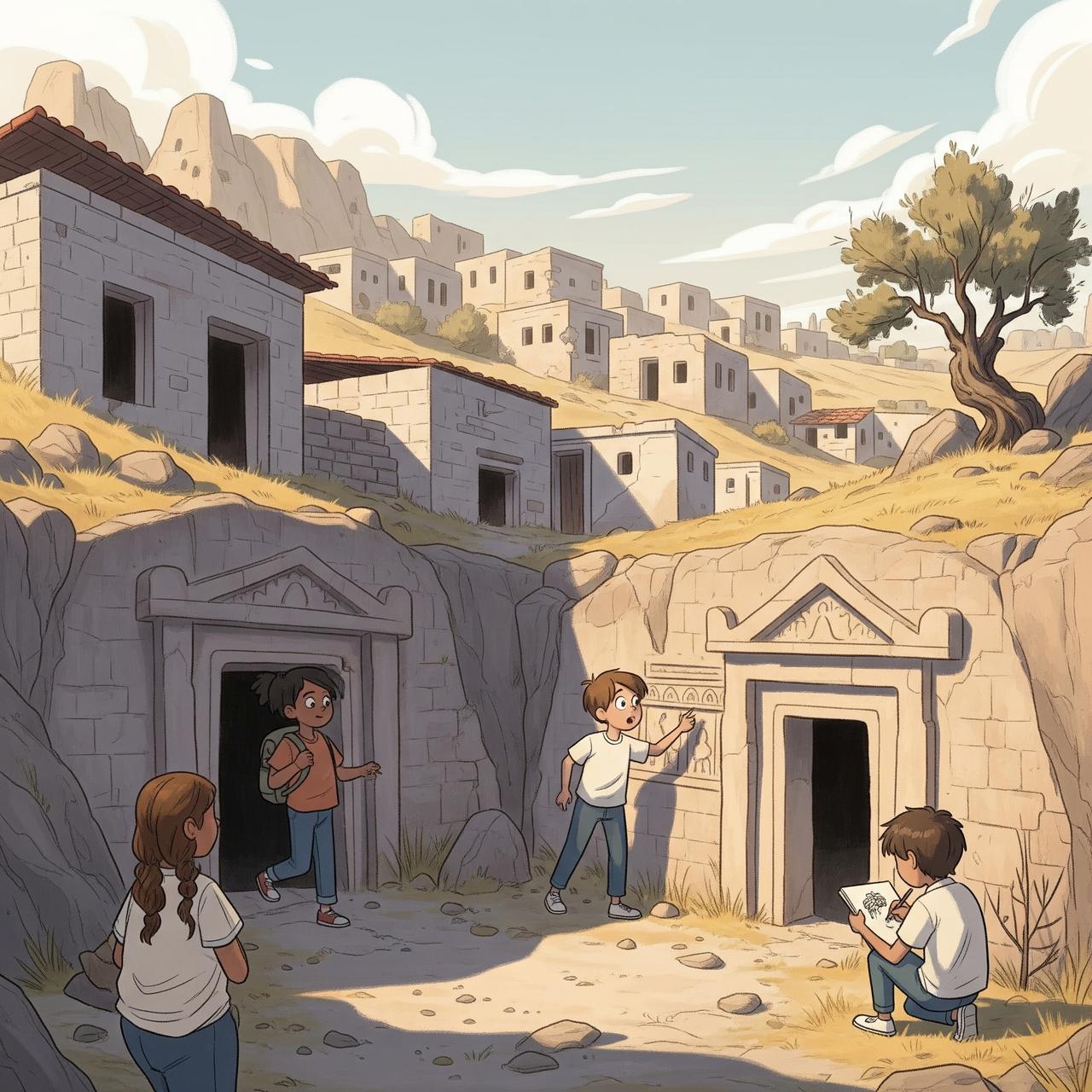
The Ancient City of Şuayb is a very old settlement dating back to the Roman Empire. Hundreds of years ago, people lived here, children ran through its streets, and families gathered in their homes. Today, only remnants of stone houses and rock-cut tombs remain from those days. These ruins provide important clues about life during that era.
Time Travel
Let us travel back in time! Approximately 1600 years ago, the Roman Empire ruled over a large part of the world. At that time, during the Late Roman period, the Ancient City of Şuayb was an important settlement. People then did not build homes from bricks and concrete as we do today, but from large cut stones. This city preserves the architectural features of that era.
A Walk Through the Streets of the Ancient City
Walking through the Ancient City of Şuayb feels like navigating a labyrinth. The city is laid out in a grid of straight streets intersecting at right angles, demonstrating that it was carefully planned. Houses typically consist of rooms arranged around a central courtyard. One of its most intriguing features is that the foundations of many homes were built directly on top of older rock-cut tombs.
The cut stones used in the construction of these houses attest to the skill of the builders of that time. Some of the walls and foundations of these homes still stand today. Visitors to the city wander among these ruins, trying to imagine life here hundreds of years ago.
Prophet Şuayb and the City’s Name
According to local tradition, the city derives its name from Prophet Şuayb. It is believed that Prophet Şuayb, mentioned in the Quran, lived here for a time and called people to goodness and truth. A cave within the city is still visited today as the “Tomb of Prophet Şuayb.”
However, scholarly research indicates that the region associated with the Midianites, to whom Prophet Şuayb was sent according to the Quran, lies in the area of present-day Jordan and the Hejaz. Therefore, the belief that the city’s name comes from the prophet is a popular tradition. Another theory suggests that the name may derive from a phrase meaning “ancient city.” This illustrates a beautiful example of how history and belief are intertwined.