

Silk Road
Once, the world’s most famous route existed: The Silk Road! It derived its name from the silk fabrics that spread from China to the rest of the world. But this route was not used solely for transporting silk. Spices, precious stones, gold, books, and even ideas were also carried along this path.
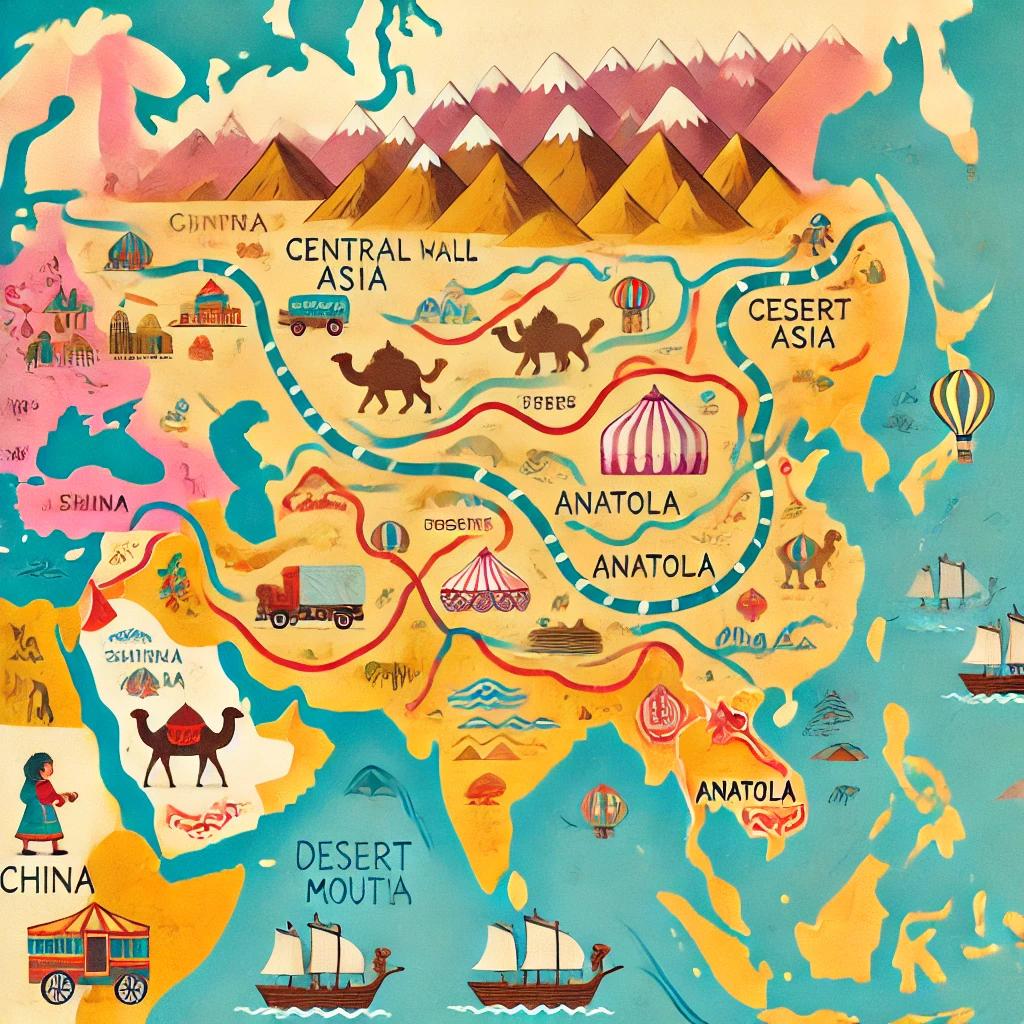
The Silk Road stretched from China through the steppes of Central Asia to Anatolia and from there to Europe. Thousands of kilometers long, parts of this route were overland while others connected with seas. Caravans traveled using camels and horses. Caravanserais and inns served as resting points where merchants exchanged goods.
The most important feature of this route was connecting people. The Turkic world held a crucial position along the Silk Road. Because the Turks, across the region stretching from Central Asia to Anatolia, ensured route security and promoted trade. Nomadic Turkic tribes guided merchants and sold goods at marketplaces.

Silk Road (Generated by Artificial Intelligence.)
The Silk Road was not only a trade route but also a meeting point of cultures. China’s paper, Iran’s carpets, India’s spices, and Turkic horses reached other countries via this route. Even some scientific discoveries, folktales, and games spread thanks to the Silk Road.
Today, some sections of the Silk Road are no longer in use. Yet this historic route lives on in memory as a symbol of the spirit of friendship, sharing, and exploration. In modern times, “Modern Silk Road” initiatives aim to reestablish trade and cultural ties between nations.