




Sülüklü Han
Diyarbakır’s narrow, history-laden streets may lead you to a large, ancient building with massive doors made of black stone. This is the Sülüklü Han! Does the name sound a little unusual? Let us uncover the mystery behind this name and the exciting story of the han together.

Sülüklü Han (Diyarbakır Governorship)
Where Does the Name of This Han Come From?
Long ago, there was a deep well in the courtyard of this han. Physicians of that time would extract small creatures called leeches from this well. These leeches were used to heal and cure people. It was because of this practice that locals began calling the place “Sülüklü Han.”
Although the well no longer exists today, anyone who hears the name of the han remembers this intriguing story. Another name for the han, derived from the nearby tradespeople, is Kazancılar Hanı.
The Story of Black Stones and Siblings
This massive structure was built over 300 years ago, in 1683. It was commissioned by Hanilioğlu Mahmut Çelebi and his sister Atike Hatun. The construction used Diyarbakır’s distinctive volcanic rock: pitch-black basalt stones.
Thanks to these stones, the han remained exceptionally sturdy and acquired a striking, deep color. When first built, it had three floors, each containing exactly 18 resting rooms.
A Walk Inside the Han
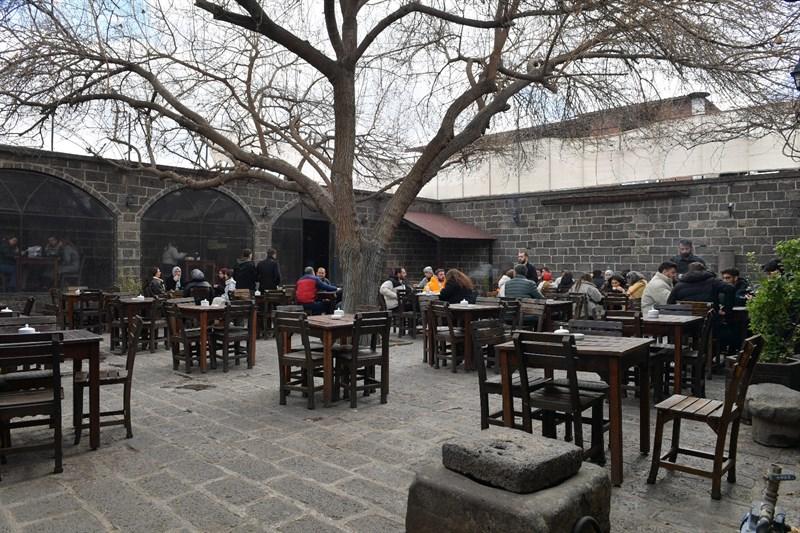
Upon entering the han, you are greeted by a spacious, square courtyard. In the past, the upper-floor rooms provided rest for merchants and travelers arriving from distant lands. The lower-level sections served as stables for the travelers’ horses and camels.
Today, the han has been restored and functions as a café. While sitting inside, you can taste Diyarbakır’s famous fruit sherbets and listen to the sounds of local blacksmiths at work.
Time Travel: The Headquarters of Cavalry Soldiers
Sülüklü Han did not only host travelers; it also witnessed significant historical events. During the Turkish War of Independence, this han served as the headquarters, or main base, for cavalry units. Can you imagine the sounds of horses and the preparations of soldiers here?