




The Egyptian Adventure of Yavuz Sultan Selim
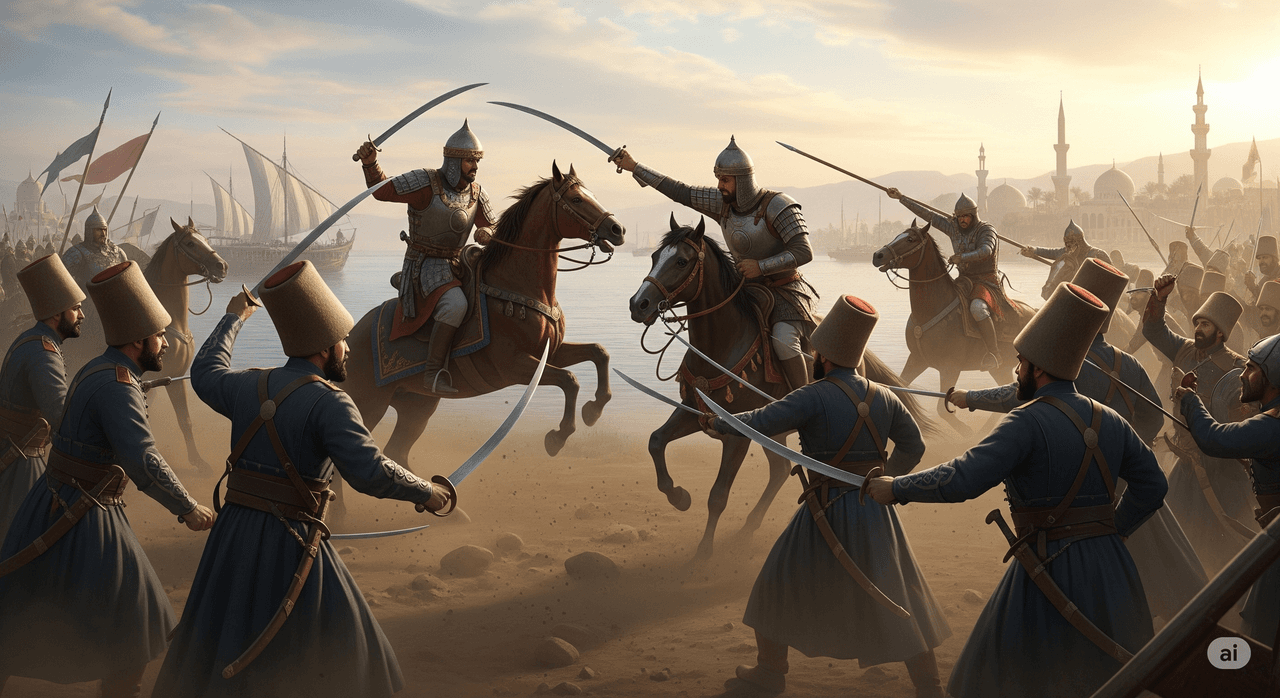
Yavuz Sultan Selim was a determined and exceptionally intelligent sultan, much like his grandfather Fatih Sultan Mehmet, with grand ambitions. Upon ascending the throne, there were two major Turkish states in the east: the Ottomans and the Mamluks centered in Egypt. The Mamluk State controlled Mecca and Medina, the holiest cities of Islam, and held sway over the lucrative spice routes. Yavuz Sultan Selim turned his gaze southward toward the Mamluks, aiming to end this dualism in the Islamic world, unite all Muslims under a single banner, and safeguard the sacred trusts. This was not merely a conquest but the beginning of a great endeavor that would alter the course of history.
(Image generated by artificial intelligence.)
The Power of Cannon: The First Victory at Marj Dabiq
The first major clash of the campaign did not take place in Egypt but on the Marj Dabiq Plain, located in today’s Syrian territory. When the two armies faced each other, a stark difference emerged. The Mamluk army consisted of brave, armored cavalrymen armed with lances, employing traditional warfare tactics. The Ottoman army, however, possessed disciplined Janissaries and, more importantly, powerful artillery units such as the Şahi Cannon and matchlock firearms. As the battle began, the Ottomans’ technological superiority became evident. The Mamluk cavalry, helpless against the fire of cannons and muskets, were decisively routed. The battle ended in a clear Ottoman victory, during which Mamluk Sultan Qansuh al-Ghawri was killed.
The Impassable Barrier: Crossing the Sinai Desert
With the victory at Marj Dabiq, the gates to Syria and Palestine opened to the Ottomans, but an almost insurmountable obstacle lay between them and their ultimate goal: Egypt—the Sinai Desert. Until then, no commander had dared to cross this arid, scorching desert with a massive army. His viziers and pashas tried to dissuade the sultan, warning that the troops would perish from thirst in the desert. Yet Yavuz Sultan Selim remained resolute. According to accounts, at the desert’s edge he dismounted from his horse and began to walk. When his pashas asked why, he replied, “Before me, the Prophet and the other prophets and saints are walking; how could I remain on horseback where they have trod?” These words and the sultan’s humble yet resolute stance infused the entire army with extraordinary strength and morale.
A Brilliant Tactic: The Final Act at Ridaniya
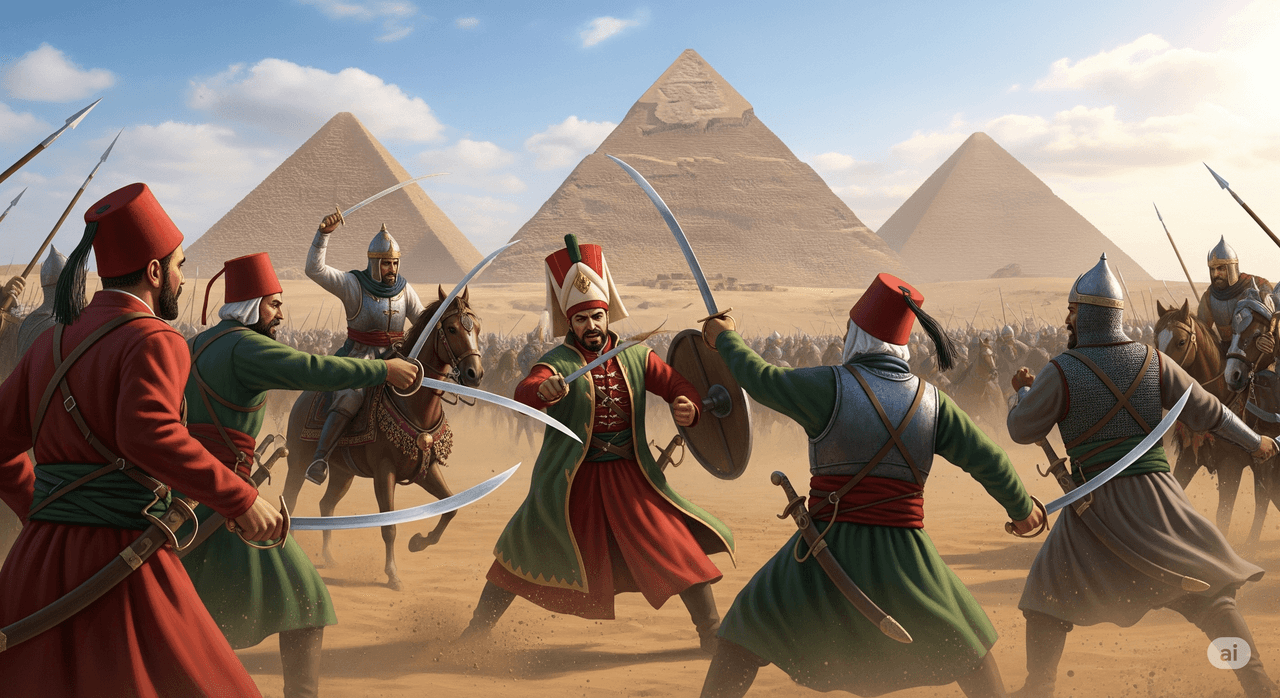
After weeks of grueling travel, the army crossed the desert, weary but determined, and arrived before Cairo. The new Mamluk Sultan, Tumanbay, had prepared his forces at a place called Ridaniya, digging trenches to protect his cannons and positioning them firmly in place to counter Ottoman artillery. Seeing this preparation, Yavuz Sultan Selim demonstrated a brilliant example of military genius. Instead of launching a frontal assault, he ordered his army to circle around Mount El-Mukattam during the night and flank the Mamluk forces from behind. At dawn, the Mamluks found the Ottoman army approaching from an unexpected direction—directly behind their cannons. Unable to reorient their fixed artillery, they were overwhelmed. Thanks to this masterful maneuver, the Battle of Ridaniya ended in a decisive Ottoman victory.
(Image generated by artificial intelligence.)
The Greatest Fruit of Victory: The Caliphate and the Sacred Trusts
Following this victory, Yavuz Sultan Selim entered Cairo in a grand ceremony, bringing an end to the Mamluk Sultanate, which had lasted nearly 270 years. Yet the most significant outcome of this conquest was far greater than military success. In Cairo, the last Abbasid Caliph, Al-Mutawakkil III, formally transferred the title of caliphate and all its sacred rights to Yavuz Sultan Selim in a ceremonial act. From then on, the Ottoman sultan became the Caliph—the leader of all Muslims worldwide. The Sacred Trusts—the cloak, sword, and banner of the Prophet Muhammad—were brought to Istanbul and placed under special protection in a dedicated chamber within Topkapı Sarayı.
A Changing Destiny of an Empire: The Legacy of the Campaign
The Egyptian campaign fundamentally transformed the character and destiny of the Ottoman State. The empire’s territories nearly doubled in size, and control over Egypt’s wealth and the spice routes passed into Ottoman hands. Most importantly, the Ottoman State was no longer merely a European power; it had become the undisputed leader and protector of the Islamic world. After this conquest, Yavuz Sultan Selim began using the title “Hâdim’ul Harameyn’iş-Şerifeyn”—Servant of the Two Holy Sanctuaries—instead of “Sultan.” This was the greatest honor he could bear, and this endeavor redirected the empire’s course toward the east, transforming it into a universal power.