




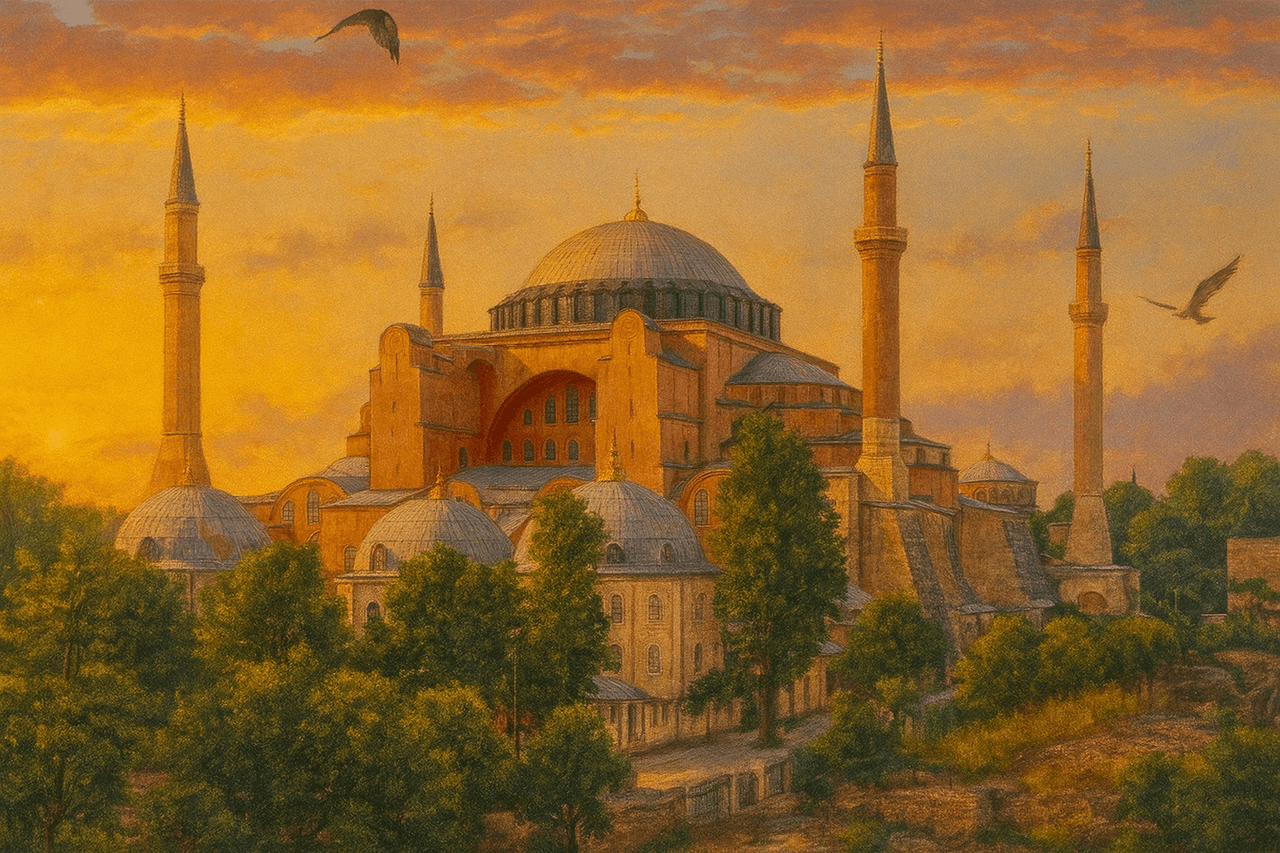
The Opening of Hagia Sophia for Worship
Why Is Hagia Sophia Important?
Hagia Sophia is an ancient and unique structure located in Istanbul. For centuries it served as a church, mosque, and later as a museum. In 2020 it was reopened for worship as a mosque once again. Hagia Sophia is not merely a building; it is a cultural treasure that bears the imprint of many civilizations throughout history.
A Brief History of Hagia Sophia
• 537 AD: Constructed as a grand church by the Byzantine Emperor Justinian I.
• 1453: Converted into a mosque by Fatih Sultan Mehmet following the Istanbul's conquest.
• 1934: Became a museum by decision of the Council of Ministers.
• 2020: The museum status was revoked by a ruling of the Council of State and it was reopened for worship as a mosque.
Why Was Hagia Sophia Reopened as a Mosque?
The revocation of Hagia Sophia’s museum status was based on a ruling by the Council of State, which determined that the 1934 decision to convert it into a museum was unlawful. Following this ruling, the Presidency of Türkiye transferred Hagia Sophia to the Directorate of Religious Affairs. On 24 July 2020, the first prayer was held and it was reopened for worship.

(Generated by artificial intelligence)
What Changed at Hagia Sophia?
• As a mosque, Hagia Sophia is now freely accessible to visitors.
• Both domestic and international tourists may visit the site.
• It is used for worship during prayer times.
• Mosaics are covered during prayer hours and visible at other times.
Cultural Significance of Hagia Sophia
Hagia Sophia was of great importance to both the Eastern Roman (Byzantine) and Ottoman Empires. Its architectural decorations, mosaics, and dome place it among the most unique structures in the world. It has been declared a UNESCO World Cultural Heritage Site.
🌍 Why Is Hagia Sophia Known Worldwide?
• It is famous for its architectural marvel of a dome.
• Its mosaics are of exceptional artistic value.
• It is a sacred site for both the Christian and Islamic worlds.

(Generated by artificial intelligence)
What If Hagia Sophia Had Never Existed?
• A major example would be lost from the history of world architecture.
• Istanbul’s historical identity would have suffered a significant absence.
References
Presidency of Türkiye. “On the Reopening of Hagia Sophia for Worship.” https://www.tccb.gov.tr/haberler/410/120174/ayasofya-cami-olarak-ibadete-acildi/
Presidency of the Council of State. “Decision of the 10th Chamber of the Council of State.” Official Gazette, 10 July 2020.
D Directorate of Religious Affairs. “Hagia Sophia Mosque Inauguration Program.” https://www.diyanet.gov.tr
TRT News. “Hagia Sophia Becomes a Mosque Again After 86 Years.” https://www.trthaber.com/haber/gundem/ayasofya-86-yil-sonra-yeniden-cami-oldu-501210.html