



Tomb of Prince Mustafa
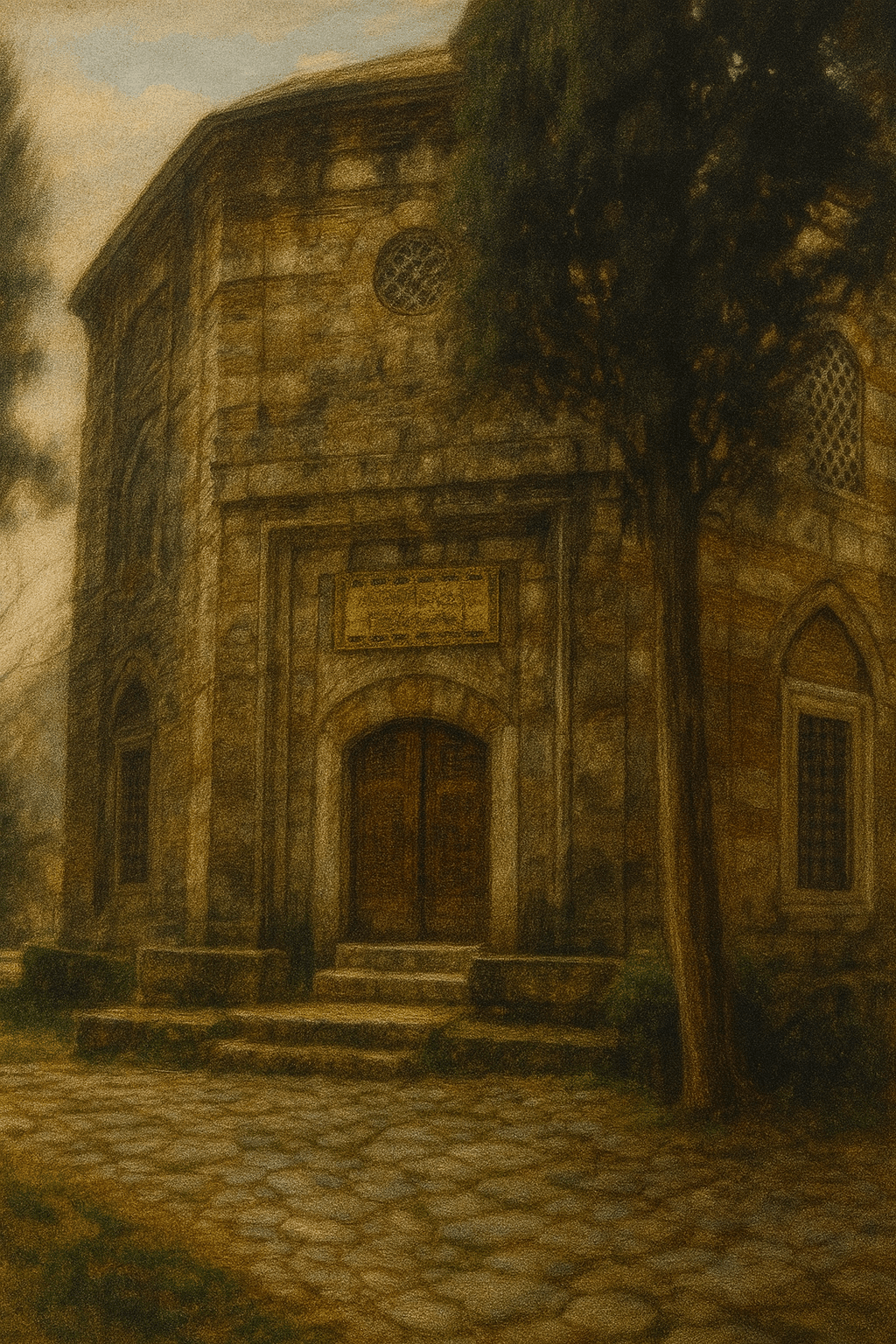
Şehzade Mustafa, son of Sultan Süleyman the Lawgiver, is remembered in Ottoman history for both his bravery and his tragic death. The tomb within the Muradiye Külliyesi in Bursa, built in his memory, is an important structure that has survived from the 16th century to the present day. This tomb is not merely a burial site but also a historical treasure bearing the marks of Ottoman art.

(Generated by Artificial Intelligence.)
The History of the Tomb
After Şehzade Mustafa died in Konya Ereğli in 1553, he was initially buried temporarily. Later, his brother Sultan Selim II decided to commission a special tomb in his memory. The architect chosen for this tomb, upon the recommendation of the Chief Imperial Architect Mimar Sinan, was Mehmet Çavuş. Construction was completed in 1573.
One notable detail in the construction of the tomb is that some columns and marble slabs were repurposed from structures dating back to the Byzantine era. This adds both historical and cultural richness to the structure.
Architectural Features
The tomb is built with an octagonal body and covered by a lead-clad dome. The entrance door is made of marble. Inside the interior space, stunning examples of Ottoman art can be found:
The walls are decorated up to a height of three meters with Iznik tiles.
Carnations and lilies motifs, crafted on a white background, lend the tomb an elegant appearance.
Kalem işi decorations, which had been covered over time with plaster and later adorned with Baroque elements, were rediscovered during the 2013 restoration.
Contents of the Tomb
Inside the tomb are four sarcophagi:
Şehzade Mustafa.
His mother, Mâhidevran Hatun.
Osman, son of Şehzade Bayezid.
An individual whose identity remains unknown.
These sarcophagi carry a poignant chapter of the Ottoman dynasty into the present day.
The History of the Tiles
Among the tomb’s most distinctive decorations, the tiles have suffered damage over time. Some of the tiles, created on a white background, have been stolen. Of these tiles, measuring 21 by 25 centimeters, 18 are missing. This absence remains noticeable even today.

(Generated by Artificial Intelligence.)