




Unmanned Aerial Vehicles (UAVs)
Have you ever seen a small device buzzing in the sky?
These devices that hover in the air and then quickly move away are called unmanned aerial vehicles, abbreviated as UAV.
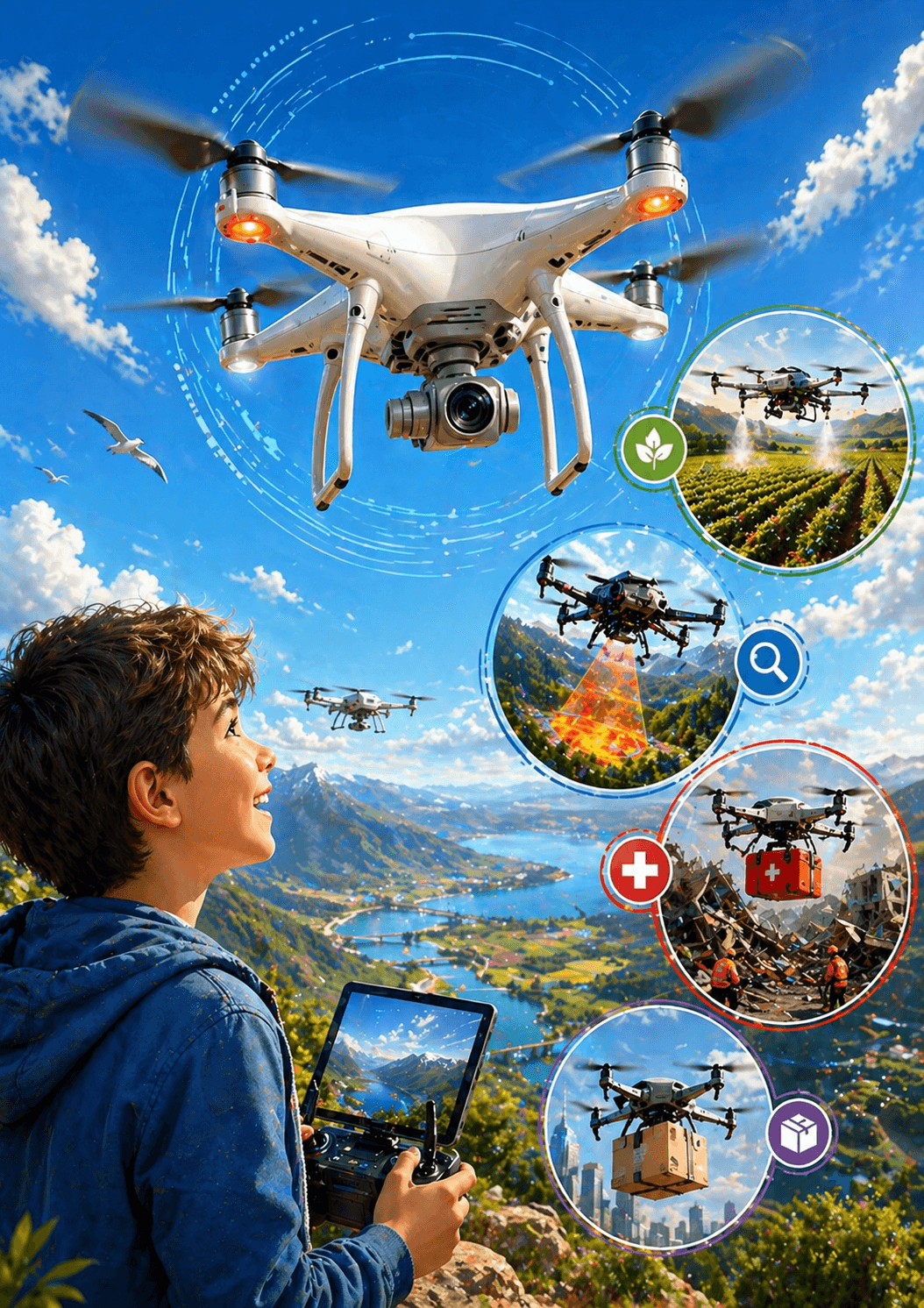
UAVs do not carry a pilot onboard. Instead, they are controlled remotely or operate using systems that enable autonomous flight. Today, UAVs are used in agriculture, film production, search and rescue operations, and package delivery.
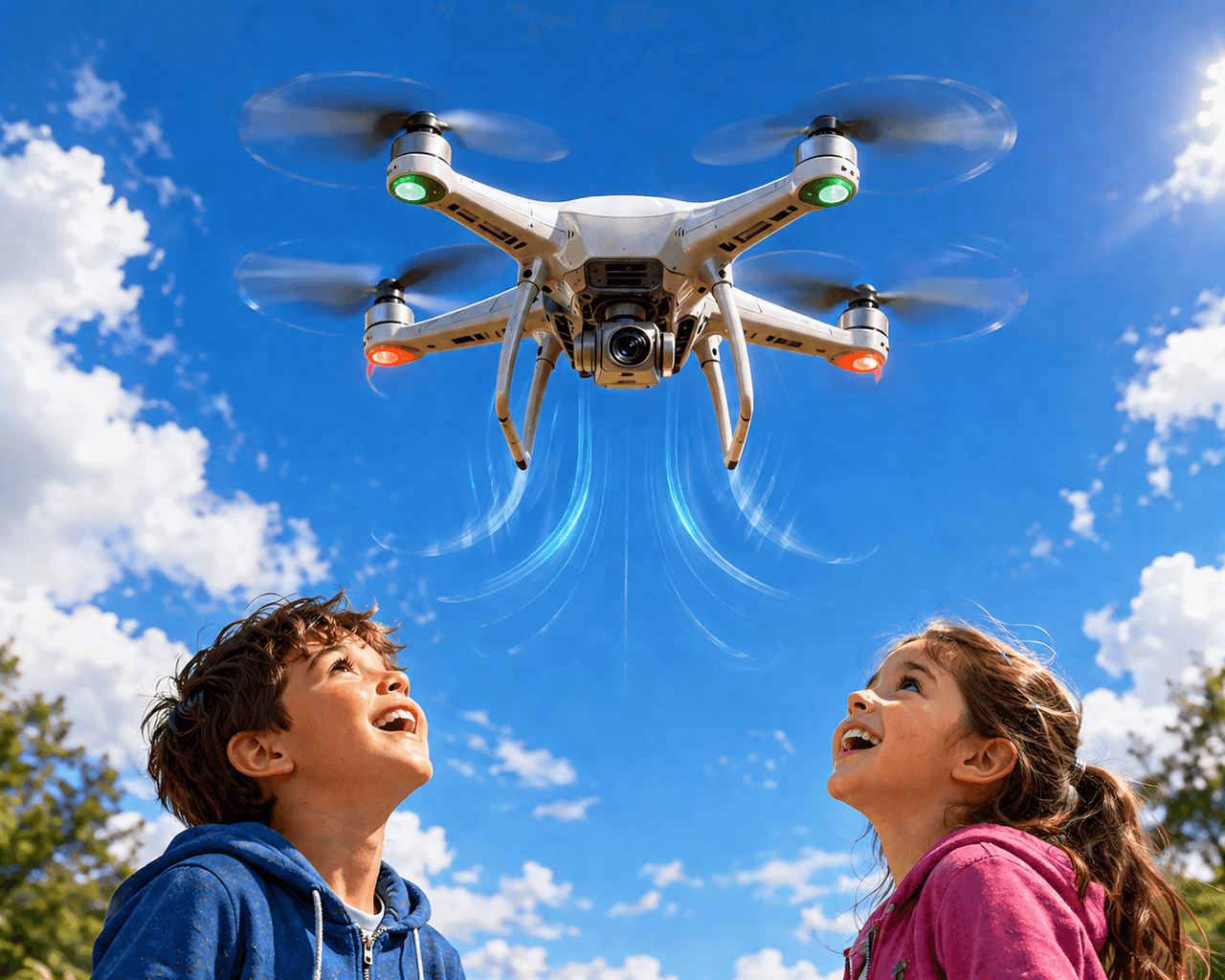
UAV (Generated by Artificial Intelligence)
🛩️ What is a UAV?
An unmanned aerial vehicle is an aircraft that can fly without a human onboard.
Their sizes vary greatly: some fit in the palm of your hand, while others are as large as a small airplane.
The most common models we see in daily life are drones with multiple propellers. These propellers rotate at different speeds to keep the vehicle stable in the air.
⚙️ How Does a UAV Fly?
UAVs stay airborne by rapidly spinning their propellers.
The propellers push air downward, causing the vehicle to rise upward.
Internal stabilization systems continuously monitor the vehicle’s position.
Even in windy conditions, they make small adjustments to maintain balance.
You can compare this to riding a bicycle:
Just as you make constant small movements to stay balanced, a UAV continuously adjusts itself to remain airborne.
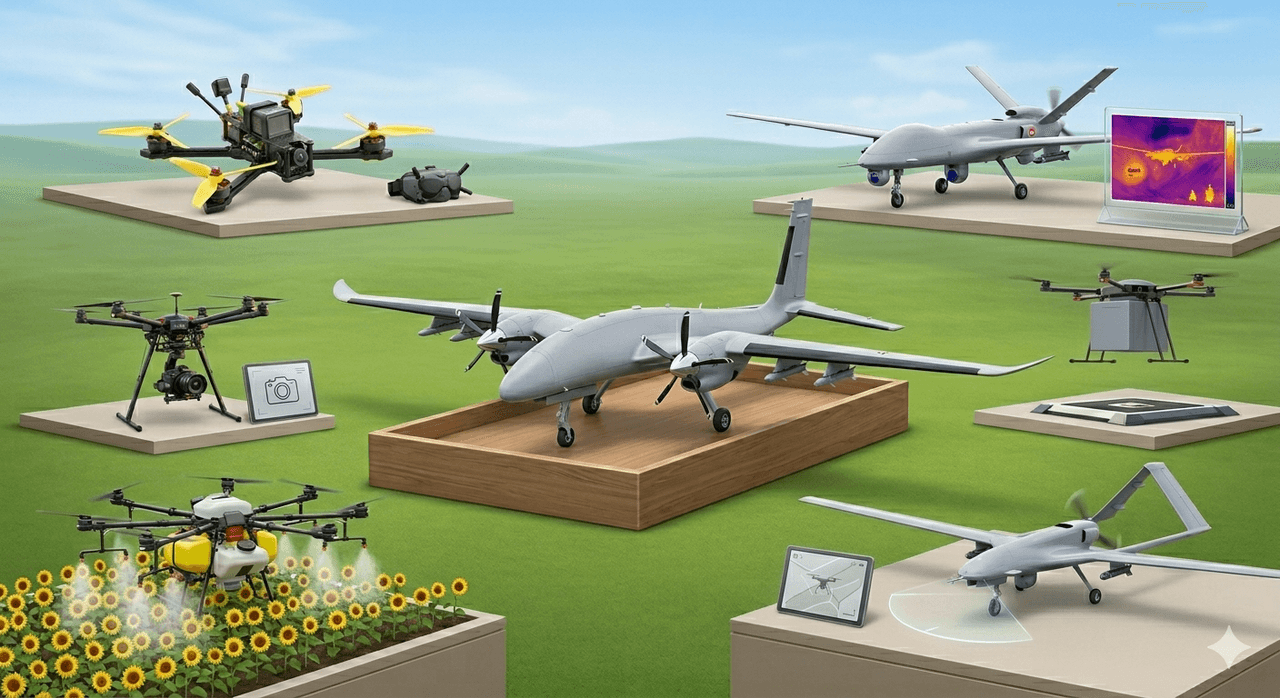
Types of UAVs (Generated by Artificial Intelligence)
📋 Types of UAVs
UAVs are classified into different types based on their intended use:
- 🎮 FPV UAVs: These are vehicles flown by a pilot using real-time video feed from the vehicle’s camera. They are commonly used in races.
- 📷 Photography and Video UAVs: These carry cameras and are used in film production and documentaries.
- 🌾 Agricultural UAVs: Used to spray crops and monitor farmland.
- 🆘 Search and Rescue UAVs: Deployed to locate people in hard-to-reach areas.
- 📦 Cargo UAVs: Designed to deliver small packages quickly.
- 🛡️ Security UAVs: Some UAVs are used to enhance security and surveillance.
⏳ Time Travel: The History of UAVs
Long ago, unmanned aerial vehicles were not as advanced as they are today. Early models could perform only simple tasks and were limited in their applications.
As technology advanced, so did UAVs. They became faster, more stable, and more capable.
Today, some UAVs can fly autonomously, perceive their surroundings, and carry out specific tasks automatically.
🌍 The Importance of UAVs
UAVs can reach places that are difficult or dangerous for humans to access.
They can perform missions in hazardous environments, replacing human presence and providing assistance in many fields.
Therefore, today UAVs are not merely technological devices—they have become essential tools.