




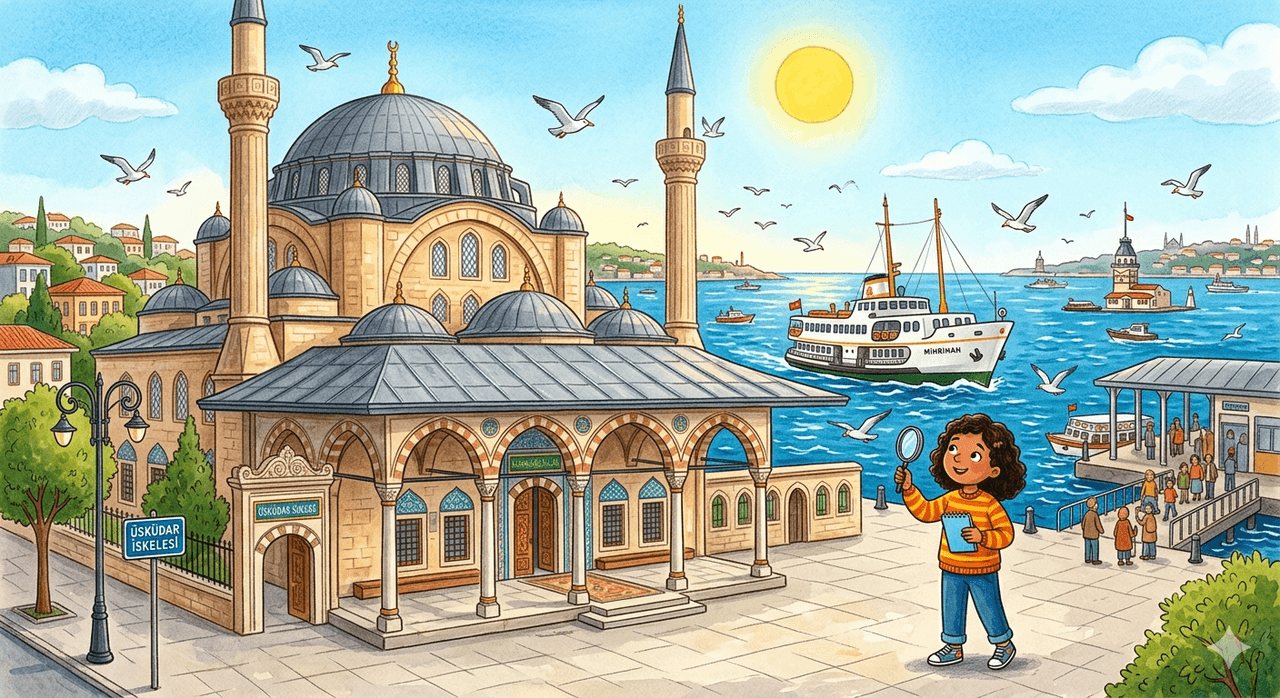
Üsküdar Mihrimah Sultan Camii
Have you ever seen this beautiful mosque facing directly across from Üsküdar Pier, overlooking the sea? Known among the people as the "İskele Camii," this structure shines like a sun along the shores of the Bosphorus. Built by Mihrimah Sultan, daughter of Sultan Süleyman the Magnificent, this mosque has been standing here for over 470 years, waiting for us.
Who Built This Mosque?
The mosque is one of the first major works of our world-renowned architect Mimar Sinan in İstanbul. Mihrimah Sultan, whose name means "Sun and Moon," was a remarkably charitable princess. Sinan designed this mosque with the grace befitting a princess—both exceptionally sturdy and aesthetically exquisite.
Time Travel: Construction of the mosque was completed around 480 years ago, in 1548. Since then, it has become the most important symbol and meeting point of Üsküdar Square.
Why Does It Look Different?
The mosque’s design differs greatly from other mosques in İstanbul and has unique features. Sinan designed it with a central dome supported by three half-domes. When you enter, you can see the massive pillars supporting the structure, which resemble four-leaf clovers. Additionally, in front of the mosque is a wide, lead-covered porch known as a "çift son cemaat yeri," built to shelter worshippers from rain—a feature first introduced here among İstanbul mosques.
The Stones Speak!
The mosque’s exterior walls are constructed using İstanbul’s famous "küfeki taşı." This stone has a fascinating property: when first quarried, it is as soft as cheese and easy to carve, but as it is exposed to air, it hardens and becomes extremely durable. Inside, the decorations feature pure white Marmara marble. The doors, the mihrap (the niche where the imam leads prayer), and the minber (the pulpit from which sermons are delivered) are adorned with exquisite carvings.
The Secret of Sound: Acoustics
How does the imam’s voice reach every corner of the mosque so clearly? Mimar Sinan placed small, open-mouthed ceramic cubes (acoustic resonators) high on the walls to prevent sound from echoing or distorting. Additionally, special porous plaster used on the walls absorbs sound like a sponge, ensuring that every worshipper hears the prayers clearly and peacefully.
A Large Neighborhood in the Garden: Külliye
This mosque is not just a single building but part of a larger complex known as a "külliye." In the past, this courtyard housed a school (medrese) where students studied, a soup kitchen (imaret) that served free meals to the poor, and a caravanserai (han) where travelers and their animals could rest. Today, some of these buildings continue to serve the public as children’s libraries or health centers.
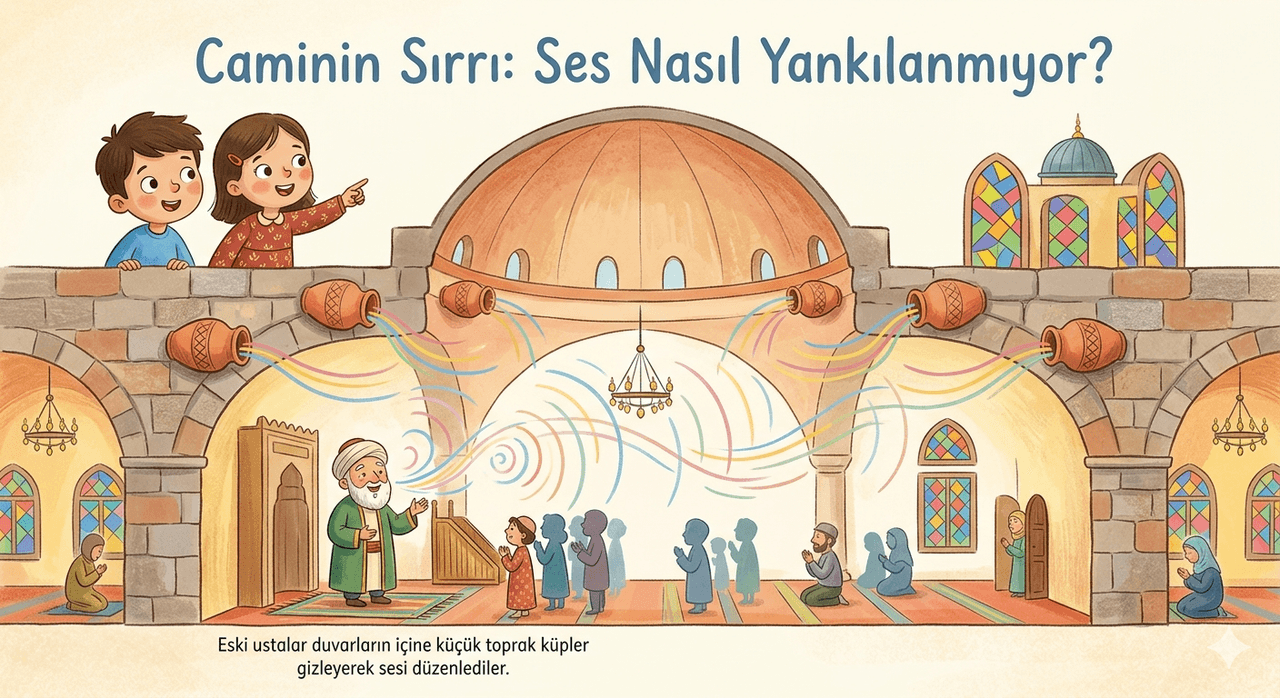
An image illustrating the mosque’s structure (generated by artificial intelligence).