


Venus
What if we explore Venus—the planet that looks like a bright star in the sky? This mysterious planet, similar in size to Earth, hides scorching surfaces like ovens, acidic clouds, and astonishing secrets! Let’s take a closer look together at Venus’s enigmatic world!
What Is Venus?
Venus is the second planet from the Sun and one of the brightest objects in the night sky. Sometimes it shines just before sunrise or just after sunset, earning it the nickname “Morning Star” or “Evening Star.” So bright is this planet that it is often mistaken for a star.
Venus is very similar to Earth in size and structural features, which is why scientists call it “Earth’s twin.” But this twin leads a very different life! Venus’s surface is extremely hot due to its dense atmosphere, which traps heat. As a result, the average surface temperature reaches about 460°C—hotter than your oven when baking cookies!

Venus. (NASA)
What Is the Weather Like on Venus?
Venus’s atmosphere is extremely dense. It is mostly composed of carbon dioxide gas and contains clouds of sulfuric acid. This is why the sky on Venus is never blue—it is always covered by a thick, yellowish layer of clouds. Moreover, sulfuric acid droplets fall like rain on its surface, but they evaporate before reaching the ground!
Is There Life on Venus?
The conditions on Venus are not suitable for life as we know it. Extreme heat, a dense atmosphere, and an acidic environment make it inhospitable for living organisms. However, scientists speculate that traces of life might exist in the upper layers of Venus’s atmosphere. Further research on this topic is expected in the future.
Does Venus Rotate Backward?
Yes! Venus orbits the Sun in the same direction as the other planets, but it rotates on its axis in the opposite direction. This means that on Venus, the Sun rises in the west and sets in the east! Additionally, because its rotation is so slow, a single day on Venus is longer than its entire year!

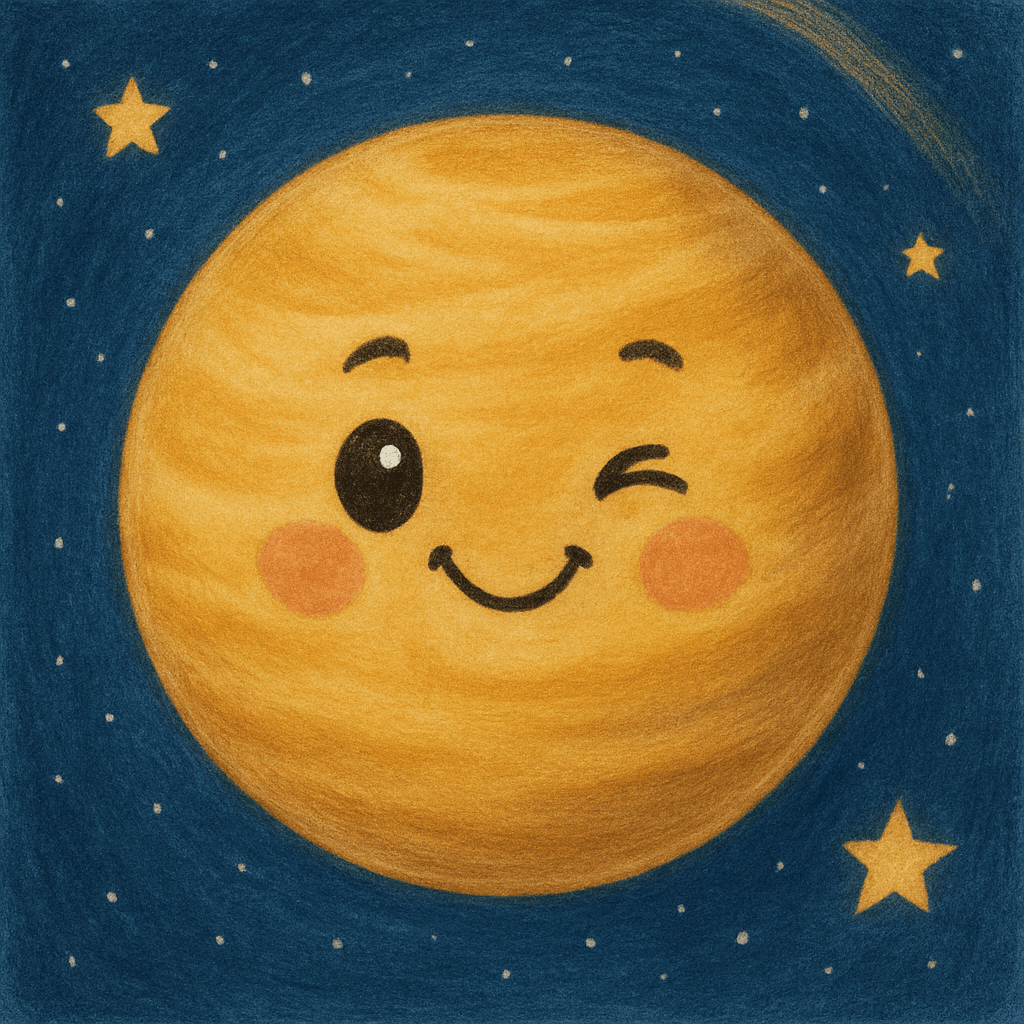
Venus (Generated by Artificial Intelligence.)