



Planet
Planets were once described as “wandering points of light” in the sky. At that time, people believed Earth was at the center of the universe. But as science advanced, telescopes were invented and astronomers made new discoveries. We now know that planets orbit a star, can vary in shape and size, and each moves along its own unique orbit.

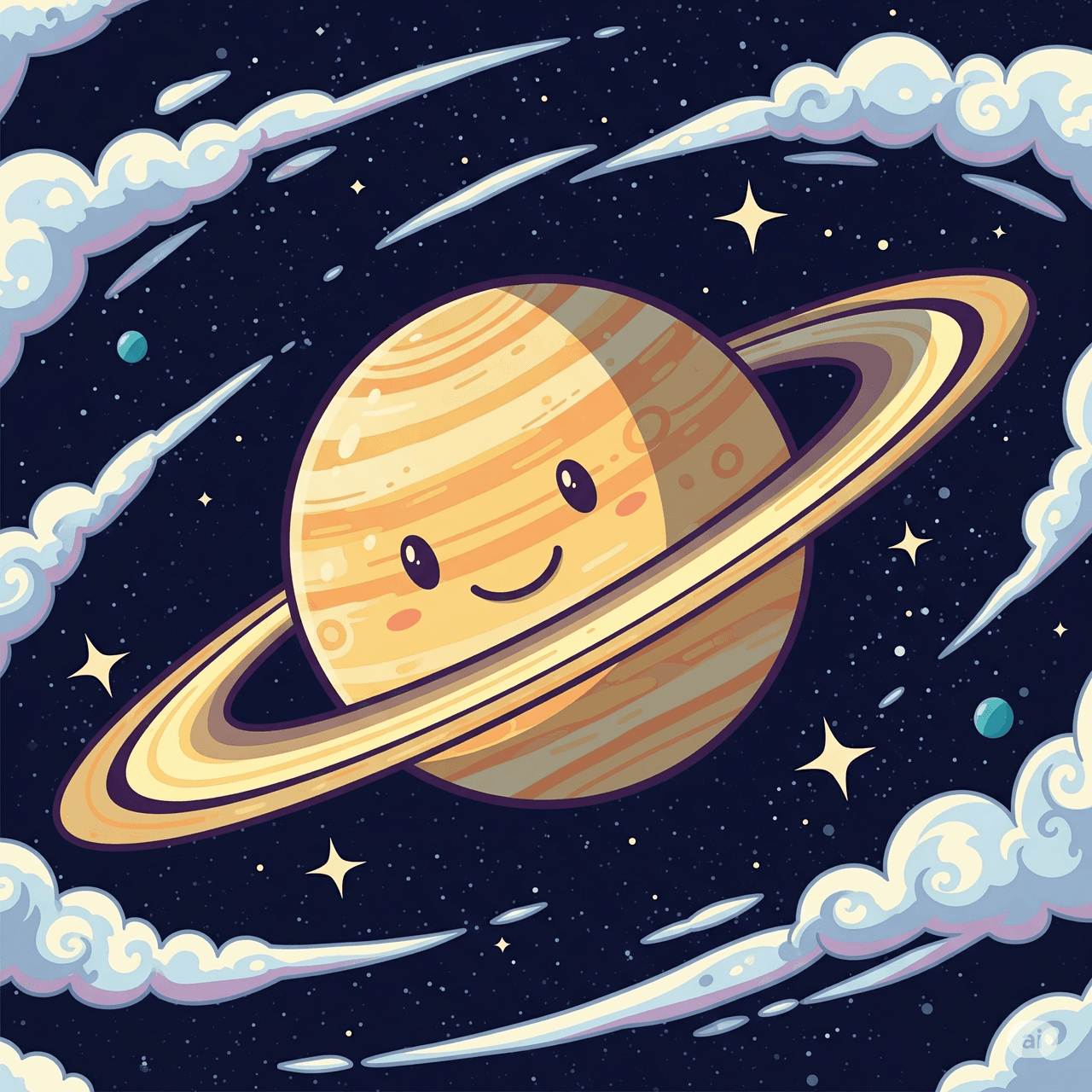
Planets (Generated by artificial intelligence)
So why is a celestial body classified as a “planet”? Scientists spent years observing the sky to find the answer. Now I will share that answer with you—but don’t forget to keep your curiosity alive! 🚀
👀 What Does “Planet” Mean?
The word “planet” comes from the ancient Greek word “planēt,” meaning “wanderer.” In the past, people tried to understand these bright objects moving across the sky. Today, scientists say a celestial body must meet three key criteria to be considered a planet:
- It must orbit a star (in our case, the Sun),
- It must have sufficient mass for its own gravity to pull it into a nearly round shape,
- It must have cleared its orbital path of other objects of similar size.
This definition helps us clearly determine whether certain celestial bodies qualify as planets.
🔭 How Were Planets Discovered?
Once, people believed Earth was at the center of the universe—even the Sun and Moon were considered planets. But after the invention of the telescope, this view changed. Scientists realized that the Sun lies at the center and that Earth and other planets orbit around it. Over time, planets such as Uranus, Neptune, and Mars were discovered.

Planets (Generated by artificial intelligence)
🚀 And More!
Astronomers have discovered not only the planets in our own Solar System but also hundreds of planets orbiting other stars! These are called “exoplanets.” Perhaps one day we will even discover other planets capable of supporting life.