




What is a Landslide?
Landslide is the movement of soil, rock, or other surface materials down slopes due to gravity. This phenomenon can occur slowly or rapidly and may cause damage to the environment. Steep slopes facilitate the sliding of soil and rocks under the influence of gravity.

(Generated by artificial intelligence.)
Factors Triggering Landslides
Landslides can occur due to loose or water-saturated soil, heavy rainfall, snow and ice melt, earthquakes and tremors, loss of vegetation, and human activities. These factors can initiate sliding individually or in combination.
Formation of Landslides
The structure of the soil, slope angle, and water accumulation determine the speed of sliding. Snow and ice melt soften the soil and facilitate movement. Earthquakes and tremors can displace soil. Loss of vegetation and human activities disrupt the balance of slopes.
Soil Landslide
A soil landslide is the slow or rapid sliding of the upper soil layer. Agricultural fields and gardens are commonly affected by this type.
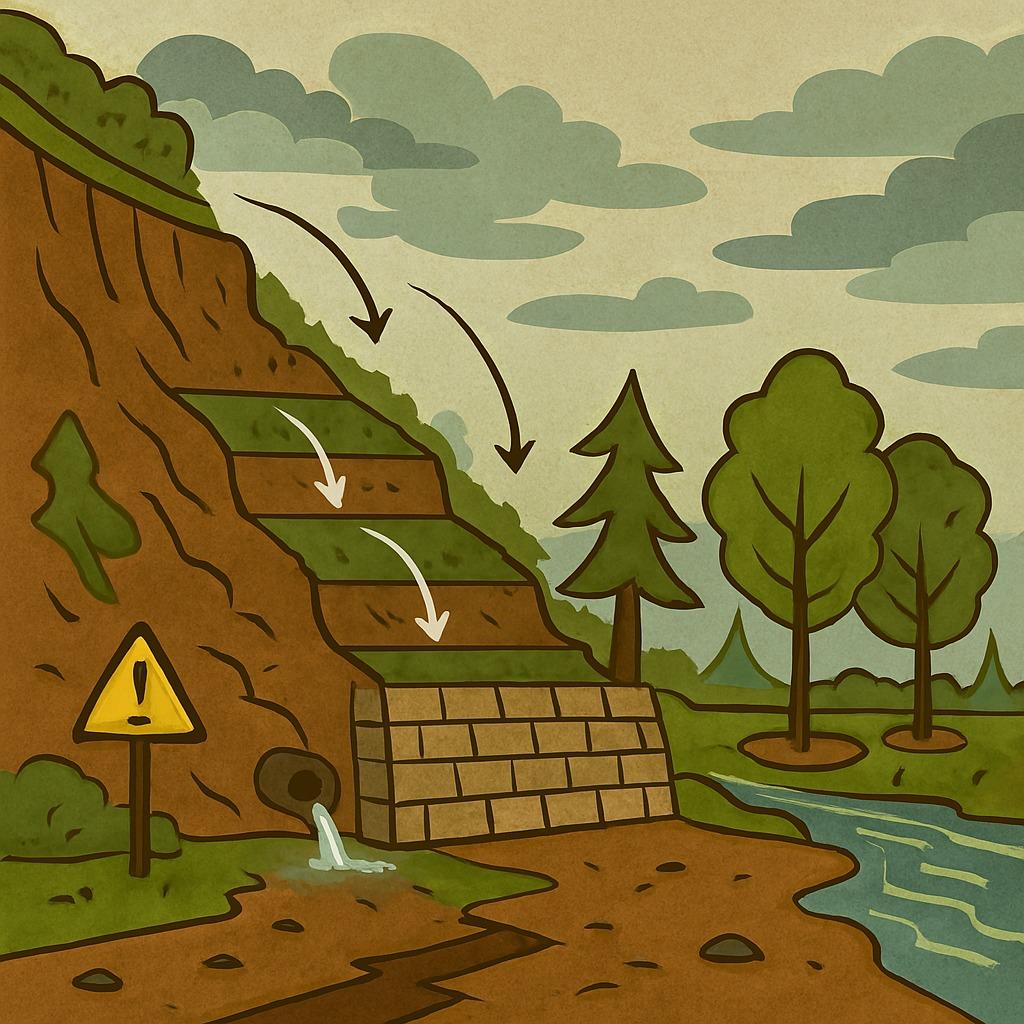
(Generated by artificial intelligence.)
Rock Landslide
In a rock landslide, large fragments of rock break away from the slope and fall rapidly downward. These pose a serious threat to roads and structures.
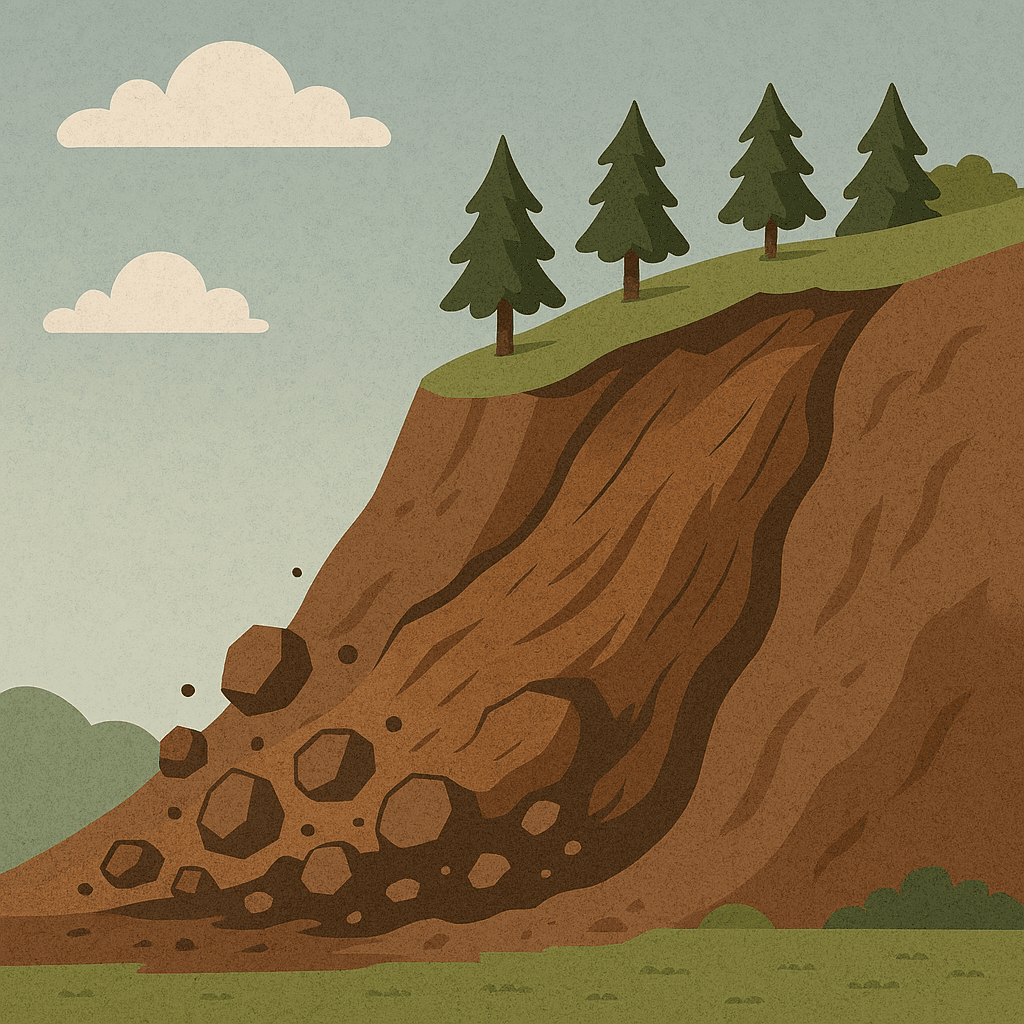
(Generated by artificial intelligence.)
Mudflow
Mudflows occur when soil and rocks mix with water and flow rapidly downhill. They can destroy homes, roads, and agricultural land.
Snow Avalanche (Slushflow)
Snow masses slide rapidly down mountain slopes. Such landslides create hazards for roads and villages.

(Generated by artificial intelligence.)
Rockfall
Small rocks or rock fragments detach from steep slopes. These pose a risk to roads and homes.
Subsidence Landslide
The upper layer collapses due to voids forming in the underlying soil layers. This can threaten buildings and roads.
Damage Caused by Landslides
Landslides pose serious threats to homes, buildings, roads, agricultural land, and infrastructure. Forests, animal habitats, and river flows can also be affected. Major landslides can result in loss of life and property and make life difficult in affected areas.
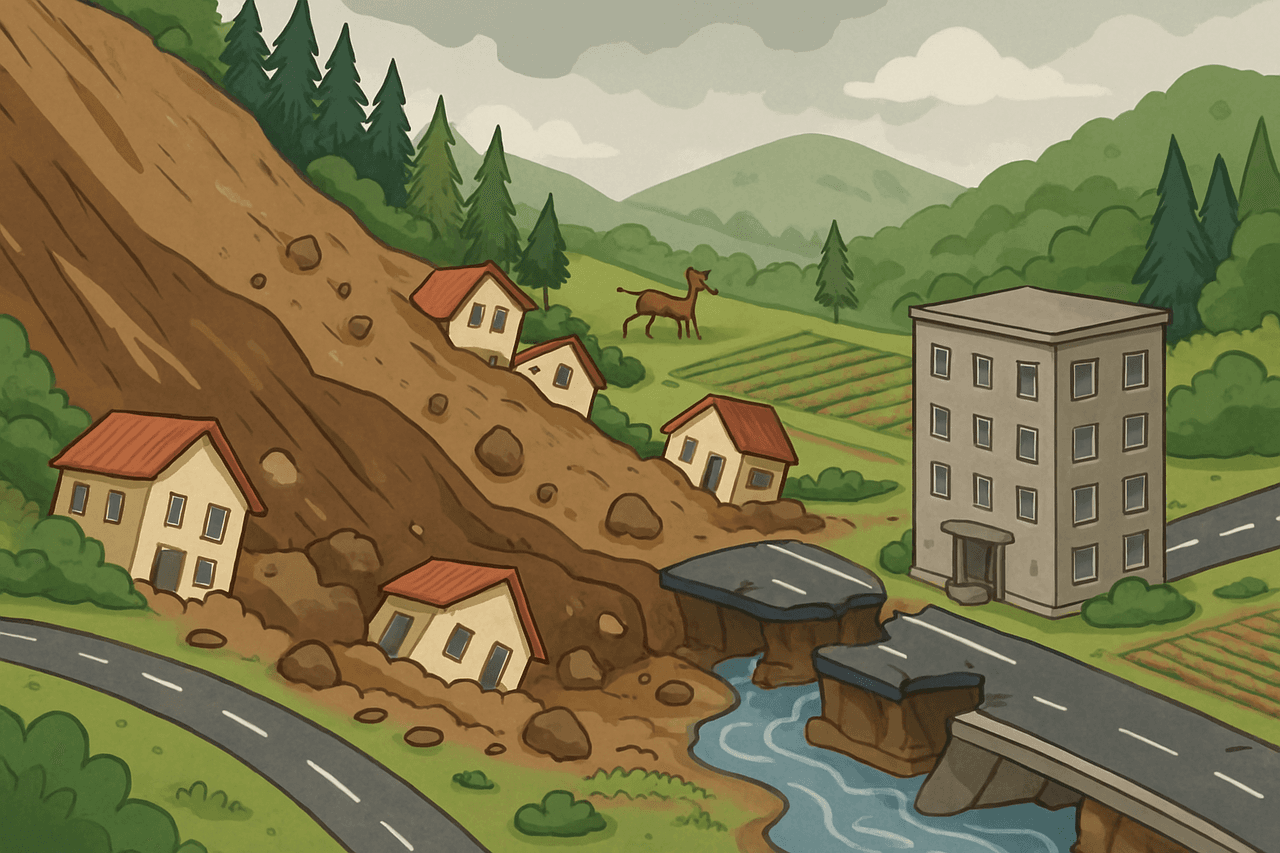
(Generated by artificial intelligence.)
What Happens During a Landslide and How Should One Respond?
It is essential to move to a safe location during a landslide. People inside buildings should stay away from windows and remain in safer areas. Those outdoors should head toward higher, stable ground.
Since large rocks and mud masses move rapidly downhill, running downward is dangerous. In such situations, attention should be paid to guidance from elders or teachers.
After a landslide ends, it is necessary to avoid approaching damaged areas. Safety is ensured once rescue teams arrive. Staying calm and carefully observing the surroundings are among the factors that can save lives during a landslide.
Landslide Prevention and Safety
Landslide risks on steep slopes can be identified in advance. Planting trees and vegetation reduces soil sliding. Drainage of rainwater can help reduce soil saturation.
Homes and buildings should be constructed in safe areas. Early warning systems help prevent loss of life and property by alerting people in advance when landslide risks arise.