



What Is a Solar Eclipse?
A solar eclipse occurs when the Moon passes between the Earth and the Sun, temporarily blocking sunlight from reaching the Earth. This phenomenon can only happen during the new moon phase, when the Moon is not visible in the sky and simultaneously obscures the Sun.
During a solar eclipse, the sky may briefly darken. This event is visible only from specific regions on Earth, not from everywhere, because the Moon’s shadow traces a narrow path across the Earth’s surface.

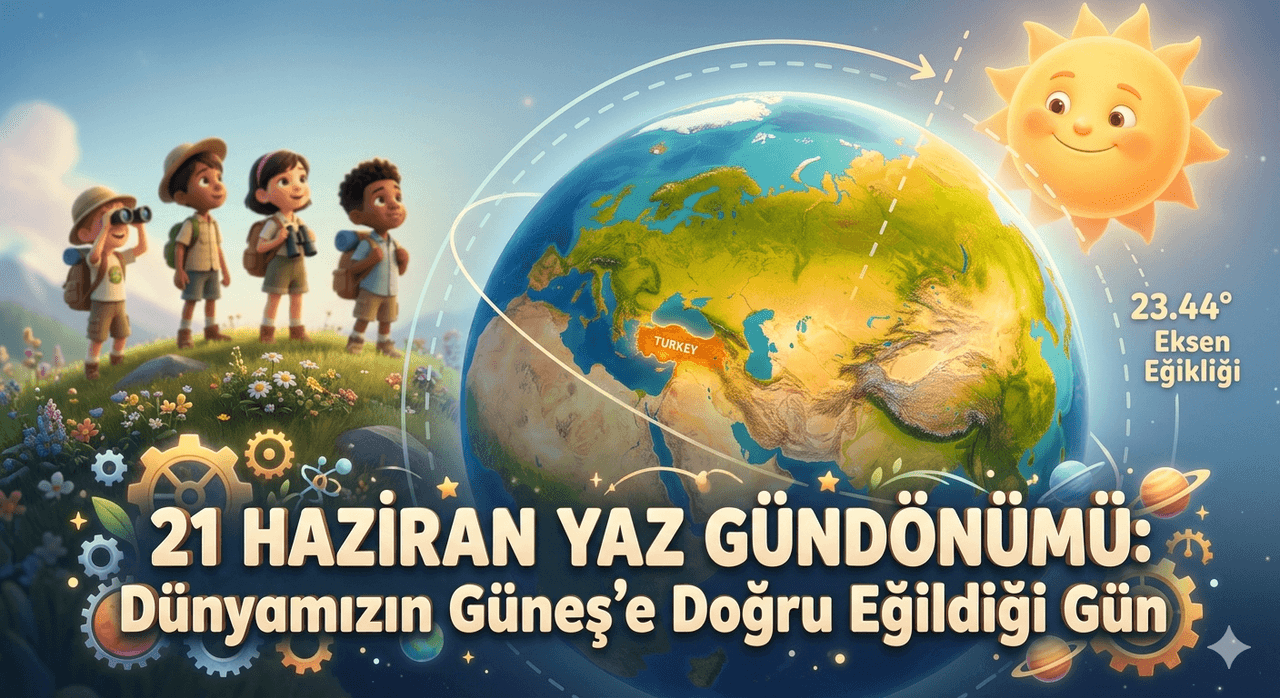
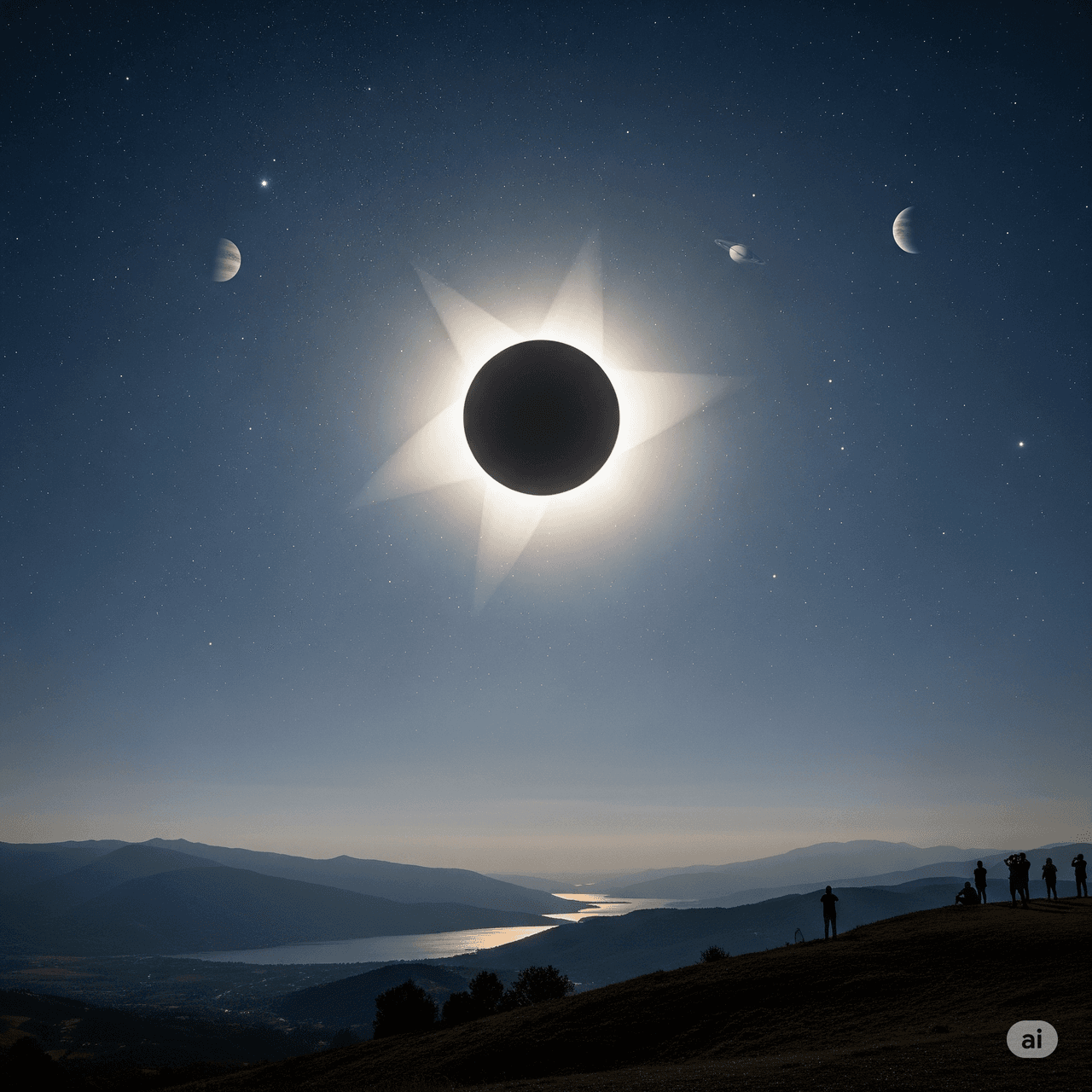
(Generated by Artificial Intelligence.)
How Many Types of Solar Eclipses Are There?
Solar eclipses can occur in different forms. Scientists classify them into four categories:
Total Solar Eclipse
The Moon completely covers the Sun. Day turns to night briefly, and the Sun’s outer atmospheric layer (the corona) becomes visible.
Partial Solar Eclipse
The Moon covers only a portion of the Sun. The Sun’s brightness diminishes but does not disappear entirely.
Annular Solar Eclipse
The Moon does not fully cover the Sun because it appears smaller from Earth. As a result, a bright ring of sunlight remains visible around the Moon’s edge.
Hybrid Eclipse
This type appears as a total eclipse in some locations and as an annular eclipse in others. It is the rarest type of solar eclipse.
How Long Do Solar Eclipses Last?
Solar eclipses typically last several minutes. Total eclipses are usually observable for an average of 2 to 5 minutes. Even the longest total eclipse never exceeds 7 minutes. The entire eclipse event, from beginning to end, can last approximately 2 to 3 hours.

(Generated by Artificial Intelligence.)
How Often Do Solar Eclipses Occur?
Between two and five solar eclipses occur somewhere on Earth each year. However, only some of these are visible from specific regions. Witnessing a total solar eclipse from the same location is a rare event and may occur only once every hundred years or more!
Is It Safe to Observe a Solar Eclipse?
No, looking directly at the Sun with the naked eye is dangerous. To observe a solar eclipse safely, special filtered glasses or solar telescopes must be used. Otherwise, permanent eye damage can occur.