



What is a Stream?
A stream is one of the smallest types of watercourses in nature. Rainwater, melting snow, or spring water emerging from underground flows downhill over sloped terrain to form a stream. Stream waters typically reach larger rivers, lakes, or seas.
How Is a Stream Formed?
Rain and Snowmelt: Water accumulates from rainfall falling from the sky or from snow melting in mountains.
Spring Water: Water beneath the earth’s surface rises to the surface and feeds the stream.
Effect of Gravity: Water flows downward along sloped areas, carving out the stream bed.

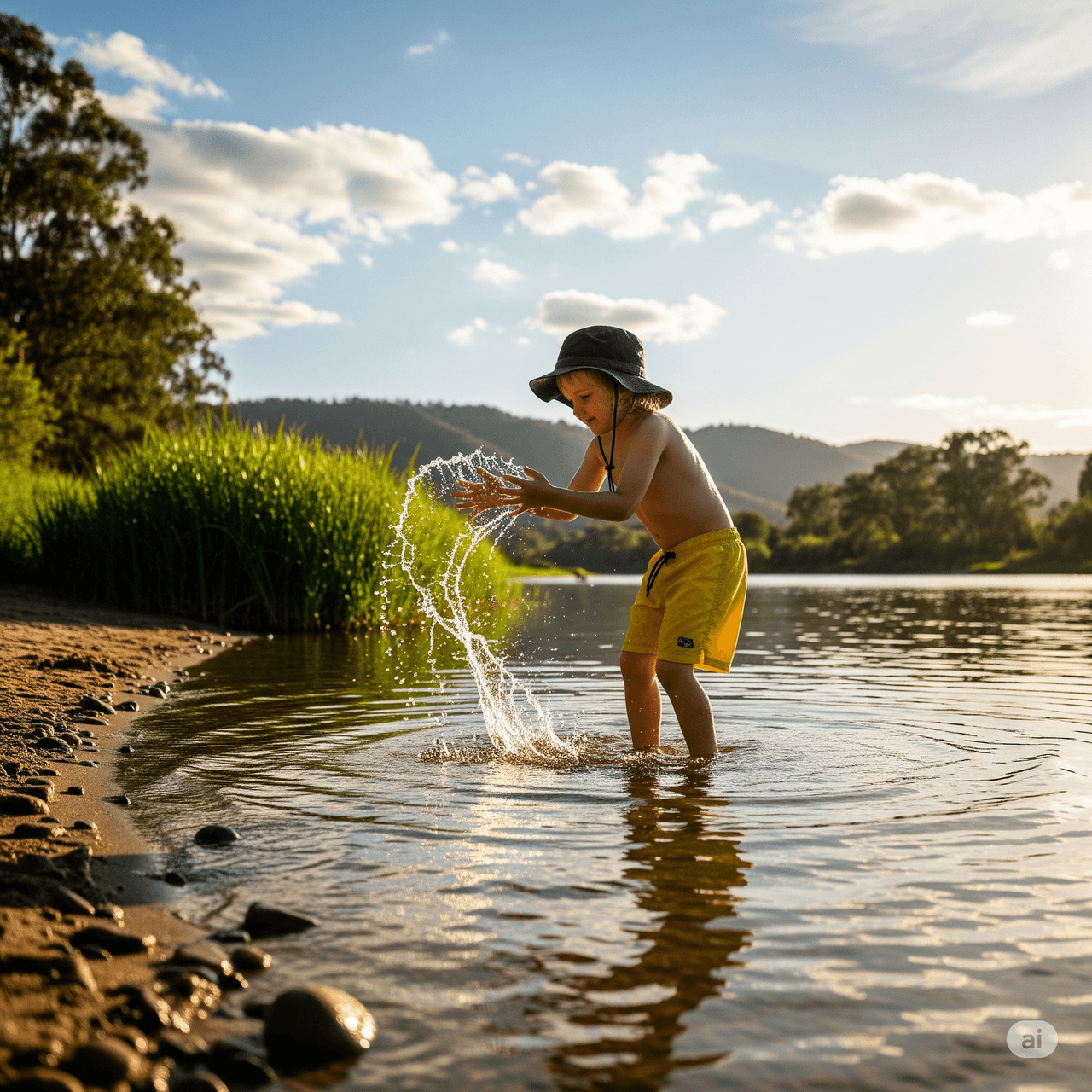
Image of Children Playing in a Stream (Generated by Artificial Intelligence)
Characteristics of Streams
They are generally narrow, winding, and shallow.
Their discharge (volume of water carried) varies with the seasons.
Their flow speed depends on the slope; they flow faster in steeper areas.
They can carry materials such as stones, sand, and leaves.
Streams and Nature’s Harmony
Streams provide many benefits to the environment. They prevent soil erosion, supply water to plants and trees, and offer habitat and food for numerous organisms such as fish, frogs, and water birds. They are an essential part of the water cycle.

Image of Children Playing in a Stream (Generated by Artificial Intelligence)
What Lives Along Streams?
Plants, trees, frogs, fish, and birds live along stream banks. For these organisms, streams are vital habitats.
Let’s Be Careful!
We must not pollute streams. Throwing garbage or damaging their surroundings harms the stream and its living creatures. Together, we must protect nature!