


What Is Eutrophication?
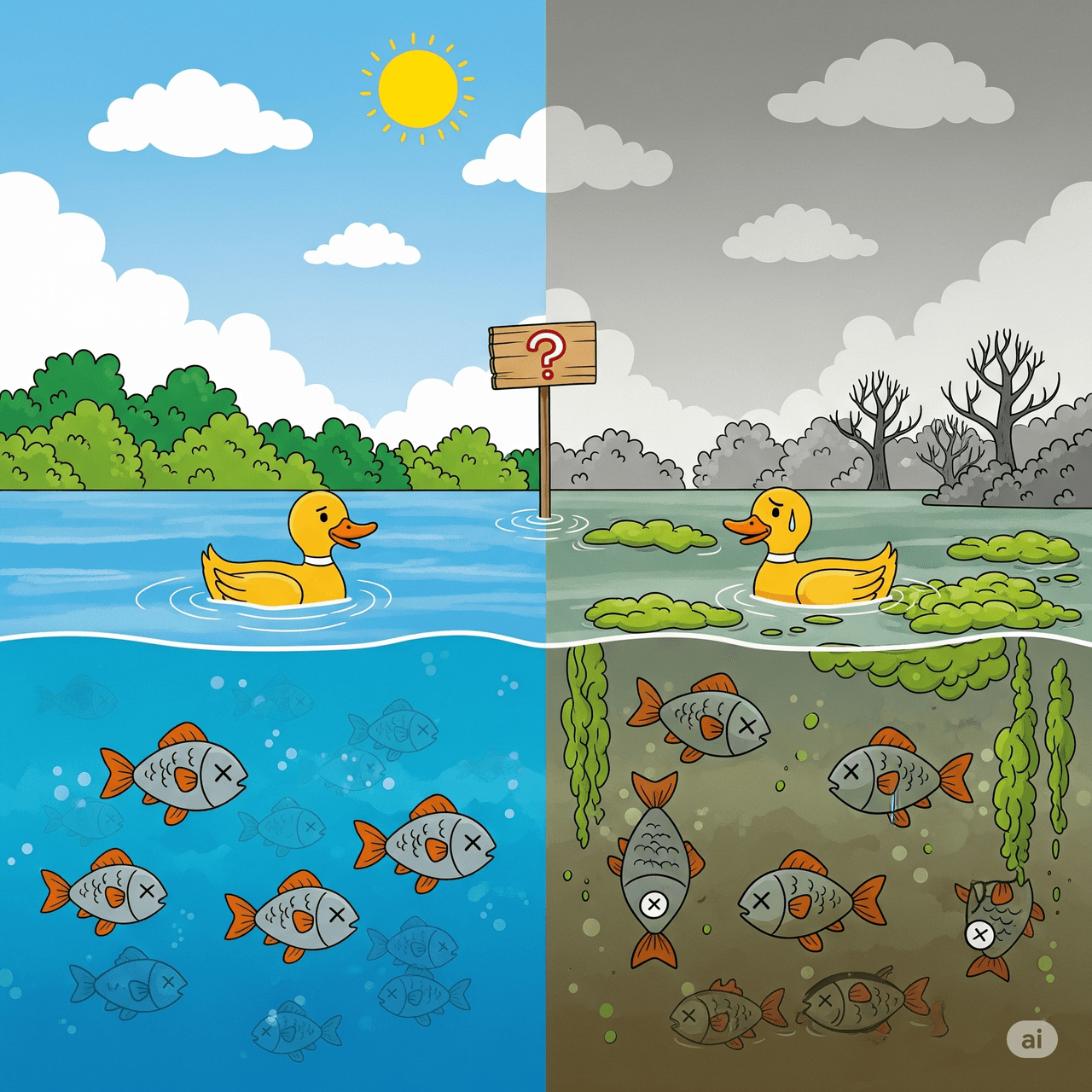
Eutrophication is a process caused by the excessive increase of nutrients in water bodies such as lakes, rivers, or seas, particularly nitrogen and phosphorus. This disrupts the natural balance of the water and leads to changes in the ecosystem. Fertilizers and waste materials especially accelerate this process. If this balance is disturbed, the water’s ability to regenerate itself diminishes and the ecosystem loses its health.

(Generated by Artificial Intelligence.)
How Does It Occur?
Fertilizers from agricultural fields, domestic wastewater, or industrial effluents carry nutrients such as nitrogen and phosphorus into water bodies. When these nutrients are present in excess, algae multiply rapidly. Algal blooms consume the oxygen in the water, making it difficult for aquatic organisms to survive. As a result, fish, crustaceans, and aquatic plants begin to lose their habitats.
Effects on Water Bodies
In eutrophic waters, fish, plants, and other organisms struggle to obtain sufficient oxygen. This leads to fish kills and a decline in biological diversity. The water becomes cloudy, develops unpleasant odors, and its quality deteriorates. Over time, these waters may become unusable for human purposes.
Effects on Humans
This process affects not only nature but also human populations. The quality of drinking water sources declines, fisheries suffer losses, and tourism is negatively impacted. Particularly, the cleaning of lakes and reservoirs becomes more difficult, resulting in economic losses. Therefore, eutrophication has become both an environmental and a social issue.
Relationship with Heavy Metals
In some water bodies, heavy metals make eutrophication even more dangerous. Heavy metals pollute the water and can cause poisoning in living organisms. This situation renders the ecosystem twice as vulnerable. In particular, heavy metals that enter the food chain directly threaten human health.

(Generated by Artificial Intelligence.)
Solutions
The most important step in preventing eutrophication is reducing the excess nutrients entering water bodies. Responsible use of fertilizers, treatment of wastewater, and protection of natural areas are essential. This way, both nature and humans can be protected. Furthermore, raising public awareness and encouraging environmentally conscious behavior leads to sustainable solutions.