




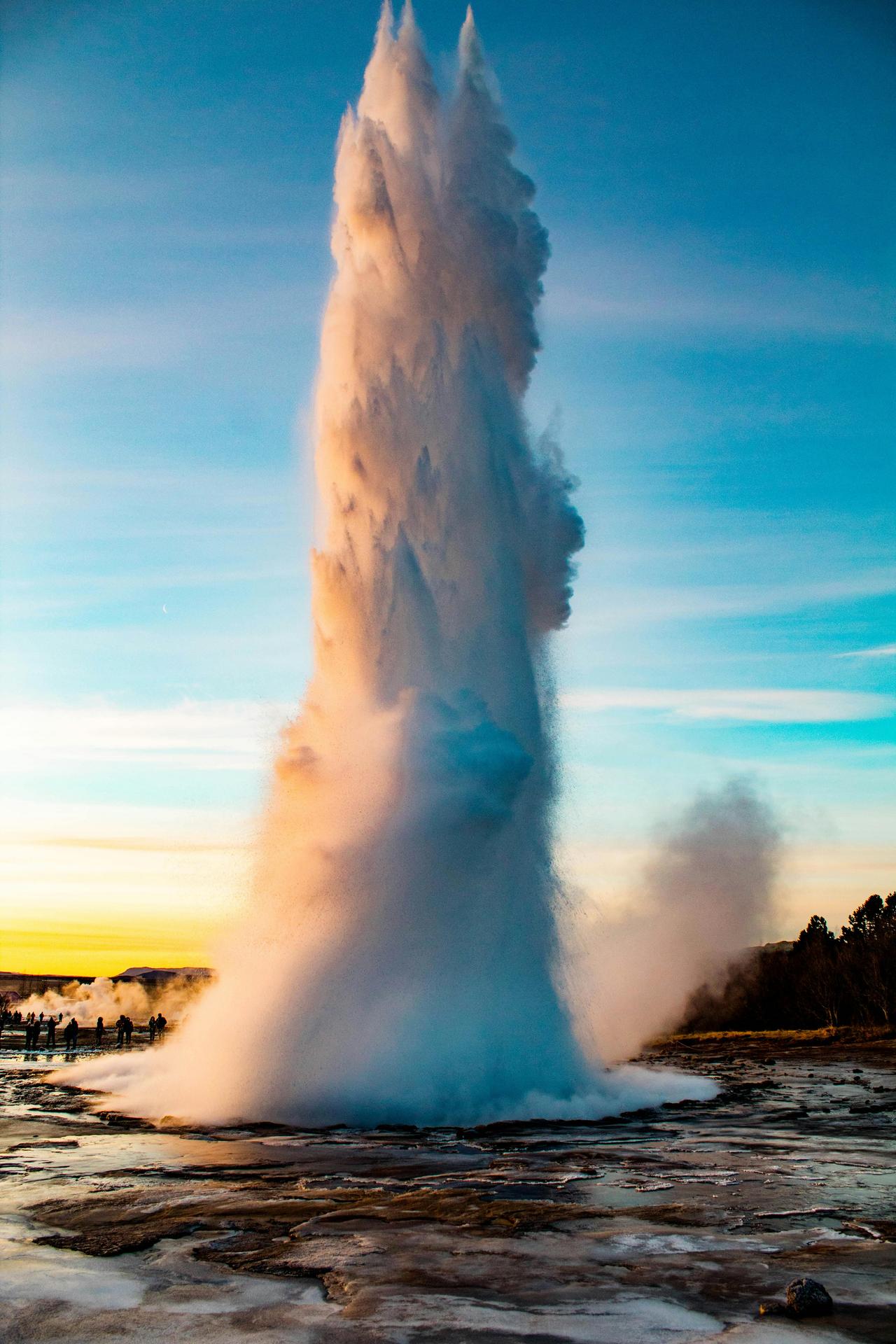
What is Gayzer?
Geyser is a natural hot spring that periodically erupts with great force, ejecting hot water and steam from beneath the Earth’s surface. Rain and snowmelt seep deep into the ground, where they are heated significantly by magma and suddenly erupt to the surface when pressure builds up.
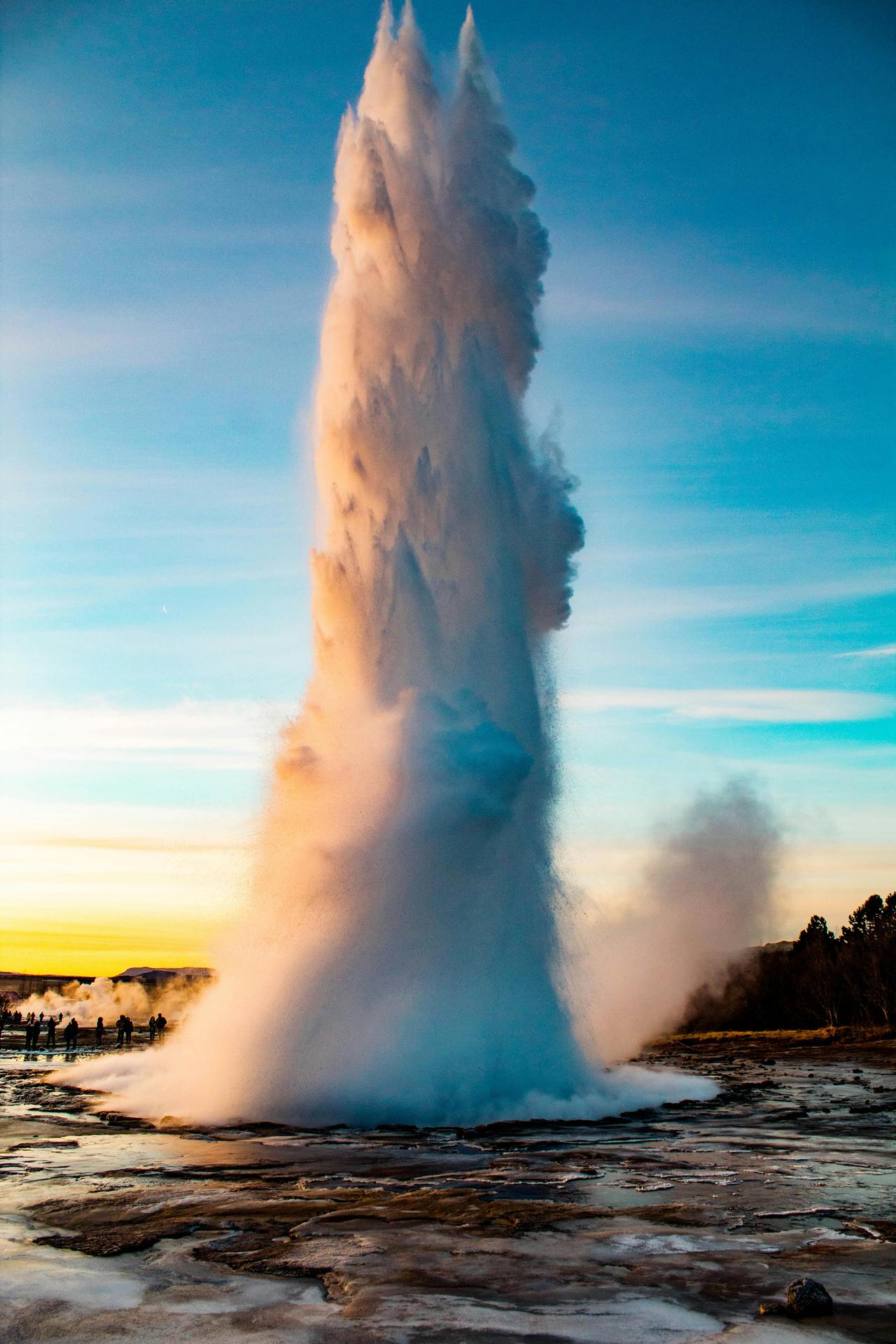
Geyser ()
How Do Geysers Form?
Rain and snowmelt water percolate through small cracks in the Earth’s crust and descend to great depths. These waters accumulate in regions near magma, which is extremely hot and located deep underground. Magma, composed of molten rock, heats its surroundings to very high temperatures.
Why Do They Erupt?
The water accumulating underground becomes intensely heated by the magma. However, because the pathways to the surface are narrow and confined, the water cannot immediately boil. Instead, both temperature and pressure gradually increase. Eventually, when pressure becomes high enough, the water suddenly boils and erupts with great force to the surface. This is known as a geyser eruption.
The hot water trapped underground remains under extremely high pressure within narrow, sealed channels, preventing it from boiling immediately. However, when the uppermost layer of water cools slightly and begins to rise, the pressure on the hotter water below decreases. As pressure drops, the deeply heated water instantly boils and is violently expelled upward along with steam. This is the reason behind geyser eruptions.
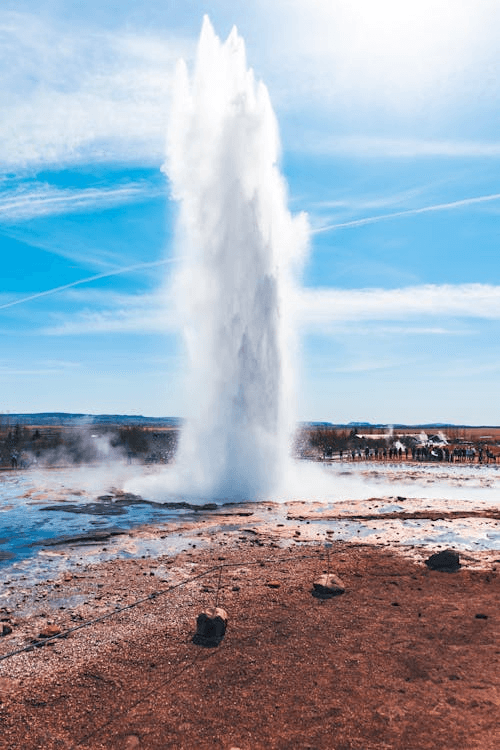
How Do Geysers Erupt Repeatedly?
When a geyser erupts, most of the underground hot water and steam are expelled. Over time, these emptied spaces are gradually refilled by rain and snowmelt. The water once again seeps deep underground, is heated by magma, and pressure builds anew. Once pressure reaches a critical level, the geyser erupts once more. Thus, geysers continue to erupt repeatedly as they refill with water and reheat.
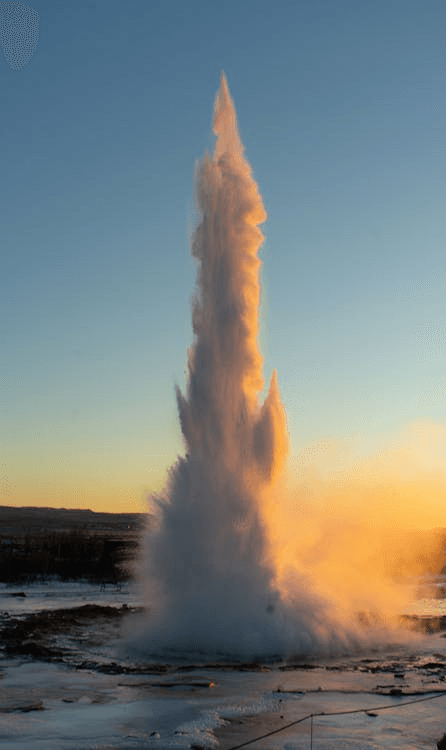
Where Are Geysers Found?
Geysers are rare worldwide because their formation requires both extremely hot magma deep underground and specialized fissures capable of trapping water. As a result, geysers are uncommon and attract significant attention. The greatest concentration of geysers is found in Yellowstone National Park in the United States. Other volcanic regions such as Iceland, New Zealand, and Chile also host geysers.
Significance and Interesting Features of Geysers
Geysers provide information about temperature and pressure conditions deep within the Earth. The water and steam released during eruptions deposit unique mineral formations and sediments on surrounding rocks. Some geysers erupt at regular intervals, allowing their cycles to be measured. These characteristics make geysers both natural phenomena and observable natural events.