

This article was automatically translated from the original Turkish version.
+2 More
Formation | Natural Hot Water Sources | ||||||||
|---|---|---|---|---|---|---|---|---|---|
Usage | Spa Facilities | ||||||||
Visit Period | Year-Round Use | ||||||||
Water Type | Mineral Geothermal Source | ||||||||
Source Points | Yılanlı, Davut, Tunca, Köprü Kaplıcaları | ||||||||
Location | Türkiye Ağrı Diyadin | ||||||||
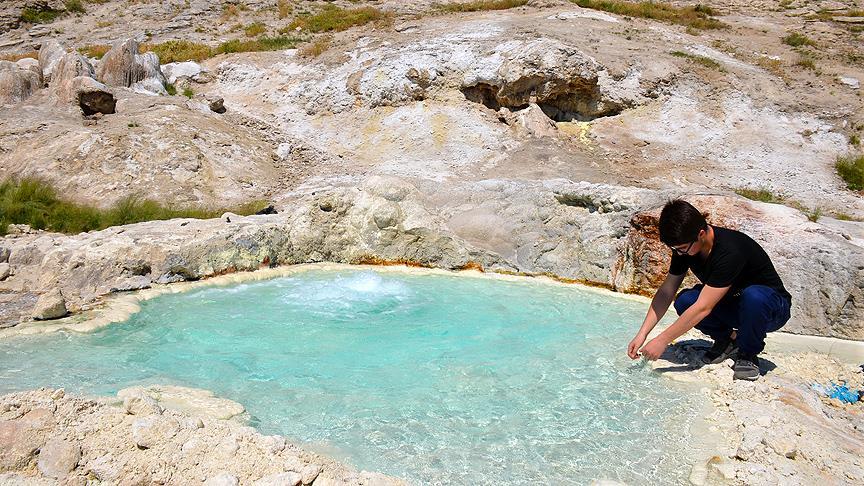
Diyadin Thermal Springs are a general term for thermal areas composed of natural hot water sources emerging from underground within the boundaries of Diyadin district, which is under the administration of Ağrı province in Eastern Anatolia Region of Türkiye. The springs are scattered along the valley of the Murat River south of the Diyadin district center and consist of multiple thermal sources known by different names such as Yılanlı, Davut, Tunca and Köprü Thermal Springs.
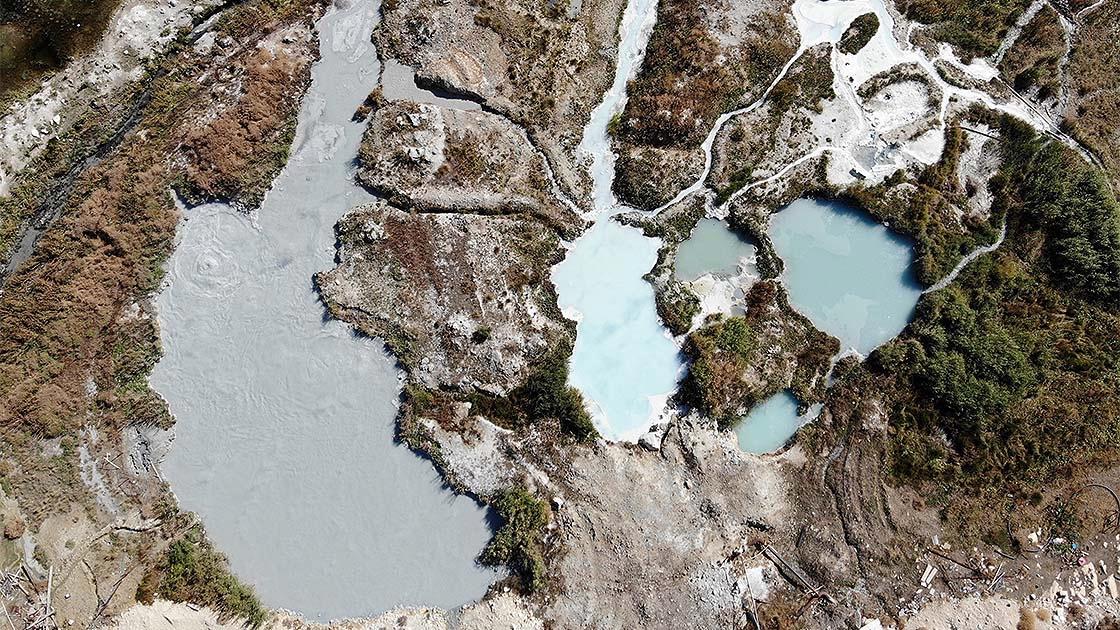
Diyadin Thermal Springs (Anadolu Ajansı)
Diyadin Thermal Springs are located approximately 60 kilometers from the center of Ağrı province and about 5 kilometers from the center of Diyadin district. The spring area lies within the valley of the Murat River and extends in an east-west direction. The region hosting the springs is part of the high plateau areas characteristic of Eastern Anatolia Region.
The spring area is surrounded by a natural environment defined by the Murat River and its tributaries. Thermal sources emerge at various points along the river valley. This distribution allows the springs to be considered as distinct yet part of the same hydrothermal system. The surroundings of the thermal area are characterized by mountainous terrain and sloping slopes of volcanic origin.
The formation of Diyadin Thermal Springs is linked to the young tectonic structure of Eastern Anatolia and the volcanic activity in the region. The thermal waters rise to the surface through deep fractures along fault lines. It is known that the hot water discharges are connected to fracture and crack systems formed by tectonic movements. This geological structure plays a decisive role in determining the temperature and mineral content of the spring waters.
The temperature of the thermal waters at Diyadin Thermal Springs varies by source but generally ranges between 72–78 °C.【1】 These high-temperature waters reach the surface at their natural outlets. The spring area includes both open-air and covered pools, with waters used in natural or artificially modified settings.
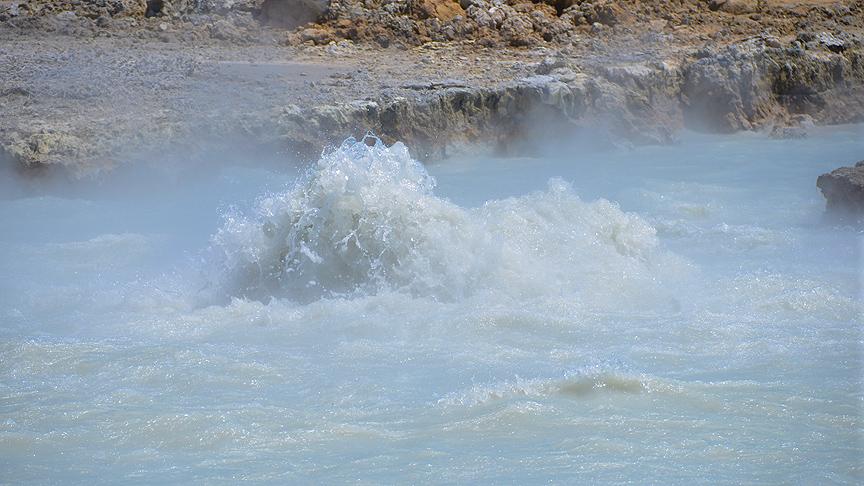
Diyadin Thermal Springs (Anadolu Ajansı)
The spring waters contain bicarbonate, chloride, sulfate, calcium and carbon dioxide. The total mineralization level is approximately 1000 mg/L.【2】 These chemical properties make Diyadin Thermal Springs one of the significant thermal areas in Türkiye. The mineral content and temperature values directly influence the ways in which the springs are utilized.
The thermal waters at Diyadin Thermal Springs are used for bathing and therapeutic treatments. The spring area features open-air and covered pools as well as individual use facilities. The thermal waters are applied for the treatment of rheumatic conditions, muscle and joint pain, skin diseases and certain nervous system disorders, and their use is associated with health-oriented therapies.
Diyadin Thermal Springs are visited throughout the year, with particular interest increasing during the autumn months. The springs are considered among the areas evaluated for health and thermal tourism, and surrounding accommodation and usage facilities are available. The spring area represents a significant potential for regional tourism activities in Diyadin district.
Anadolu Ajansı. "Diyadin kaplıcaları sonbaharda şifa arayanların uğrak yeri oluyor." Accessed January 27, 2026. https://www.aa.com.tr/tr/turkiye/diyadin-kaplicalari-sonbaharda-sifa-arayanlarin-ugrak-yeri-oluyor/2011327
Anadolu Ajansı. “Şifa Arayanların Uğrak Mekânı ‘Diyadin Kaplıcaları’.” Accessed January 27, 2026. https://www.aa.com.tr/tr/yasam/sifa-arayanlarin-ugrak-mekani-diyadin-kaplicalari/1228940.
Ağrı İl Directorate of Culture and Tourism. "Diyadin Kaplıcaları." T.C. Kültür veTurizm Bakanlığı. Accessed January 27, 2026. https://agri.ktb.gov.tr/TR-126226/diyadin-kaplicalari.html
Diyadin Kaymakamlığı Governorship. "Diyadin Spas." *Republic of Türkiye Diyadin District Governorship Website.* Accessed January 27, 2026. https://www.diyadin.gov.tr/diyadin-kaplicalari.
Türkiye Kültür Portalı. "Diyadin Kaplıcaları." *T.C. Kültür ve Turizm Bakanlığı.* Accessed January 27, 2026. https://www.kulturportali.gov.tr/turkiye/agri/gezilecekyer/diyadin-kaplicalari.
Zaman, Mehmet, Selahattin Polat, and Mustafa Özdemir. "Diyadin Kaplıcaları/Diyadin Thermal Springs." *Doğu Coğrafya Dergisi* 6, no. 4 (2011): 349–377. Accessed January 27, 2026. https://dergipark.org.tr/tr/pub/ataunidcd/article/31068
[1]
Ağrı Provincial Directorate of Culture and Tourism, "Diyadin Thermal Springs," Ministry of Culture and Tourism of the Republic of Türkiye, Access date: 27 January 2026, https://agri.ktb.gov.tr/TR-126226/diyadin-kaplicalari.html.
According to another source, the water temperature ranges between 40–71 °C. (Mehmet Zaman, Selahattin Polat and Mustafa Özdemir, "Diyadin Thermal Springs/Diyadin Thermal Springs," Eastern Geography Journal 6 (4), (2011): 362, Access Date: 27 January 2026, https://dergipark.org.tr/tr/pub/ataunidcd/article/31068.)
[2]
Ağrı Provincial Directorate of Culture and Tourism, "Diyadin Thermal Springs," Ministry of Culture and Tourism of the Republic of Türkiye, Access date: 27 January 2026, https://agri.ktb.gov.tr/TR-126226/diyadin-kaplicalari.html.

Formation | Natural Hot Water Sources | ||||||||
|---|---|---|---|---|---|---|---|---|---|
Usage | Spa Facilities | ||||||||
Visit Period | Year-Round Use | ||||||||
Water Type | Mineral Geothermal Source | ||||||||
Source Points | Yılanlı, Davut, Tunca, Köprü Kaplıcaları | ||||||||
Location | Türkiye Ağrı Diyadin | ||||||||
No Discussion Added Yet
Start discussion for "Diyadin Hot Springs" article
Geographical Location
Natural Environment and Hydrography
Geological Structure and Formation Process
Physical Properties of Thermal Waters
Chemical Composition
Usage Patterns
Thermal Tourism