



Euphrates River
The Euphrates River, the longest river in Western Asia, originates in Türkiye and flows through the territories of Syria and Iraq before emptying into the Persian Gulf. For thousands of years, this river has sustained life across the regions it traverses, serving not only as a physical waterway but also as the vital artery of history, civilizations, and cultures. The Euphrates has a total length of approximately.
Geographical and Hydrological Characteristics
The Euphrates’ journey begins in the high mountains of Eastern Anatolia. Its two main tributaries are the Karasu, which rises from Dumlu Dağı in Erzurum, and the Murat River, which originates from Muratbaşı Dağı in Ağrı. These two rivers converge at the Keban Dam Lake near Elazığ to form the Euphrates River. From there, the Euphrates continues its southward flow, passing through the territories of Turkish provinces such as Malatya, Adıyaman, Şanlıurfa, and Gaziantep before crossing international borders.
After leaving Türkiye, the river traverses Syria from north to south and then enters Iraq. In southern Iraq, it joins its ancient companion, the Tigris River, to form the Shatt al-Arab, which flows for approximately 200 kilometers before emptying into the Persian Gulf. The Euphrates’ flow regime rises during winter and spring due to snowmelt and declines during summer months.
The Euphrates and the Cradle of Civilization: Mesopotamia
The Euphrates River has been the primary life source of Mesopotamia, the land between the two rivers, which hosted some of the world’s earliest known civilizations. In the 4th millennium BCE, the Sumerians, Akkadians, Babylonians, and Assyrians established settled communities and built great city-states on these fertile lands, thanks to the irrigation opportunities provided by the Euphrates and Tigris rivers.
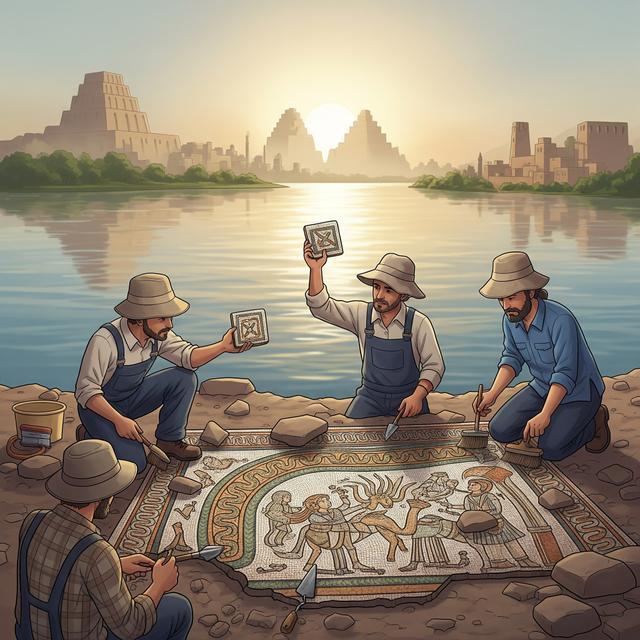
The role of the Euphrates in the development of fundamental elements of civilization—such as agriculture, writing, and architecture—is undeniable. The river is even revered as a sacred element in the Epic of Gilgamesh, the earliest known written epic of the Sumerians. Additionally, the ancient city of Zeugma, once a major trade center of the Roman Empire, was situated along the banks of the Euphrates. Founded around 300 BCE and flourishing during the Roman period, Zeugma connected Eastern and Western trade routes due to its strategic location on the river. The mosaics found in the city, reflecting the wealth and artistic aesthetics of the era, stand as the most tangible evidence of a civilization that flourished along its banks. A large portion of the Zeugma mosaics is now displayed at the Zeugma Mosaic Museum in Gaziantep.
Economic and Ecological Significance
Today, the Euphrates River remains a vital economic resource for the countries it flows through. In Türkiye, the Southeastern Anatolia Project (GAP) is an integrated development initiative designed to efficiently utilize the waters of the Euphrates for agriculture and energy production. Massive structures such as the Atatürk Dam, the Keban Dam, and the Karakaya Dam contribute to the national economy by generating hydroelectric power and enhance agricultural productivity by irrigating arid lands in the region.
The river and its surrounding wetlands support a rich ecosystem. The Euphrates is home to rare species such as the Euphrates turtle, endemic to Türkiye. In addition, fish species like carp and barbel inhabit its waters, while herons, storks, and various waterbirds live among the reed beds and riparian woodlands. This natural biodiversity plays a critical role in maintaining the ecological balance of the region.