


This article was automatically translated from the original Turkish version.
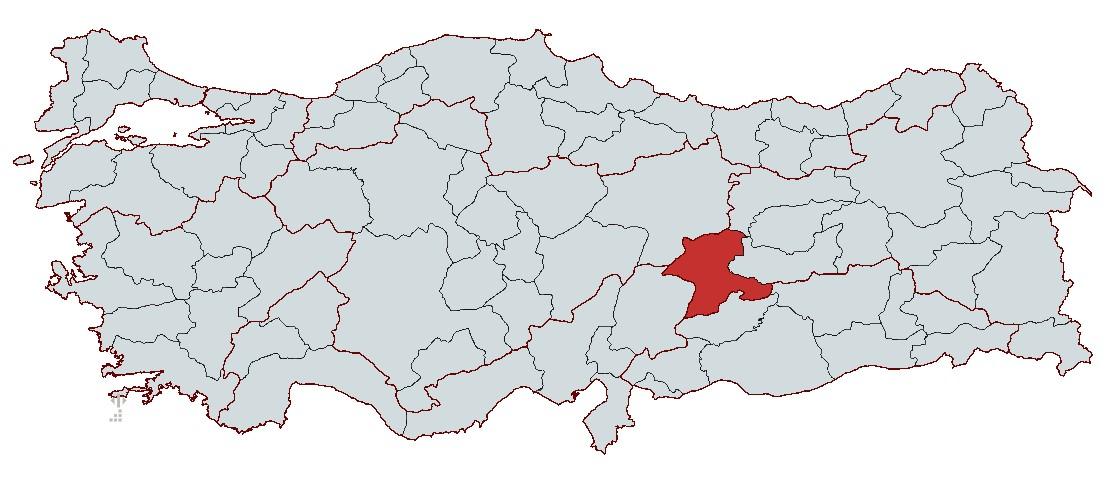
Malatya
Country | Türkiye | ||||||||
|---|---|---|---|---|---|---|---|---|---|
Region(s) | Eastern Anatolia Region | ||||||||
Population | 750491 | ||||||||
Area(s) | 12313 km² | ||||||||
Climate(s) | Continental Climate | ||||||||
Important Structure(s) | Levent Vadisi Malatya Atatürk Evi ve Müzesi Malatya Kalesi Silahtar Mustafa Paşa Kervansarayı Battalgazi Ulu Cami Arslantepe Höyüğü | ||||||||
Area Code(s) | 422 | ||||||||
License Plate | 44 | ||||||||
Governor(s) | Seddar Yavuz | ||||||||
Mayor(s) | Sami Er | ||||||||
Malatya is an ancient settlement center located in the East Anatolia Region of Türkiye, which has been home to numerous civilizations throughout history. Due to its geographical position, it has experienced continuous habitation since prehistoric times and bears witness to one of the earliest state formation processes in Anatolia, particularly through the Aslantepe Höyüğü. During the Hittite, Urartian, Roman, and Byzantine periods, city served as a transit point and retained its role as a center of administration and commerce during the Seljuk and Ottoman periods.
Today, thanks to its advanced transportation network and direct air and rail connections to major Turkish cities, Malatya has become one of the regional centers of trade and industry. Its rich gastronomic heritage is renowned especially for its apricot production and is recognized on a national scale. Traditional cuisine includes dishes such as Analı Kızlı Köfte, Kağıt Kebabı, and Malatya Kulak Çorbası like original. At the same time, important cultural heritage sites such as the Arslantepe Excavation Site, Günpınar Waterfall, Levent Valley, and the Old Malatya Ulu Cami preserve the city’s historical legacy for the present day. With its historical depth, economic potential, and natural beauty, Malatya stands out as one of Türkiye’s significant cities.
Malatya is among the cities with the earliest traces of human settlement, with historical roots extending back to the Paleolithic Era. The city’s oldest settlement remains have been identified in the Ansır (Buzluk) and İnderesi caves, where artifacts demonstrate that human communities used the area as a shelter. Cafer Höyük, dated to around 7000 BCE, is one of the most important archaeological sites documenting the transition to settled life and the earliest agricultural activities in the region. Similarly, Aslantepe Höyüğü reveals that Malatya was a major settlement center during the Chalcolithic period from around 5000 BCE. Trade relations with Northern Mesopotamia and Syria via the Euphrates River during this period are evidenced by seals and ceramic found at Aslantepe and Değirmentepe.
Malatya came under Hittite control from around 2000 BCE, and during this period Aslantepe became an important administrative center. After the collapse of the Hittite Empire, the city was part of the Late Hittite Kingdoms between 1200 and 700 BCE, known as the Kingdom of Malatya (Melid, Milidia). The Kingdom of Malatya, which resisted the Assyrian and Urartian kingdoms, was captured in 712 BCE by the Assyrian King Sargon II, whose forces deported the local population to Assyrian territories and replaced them with Assyrian settlers.
Following the fall of the Hittite Kingdom, Malatya came under Median rule (circa 612 BCE). After the Persians took control of Anatolia (circa 550 BCE), Malatya became part of the Persian Empire’s Cappadocia Satrapy, preserving its strategic position along trade routes. The road between Mazaka (Kayseri) and Malatya carried significant importance during this period as part of the Persian Royal Road.
With Alexander the Great’s conquest of Anatolia (334 BCE), Malatya came under Hellenistic cultural influence. After Alexander’s death, the region changed hands among the Seleucids, the Kingdom of Cappadocia, and the Kingdom of Pontus. In 66 BCE, after Rome defeated the Kingdom of Pontus, Malatya was incorporated into the Roman administration and became an important military center known as Melitene. During the Roman period, the XII Fulminata Legion was stationed in Malatya, making the city a key defensive line on Rome’s eastern frontier. By the 4th century CE, it had become a castle-city safeguarding the eastern borders of the Byzantine Empire.
During the Byzantine era, Malatya served as a crucial defense point against Sasanian attacks. In 575 CE, the Sasanians sacked and destroyed the city, but it was later rebuilt by the Byzantines. From the 7th century onward, Malatya faced Muslim Arab conquest campaigns and became one of the most important bases for expeditions against Byzantium, particularly under the Umayyads and Abbasids. During the Abbasid period, Malatya emerged as one of the most significant frontier cities known as Avasım and became one of the largest Muslim garrison towns in the region. Although briefly occupied by Byzantines in 934, the Hamdanid emirs reclaimed Malatya for Muslim territories.
After the Battle of Manzikert (1071), Malatya came under Seljuk control and was subsequently governed by the Danişmendids, Anatolian Seljuks, and Ilkhanids. Following Danişmend Gazi’s conquest of Malatya in 1101, the city became one of the key centers of the Danişmendli Beylik. In 1144, Seljuk Sultan I. Mesud captured Malatya and incorporated it into the Anatolian Seljuk realm, after which the city passed under the control of the Ilkhanids, Eretna, and Dulkadiroğulları beyliks.
Yavuz Sultan Selim’s annexation of the Dulkadiroğulları Beylik following the Battle of Turnadağ in 1515 brought Malatya under Ottoman rule. Initially administered as a district under the Maraş Eyalet, the city was later attached to the provinces of Diyarbakır and, in 1892, incorporated into the Mamuret-ül Aziz Vilayet. Throughout the Ottoman period, Malatya continued as a center of agriculture and trade, gaining prominence especially in silk production and cotton manufacturing.
After the proclamation of the Republic, Malatya gained provincial status in 1924 and became one of Türkiye’s key centers for industry and agriculture. Its connection to the railway network in 1931 enhanced its commercial capacity, and the establishment of the Bez and Tobacco Factories in 1939 marked the first steps toward industrialization. As the world’s leading producer of apricots, Malatya has evolved into a regional hub through its agricultural economy, industry, trade, and cultural heritage. The city has produced two prominent national figures, İsmet İnönü and Turgut Özal, and has made significant contributions to Türkiye’s modernization and development process. Today, Malatya remains one of the most important cities in the Eastern Anatolia Region, distinguished by its historical legacy, rich cultural fabric, and economic potential.
Malatya is a city located in the east of Türkiye, within the Upper Euphrates Section of the Eastern Anatolia Region, notable for its historical and geographical characteristics. The city, situated east of the Euphrates River, is distinguished by its fertile lands, mountainous terrain, and continental climate, making it a significant settlement area throughout history. Strategically positioned for agriculture, industry, and transportation networks, Malatya is also known as Türkiye’s apricot production center.
Malatya lies between 37° 45' and 39° 08' north latitudes and 37° 26' and 39° 57' east longitudes. As a province in the Eastern Anatolia Region, it shares borders with the following neighboring provinces:
Due to its position along major land and rail routes connecting eastern and western Türkiye, Malatya has historically served as a crucial intersection of trade and migration routes. The natural boundary formed by the Euphrates River provides a significant advantage for agricultural irrigation and energy production in the eastern part of the province.
Malatya has a climate characterized by transitional features between continental and Mediterranean climates. Summer months are hot and dry, while winter months are cold and snow rainy.
In certain areas of Malatya, microclimate effects caused by the Euphrates River and dam lakes are noticeable. Particularly in regions with intensive apricot cultivation, moderate climatic conditions prevail. This situation reduces frost risk even during winter months, positively influencing agricultural production.
Malatya has a complex topography shaped by mountains, plateaus, plains, and rivers.
Malatya’s terrain is generally rugged, with mountainous areas concentrated in the north and west regions. The main mountains include:
Malatya’s fertile plains and plateaus are of great importance for agriculture and livestock.
Due to its geological structure, Malatya possesses various natural resources and mineral deposits. Major mineral resources include:
These natural resources contribute to the development of the mining sector in Malatya’s economic structure.
Malatya is rich in a network of rivers and tributaries connected to the Euphrates River.
These water resources play a vital role in the development of Malatya’s agricultural and energy sectors.
Malatya lies on the East Anatolian Fault Line and is an active earthquake zone. Throughout history, the province has experienced numerous major earthquakes, particularly along the Kahramanmaraş-Malatya fault line, which exhibits active seismic movement. The city was affected by the major 2023 earthquakes centered in Kahramanmaraş, prompting reconstruction efforts. Due to seismic risk, new buildings are constructed in compliance with earthquake regulations. Urban transformation projects aim to renovate old and hazardous structures.
The region’s geological structure, composed of volcanic rocks, limestone, and alluvial soils, provides important resources for both agricultural productivity and the construction industry.
Throughout history, Malatya has stood out through agricultural, livestock, industrial, and commercial activities, sustaining economic growth due to its strategic location. With fertile soils, water resources, and favorable climate conditions, Malatya possesses significant potential in agriculture and has also demonstrated fast development in industry and trade. Renowned globally for apricot production, the city also draws attention through mining, food processing, and logistics sectors.
The industrial sector in Malatya experienced significant momentum after the Republican era. Key economic activities include agriculture-based industry, textiles, mining, food production, and construction.
One of the most important centers of industrialization in Malatya is the Malatya Organized Industrial Zone (OSB). Numerous factories and enterprises representing various sectors operate in this zone:
Malatya is among the cities where industry based on agricultural production has flourished. It hosts major facilities for processing and packaging agricultural products. Key food industry sectors include:
Malatya possesses rich mineral deposits and holds considerable potential in the mining sector. The districts of Hekimhan and Kuluncak are particularly notable in this regard.
Malatya is also prominent for its traditional hand weaving products and apparel production. Textile factories operating in organized industrial zones play a major role in employment.
Malatya has maintained a strong economic structure in trade due to its historical position at the intersection of trade routes. Marketing of agricultural products and export of industrial goods hold significant importance in the city’s economy.
Malatya possesses a rich structure in terms of natural beauty, historical monuments, and religious tourism. In recent years, growth in tourism has spurred expansion in accommodation, food and beverage, and souvenir sectors.
Malatya is advancing toward becoming the logistics center of Eastern Anatolia. Thanks to its advanced road, rail, and air networks, trade volume continues to grow steadily.
Agriculture and livestock hold a major share in Malatya’s economy. Fertile soils and proximity to the Euphrates River enhance the province’s agricultural production potential.
The most important component of Malatya’s agricultural sector is apricot production. Other products also make significant contributions to the economy:
Small and large-scale livestock farming is well-developed in Malatya, making it an important center for meat and milk production.
Malatya’s infrastructure features a structure that balances modern urbanization processes with the preservation of traditional urban fabric. Continuous development in basic areas such as transportation, education, health, energy, and water supply has integrated Malatya into major transportation networks due to its strategic location. With urban modernization, significant investments have been made in infrastructure services, particularly in transportation and education projects.
Malatya, with its planned urbanization, is among the cities notable for its wide roads, intersections, and transportation networks. Public transit, road, air, and rail systems ensure the city’s internal and external connectivity.
Malatya’s urban transportation is supported by modern public transit systems.
Malatya is one of the key intersection points of major road routes connecting eastern and western Türkiye.
Malatya also possesses a developed air transportation infrastructure.
Malatya is one of Türkiye’s most important logistical centers for railway transportation.
Malatya is among the important academic centers of Eastern Anatolia, with advanced educational institutions.
Established in 2018, university focuses on vocational and technical education. It conducts academic research in agriculture, livestock, and industry.
Malatya has institutions offering vocational education oriented toward industry and agriculture. Professional training programs are implemented in food industry, textiles, agriculture, and construction sectors.
Malatya possesses one of the most advanced health infrastructures in the region.
Malatya is also a well-developed city in terms of energy and water resources.
Electricity distribution in Malatya is provided by Türkiye Elektrik İletim A.Ş. (TEİAŞ) and private distribution companies. The city has high potential for sun energy, and renewable energy projects are underway.
Malatya’s drinking water is supplied by the Karakaya Dam and underground water sources. Water purification projects conducted by Municipality ensure clean drinking water for the city.
Malatya cuisine holds an important place within the rich kitchen heritage of Anatolia, distinguished by its unique flavors. Having hosted numerous civilizations throughout history, the city has synthesized culinary traditions from various cultures to create a broad and rich food culture. Cereal products, meat dishes, kebabs, dough products, and desserts form the foundation of Malatya cuisine. Additionally, the region’s geographical structure and climate have directly influenced its culinary culture, with apricot production and cereal-based dishes standing out prominently.
One of the most distinctive features of Malatya cuisine is the abundance of köfte varieties. Köfte are typically prepared with bulgur, meat, and various spices.
Dough products hold a significant place in Malatya cuisine. Böreks, bread varieties, and grain-based dishes represent the region’s culinary traditions.
In Malatya cuisine, vegetables are intensively consumed together with meat and legumes.
Malatya is especially famous for its apricot and mulberry-based desserts. Desserts commonly use sugar, walnut, pekmez, and flour.
Beverages also hold an important place in Malatya cuisine.
Malatya cuisine is a rich culinary tradition shaped by historical and cultural accumulation, preserving traditional flavors while appealing to modern palates. While bulgur and meat-based dishes form the core, regional products such as apricots and mulberries are fundamental to its culinary identity. With its variety of köfte, dough products, desserts, and vegetable dishes, Malatya possesses one of the most distinctive culinary cultures in Anatolia.
Malatya has hosted numerous civilizations throughout history and preserved its cultural heritage to the present day, housing significant historical structures. Malatya bears traces of many civilizations—from the Hittites to the Romans, from the Seljuks to the Ottomans—and is rich in historical heritage, particularly in mosques, hans, bridges, and ancient settlements. As one of the oldest settlement areas in Anatolia, the city especially houses a globally significant archaeological site such as Arslantepe Mound.
Arslantepe Höyüğü, listed on UNESCO’s World Heritage List, is one of Malatya’s most important archaeological sites. The mound contains remains from the Hittite, Assyrian, Persian, Roman, and Byzantine periods and has served as one of the earliest state structures in Anatolia. With a history extending back to 4000 BCE, it bears the earliest traces of state formation in the region. The discovery of a palace complex, frescoes, seals, and nail inscribed tablets demonstrates that the site functioned as an administrative center.
These walls, constructed during the Roman period, were repaired and used during the Byzantine and Ottoman periods. The strong walls, built to protect the city from external attacks, still stand today, preserving their historical integrity.
This mosque, located in the Battalgazi district of Malatya, is one of the most important works of the Seljuk period. Built in 1224 by I. Alaeddin Keykubat, it is one of the most beautiful examples of Anatolian Seljuk architecture, noted for its stone decorations and large courtyard.
This mosque in the city center was built to replace the old mosque destroyed in the 1894 earthquake. It is one of the fine examples of Ottoman mosque architecture.
Constructed in 1637 by Silahtar Mustafa Pasha, vizier of Ottoman Sultan IV. Murad. Located on the historic Silk Road, the caravanserai served as accommodation for merchants and travelers. Today, it functions as a tourist center.
This Armenian church was built during the Ottoman period. The Long years it was open for worship, this church is now preserved as cultural heritage.
Taşhan, one of the hans built during the Ottoman period, was used for the accommodation of merchants along trade routes. It is notable for its cut-stone construction and strong architecture. Some sections have been restored and are now used as a tourist area.
An important inn from the Ottoman period, it is one of the original examples of caravanserai architecture and played a vital role in the development of commercial life in the city.
This bridge, built during the Ottoman period, served as an important transportation point in Malatya. It is notable for its stone-arch structure and solid architecture.
This water channel, constructed during the Ottoman period, was built to meet the city’s water to meet. Preserved as cultural heritage due to its architectural and historical significance.
Among Malatya’s historical inns, it holds an important place. It is used as a museum where traditional Malatya houses are preserved and exhibited.
An Ottoman-era mansion, it is one of the finest examples of traditional Malatya houses. Today, it is used as a museum and for cultural events.
Many inns from the Ottoman and Republican periods are found in the city. These inns are generally constructed using stone and wood and exhibit traditional architectural features.
One of the important monuments of Malatya’s modern history. The Atatürk Monument represents the city’s identity during the Republican era, while the İnönü Statue was erected in memory of İsmet İnönü, a native of Malatya.
The tomb of Somuncu Baba, who holds an important place in the Islamic world, is one of Malatya’s significant centers for religious tourism and welcomes many visitors annually.
Located in the historic Battalgazi district, the tomb belongs to Hasan Basri, an important figure in the Islamic world.
One of Malatya’s most important natural and historical heritage sites. It holds significant tourist value due to its rocky formations and natural caves.
Günpınar Waterfall, located in the Darende district of Malatya, attracts attention with its natural beauty and historical past. It is an important area for nature walks and tourism.
A natural canyon with settlement traces from ancient times in its surroundings. It is considered an area for nature sports and tourism.
Malatya’s administrative structure is shaped within the framework of Türkiye’s administrative system and is managed by both central and local authorities. The province is governed by governors appointed by the Ministry of Interior, while local administration is conducted by mayors and provincial council members elected by popular vote. Malatya gained metropolitan municipality status in 2014, resulting in structural changes to its governance.
Malatya is administered by governors appointed by the Ministry of Interior within the administrative structure of the Republic of Türkiye. Governors are responsible for overall city management, maintaining public order, implementing central government policies at the local level, and regulating public services.
Many governor have served in Malatya since the proclamation of the Republic. Governors who have served in Malatya since the Republican era include:
Malatya’s mayors have played a significant role in the city’s administrative and local governance structure. Mayors have been responsible for urban development, infrastructure projects, social services, and overall city management. Prior to 2014, when Malatya gained metropolitan municipality status, it was administered as a provincial municipality; since then, it has operated as Malatya Metropolitan Municipality.
Malatya Büyükşehir Municipality. "Resmi Web Sitesi." Accessed February 15, 2025. https://www.malatya.bel.tr/.
Malatya Valiliği. "Resmi Web Sitesi." Accessed February 15, 2025. http://www.malatya.gov.tr/.
Türkiye Diyanet Vakfı İslam Ansiklopedisi. "Malatya." Accessed February 15, 2025. https://islamansiklopedisi.org.tr/malatya.
Türkiye Kültür Portalı. "Malatya Genel Bilgiler." Accessed February 15, 2025. https://www.kulturportali.gov.tr/turkiye/malatya.

Malatya
Country | Türkiye | ||||||||
|---|---|---|---|---|---|---|---|---|---|
Region(s) | Eastern Anatolia Region | ||||||||
Population | 750491 | ||||||||
Area(s) | 12313 km² | ||||||||
Climate(s) | Continental Climate | ||||||||
Important Structure(s) | Levent Vadisi Malatya Atatürk Evi ve Müzesi Malatya Kalesi Silahtar Mustafa Paşa Kervansarayı Battalgazi Ulu Cami Arslantepe Höyüğü | ||||||||
Area Code(s) | 422 | ||||||||
License Plate | 44 | ||||||||
Governor(s) | Seddar Yavuz | ||||||||
Mayor(s) | Sami Er | ||||||||
History
Prehistoric and Early Antiquity Period
Hittite and Late Hittite Period
Median and Persian Period (7th–4th Century BCE)
Hellenistic and Roman Period (4th Century BCE–4th Century CE)
Byzantine and Islamic Period (5th–11th Century CE)
Seljuk and Beylik Period (11th–16th Century)
Ottoman Period (1515–1923)
Republican Period (1923–Present)
Geographical Structure
Location and Boundaries
Climate
Seasonal Characteristics
Microclimate Areas
Landforms
Mountains and Elevations
Plains and Plateaus
Natural Resources and Minerals
Rivers and Dams
Main Rivers
Dams and Lakes
Seismic Activity and Geological Structure
Economic Structure
Industry and Production
Organized Industrial Zone (OSB)
Food Industry
Mining
Textile and Apparel
Trade and Service Sector
Local and Regional Trade
Tourism
Transportation and Logistics
Agriculture and Livestock
Main Agricultural Products
Livestock
Infrastructure
Urban Transportation
Public Transit
Road Network
Air Transport
Railway
Educational Infrastructure
Inönü University
Malatya Turgut Özal University
Vocational High Schools and Technical Education
Research Centers and Libraries
Health Infrastructure
Hospitals and Health Facilities
Energy and Water Infrastructure
Electricity and Energy
Water Resources and Drinking Water
Cuisine and Dishes
General Characteristics of Malatya Cuisine
Notable Dishes of Malatya
Köfte and Meat Dishes
Dough Products and Soups
Vegetable and Legume Dishes
Desserts and Sweets
Regional Beverages
Historical Structures
Archaeological Sites and Ancient Cities
Arslantepe Höyüğü
Old Malatya (Battalgazi) Walls
Mosques and Religious Structures
Battalgazi Ulu Cami
Yeni Cami (Hacı Yusuf Taş Cami)
Silahtar Mustafa Paşa Kervansarayı
Taşhoron Church
Hans and Caravanserais
Taşhan
Millet Hanı
Bridges and Water Structures
Köprülü Mehmet Paşa Bridge
Gündüzbey Water Channel
Inns and Traditional Malatya Houses
Beşkonaklar Ethnography Museum and Traditional Malatya Houses
Karakaş Konağı
Malatya Inns
Monuments and Tombs
Atatürk Monument and İnönü Statue
Somuncu Baba Türbesi
Hasan Basri Türbesi
Natural and Historical Sites
Levent Valley
Günpınar Waterfall
Tohma Creek Canyon
Administration
Governorship
List of Governors
Mayors
Mayors (1924–2014)