This article was automatically translated from the original Turkish version.
Euphrates River
Length(s) | 1800 km | ||||||||
|---|---|---|---|---|---|---|---|---|---|
Source | Karasu River Murat River | ||||||||
Place of Outflow | Basra Gulf | ||||||||
Countries It Passes Through | Iraq Syria Türkiye | ||||||||
Euphrates River is one of the longest rivers in Western Asia and has held vital significance for humanity throughout history. It originates within the territories of Türkiye and flows through multiple countries before emptying into the Persian Gulf.
The Euphrates River is formed by the confluence of the Murat and Karasu rivers. One of its main tributaries, the Murat River, rises near Bingöl and flows between the Çapakçur and Zikti regions, passing in front of the towns of Palu and Pertek. The other major tributary, the Karasu River, emerges from Yeniköy in the Tercan district. These two tributaries merge near the Keban Dam site to form the Euphrates River.
The river, after passing through the Bucak subdistricts affiliated with İzoli-Çüngüş, Gerger and Siverek within Türkiye’s borders, continues toward Meskene and Anah from Birecik. It is approximately 1,800 kilometers long. The Euphrates and Tigris rivers converge in the Al-Qurna district of Basra, Iraq, before flowing into the Persian Gulf.
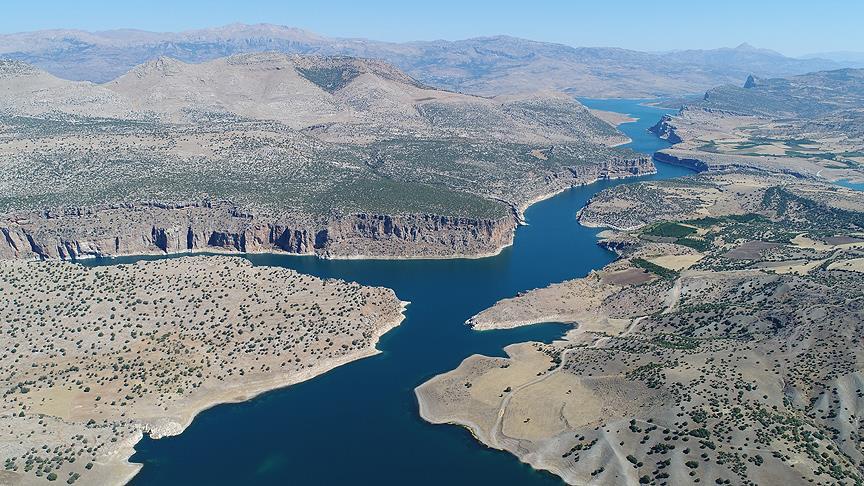
Euphrates River (AA)
The region of Mesopotamia watered by the Euphrates River has been home to some of the earliest great civilizations of human history. The Sumerian, Babylonian and Assyrian civilizations emerged on these fertile lands. This area witnessed the earliest human settlements, the first agricultural practices and the invention of writing. It is also the geographical origin of three major monotheistic religions: Judaism, Christianity and Islam. Consequently, the Middle East and the surrounding areas of the Euphrates River have directly influenced world history and culture.
The region between the Euphrates and Tigris rivers, known as Mesopotamia to the ancient Greeks and as al-Jazira to the Arabs, has held major political and economic importance throughout history. Its fertile plains and mineral deposits—including gold, silver, copper, iron and lead—made it a rich resource base. Its position as a crossroads between continents and the passage of major trade routes transformed it into a significant commercial center. Due to its strategic location, it became a point of convergence and conflict among major powers throughout history, including the Persian, Roman and Egyptian empires.
In the past, numerous bridges were constructed across the Euphrates River and its tributaries. Especially from the second half of the 19th century, road and bridge construction intensified, and many bridges were built during the reign of Sultan Abdulhamid II. Although the river’s waters were used as drinking water when clean, their primary use was for irrigating agricultural lands.
The most important commercial activity on the river was transportation; particularly in the Diyarbakır Sanjak, travel was conducted using rafts. It is known that river transport continued on the Tigris during the second half of the 19th century and that the state derived significant revenue from it.

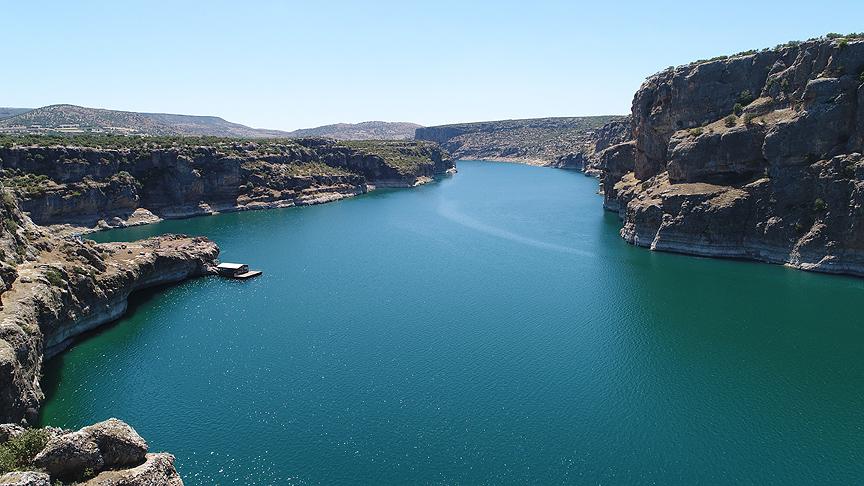
Euphrates River (AA)
After the establishment of the Republic, the issue of "water sharing" in the Middle East has become a major source of dispute. The Atatürk Dam, constructed by Türkiye as part of the Southeastern Anatolia Project (GAP), has caused tensions with neighboring countries such as Syria and Iraq over water usage.
Syria recognizes the Euphrates River as an international river, while Türkiye has adopted the approach of registering these waters as "transboundary waters." Türkiye holds a favorable position regarding the sharing of water and other resources, as international law has not yet established definitive agreements on this matter.
Anadolu Ajansı. "Fırat Nehri 3 ülkeye hayat veriyor." Accessed June 9, 2025. https://www.aa.com.tr/tr/turkiye/firat-nehri-3-ulkeye-hayat-veriyor/1228871.
Anadolu Ajansı. "Mezopotamya'yı oluşturan iki büyük nehrin birleştiği yer: El-Kurna." Accessed June 9, 2025. https://www.aa.com.tr/tr/pg/foto-galeri/mezopotamyayi-olusturan-iki-buyuk-nehrin-birlestigi-yer-el-kurna/0.
Birecik Kaymakamlığı. "Fırat Nehri." Accessed June 9, 2025. http://www.birecik.gov.tr/firat-nehri.
Forest General Directorate. "Fırat Nehri Havzası Rehabilitasyon Projesi (FIRAT)." Accessed June 9, 2025. https://www.ogm.gov.tr/firat/proje-hakkinda/firat.
Yılmazçelik, İbrahim. "Tarihi süreç içerisinde Dicle ve Fırat nehirleri hakkında kısa bir değerlendirme." Düşünce Dünyasında Türkiz 10, no. 52 (August 2019): 81–95. https://dergipark.org.tr/en/download/article-file/3173496.

Euphrates River
Length(s) | 1800 km | ||||||||
|---|---|---|---|---|---|---|---|---|---|
Source | Karasu River Murat River | ||||||||
Place of Outflow | Basra Gulf | ||||||||
Countries It Passes Through | Iraq Syria Türkiye | ||||||||
Geographical Features and Course
Historical and Cultural Significance
Economic Use and Infrastructure
Current Issues and Water Sharing