




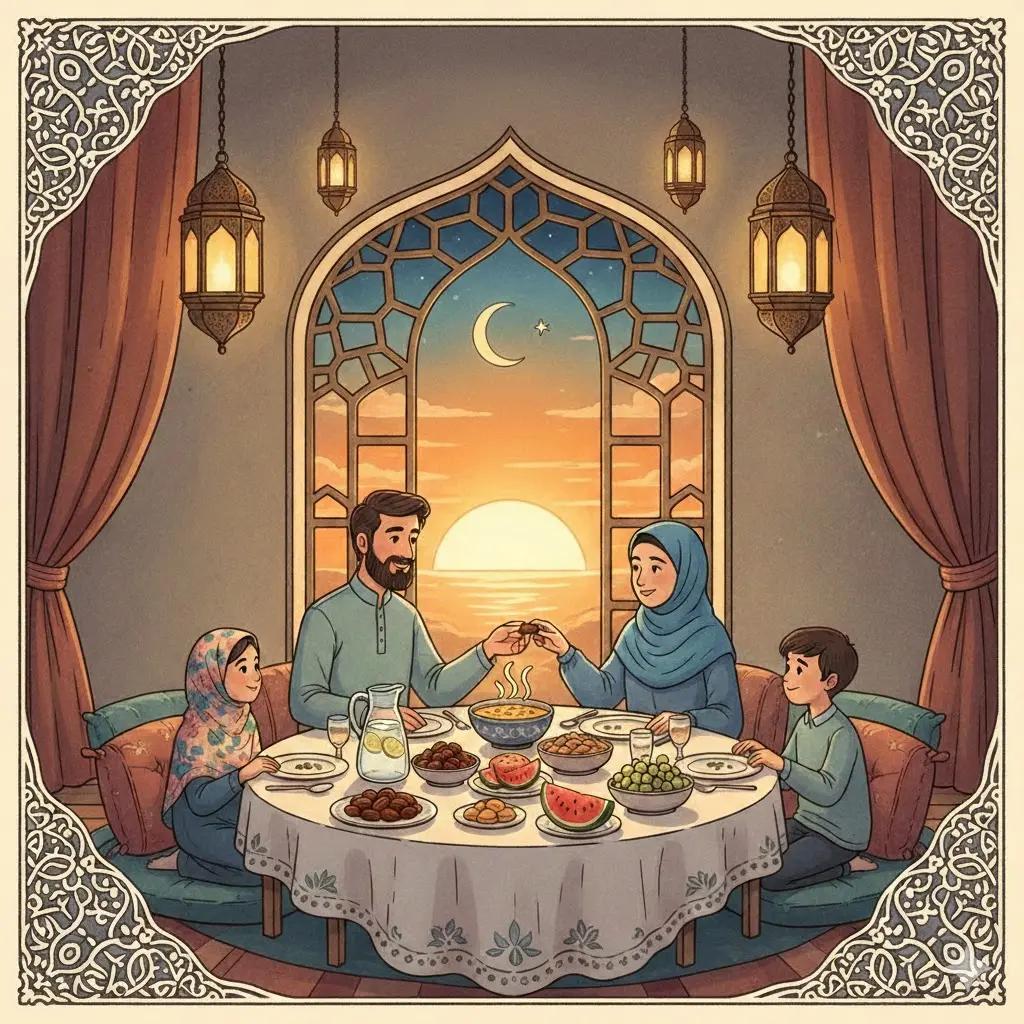
What is Iftar?
İftar is derived from the Arabic root "fatr", which means "to break" or "to open," particularly in the sense of breaking the fast. As a religious term, iftar refers to the act of properly ending the fast, which Muslims observe from dawn until sunset for worship.

Generated by Artificial Intelligence.
Timing and Practice of Iftar
The time for iftar begins precisely when the sun has set. The Qur’an commands that the fast be completed until nightfall, and the practices of the Prophet Muhammad confirm that this time coincides with sunset.
Some key facts regarding iftar are as follows:
- Promptness: It is considered sunnah (the Prophet’s recommendation) not to delay iftar once the time has entered and to break the fast promptly.
- Method of Breaking the Fast: It is recommended to break the fast with water, dates, or a sweet food. It is well known that the Prophet Muhammad would break his fast with a few dates before performing the evening prayer.
Iftar Prayer: Offering a prayer when breaking the fast is sunnah. A commonly recited prayer acknowledges that the fast was observed for the pleasure of Allah and that the breaking of the fast is made possible by His provision.

Generated by Artificial Intelligence.
Social and Cultural Significance
Iftar is not merely a mealtime but also a social period marked by increased solidarity.
- Offering Iftar: Those with the means are encouraged to provide iftar meals to others, especially those in need. According to a hadith, whoever provides iftar for a fasting person earns the same reward as that person.
- Ottoman Tradition: During the Ottoman period, iftar tables held great importance. In the palace and wealthy homes, tables were opened to the public, and after meals, guests were given various gifts or money under the name "diş kirası".

Generated by Artificial Intelligence.
Nutritional Recommendations
After a full day of fasting, it is important for the iftar meal to be balanced and nutritious for the sake of physical health. To maintain energy levels, it is recommended to consume slow-digesting carbohydrates such as oats, whole wheat bread, or brown rice. To meet the body’s hydration needs, drinking plenty of water is advised.