




What is Materials Science and Nanotechnology Engineering?
🧪 What is Materials Science and Nanotechnology Engineering?
🔬 This branch of engineering studies and develops the materials that objects are made from.
🌟 Glass, metals, plastics and even extremely small (nanoscale) particles are the subject of this science.
🧠 Materials scientists design lighter stronger and more environmentally friendly materials.
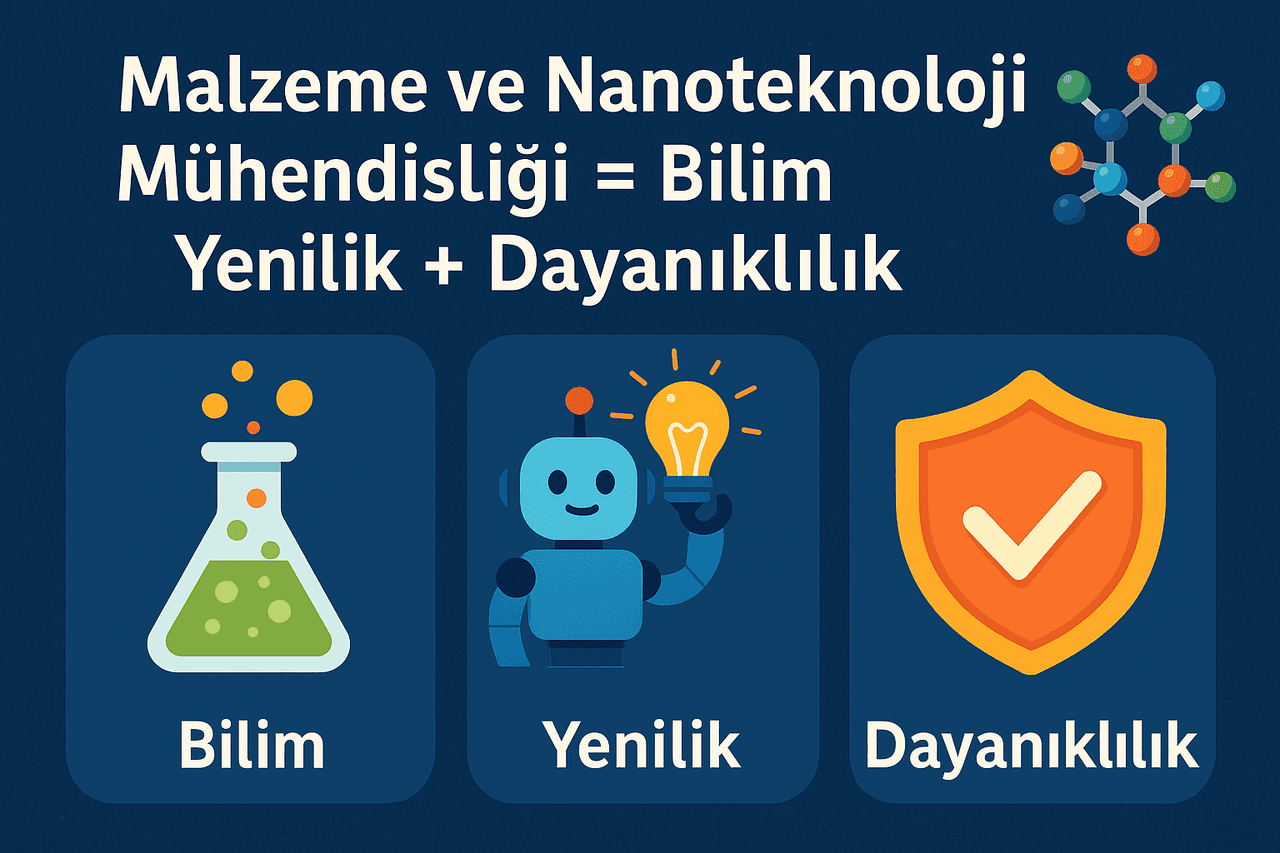
What is Materials and Nanotechnology Engineering? (Generated by artificial intelligence.)
🧲 What Do They Do?
⚙️ They develop very light but extremely durable metals for aircraft.
👟 They can design flexible yet strong soles for sports shoes.
📱 They produce special glass to prevent smartphone screens from scratching.
💊 They can design nano capsules to ensure drugs reach exactly the right part of the body.
🚀 They coat spacecraft exteriors with materials resistant to extreme heat.

What Does a Materials and Nanotechnology Engineer Do? (Generated by artificial intelligence.)
🧬 What is Nanotechnology?
🧫 Nanotechnology involves working with particles so small they cannot be seen with the naked eye (nanometre scale).
🧪 Structures thousands of times thinner than a human hair can be created to produce new materials.
🧠 This technology is used in medicine electronics textiles and even agriculture.
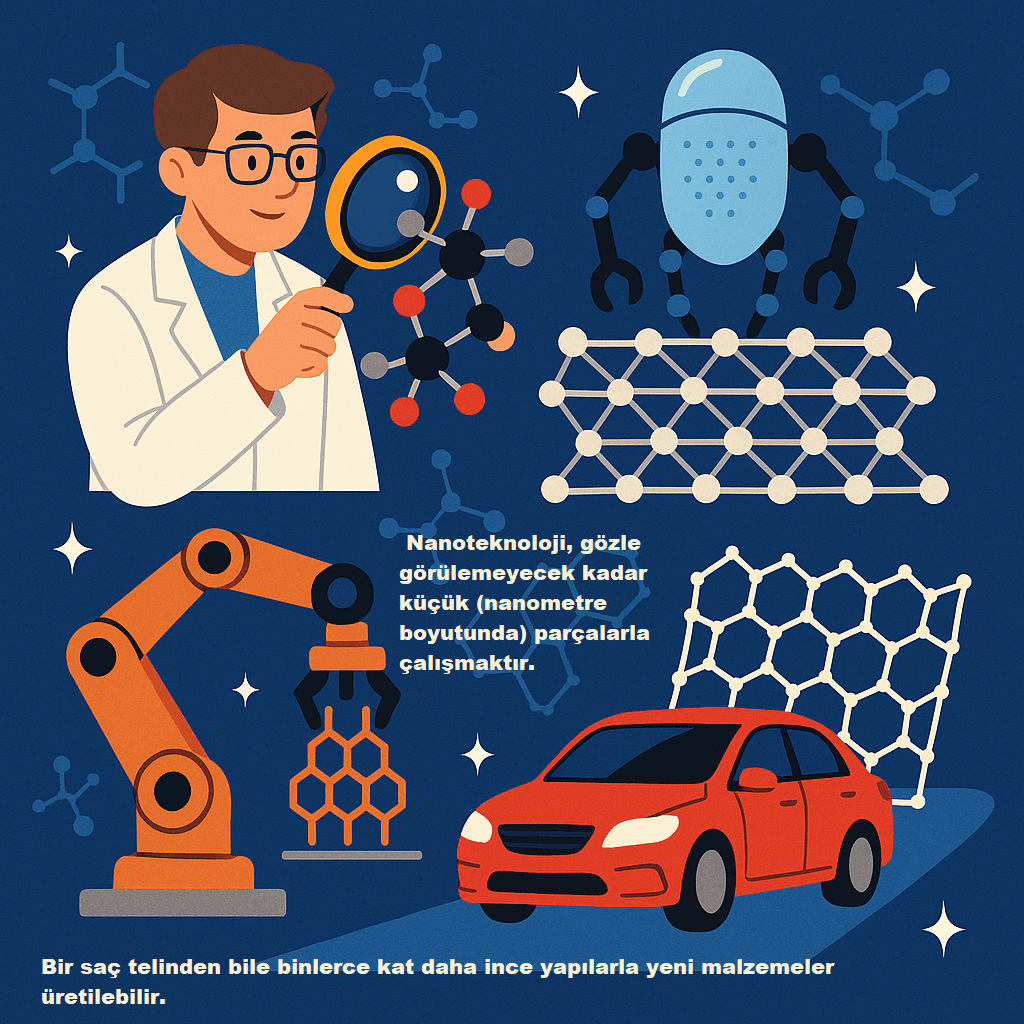
What is Nanotechnology? (Generated by artificial intelligence.)
🌍 Where Is It Used?
🏥 In medicine: To deliver cancer drugs only to diseased cells
📱 In electronics: To create smaller and more powerful computer chips
🧤 In textiles: To produce self-cleaning fabrics
🌽 In agriculture: To develop nano solutions that protect plants from diseases
🚗 In automotive: To manufacture durable yet lightweight vehicle parts

Where Is a Materials and Nanotechnology Engineer Used? (Generated by artificial intelligence.)
🧰 What Tools Do They Use?
🔬 Microscopes (especially electron microscopes)
🧪 Laboratory testing equipment
🖥️ Materials modeling and simulation software
🧲 Nano-coating machines
⚗️ Chemical analysis systems

What Tools Does a Materials and Nanotechnology Engineer Use? (Generated by artificial intelligence.)
🎓 How to Become a Materials and Nanotechnology Engineer?
📚 Have an interest in the sciences (chemistry physics biology)
🧠 Be curious patient and enjoy conducting experiments
🧑🏫 Study at university in the “Materials Science and Nanotechnology Engineering” department after high school
🧪 Gain practical experience through laboratory work and internships
💡 Be excited by designing and testing new materials

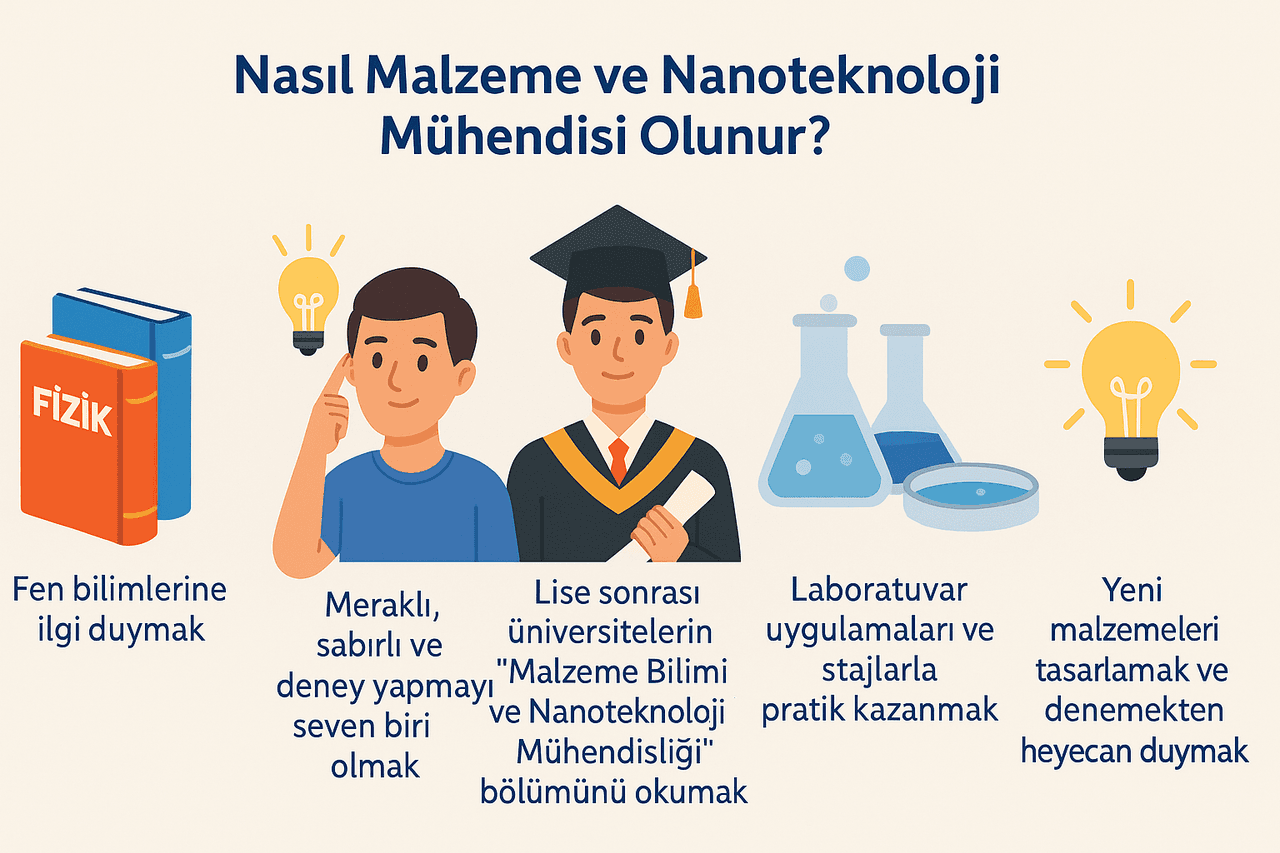
How to Become a Materials and Nanotechnology Engineer? (Generated by artificial intelligence.)
🌟 Why Is It Important?
🌱 They develop more eco-friendly and recyclable materials.
🧬 They produce solutions that enable faster and more effective treatment of diseases in medicine.
🚀 They make technology lighter stronger and more durable.
📉 They create materials that save energy.
🏆 They shape the future of engineering projects.

Why Is a Materials and Nanotechnology Engineer Important? (Generated by artificial intelligence.)
References
Turkiye Presidency Human Resources Office. “Materials Science and Nanotechnology Engineering (19034) – Placement and Admission Information.” Higher Education Program Atlas (YÖK Atlas). Accessed 13 May 2025. https://yokatlas.yok.gov.tr/netler-tablo.php?b=19034
TOBB University of Economics and Technology. “Department of Materials Science and Nanotechnology Engineering.” TOBB ETÜ Official Website. Accessed 13 May 2025. https://www.etu.edu.tr/tr/bolum/malzeme-bilimi-ve-nanoteknoloji-muh
TÜBİTAK Science Young. “Nanotechnology.” Science Young. Accessed 13 May 2025. https://bilimgenc.tubitak.gov.tr/konular/nanoteknoloji-0
TÜBİTAK Science and Technology. “Nano Materials: Particles That Change the Future.” Science and Technology Magazine Issue 398 Volume 34 Page 40. Accessed 13 May 2025.