




What Is Ocean Acidification?
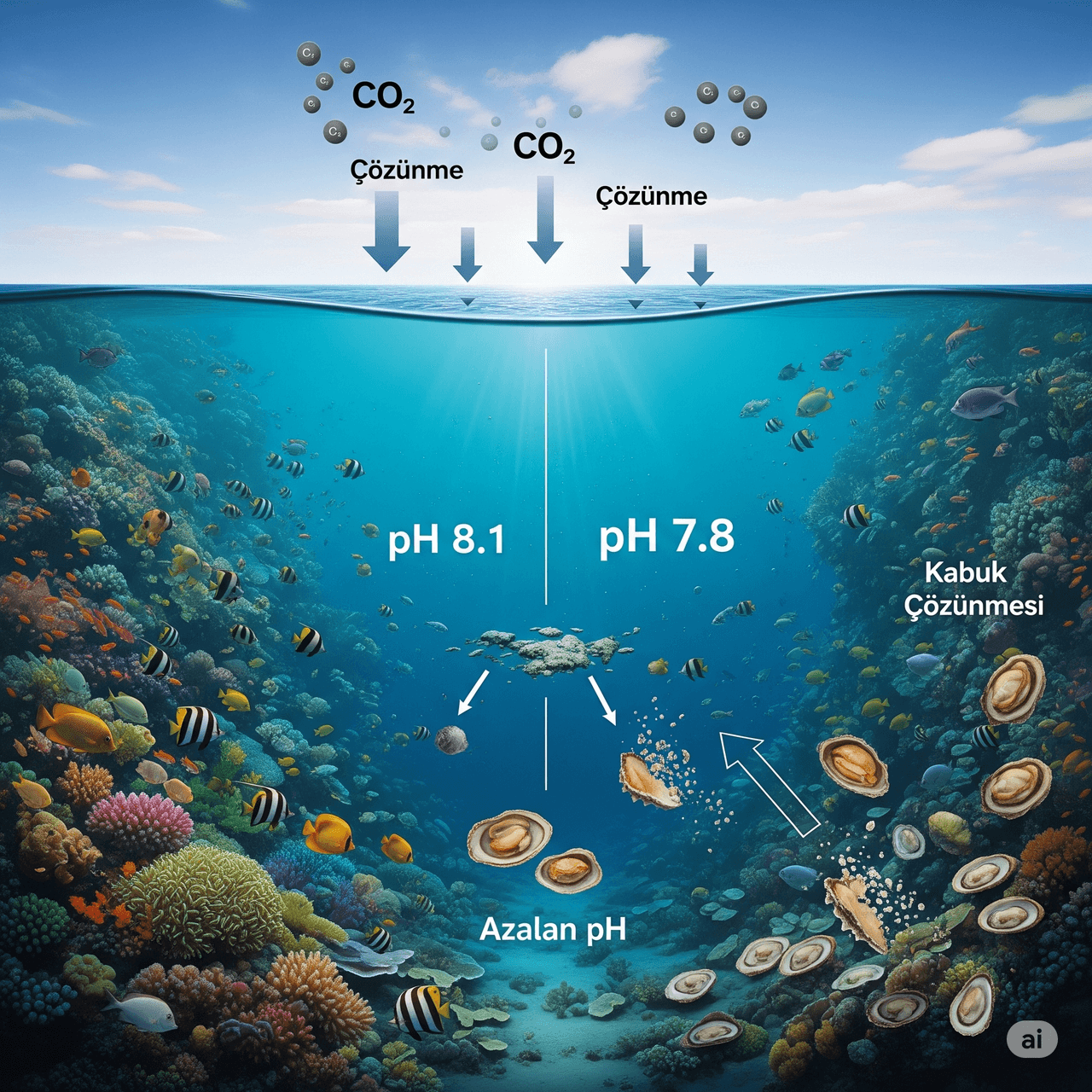
Ocean acidification means the oceans are becoming more acidic. This occurs when carbon dioxide (CO₂) from the atmosphere dissolves into seawater. The dissolved CO₂ alters the water’s chemistry, lowering its pH value. As a result, the oceans gradually become more acidic.
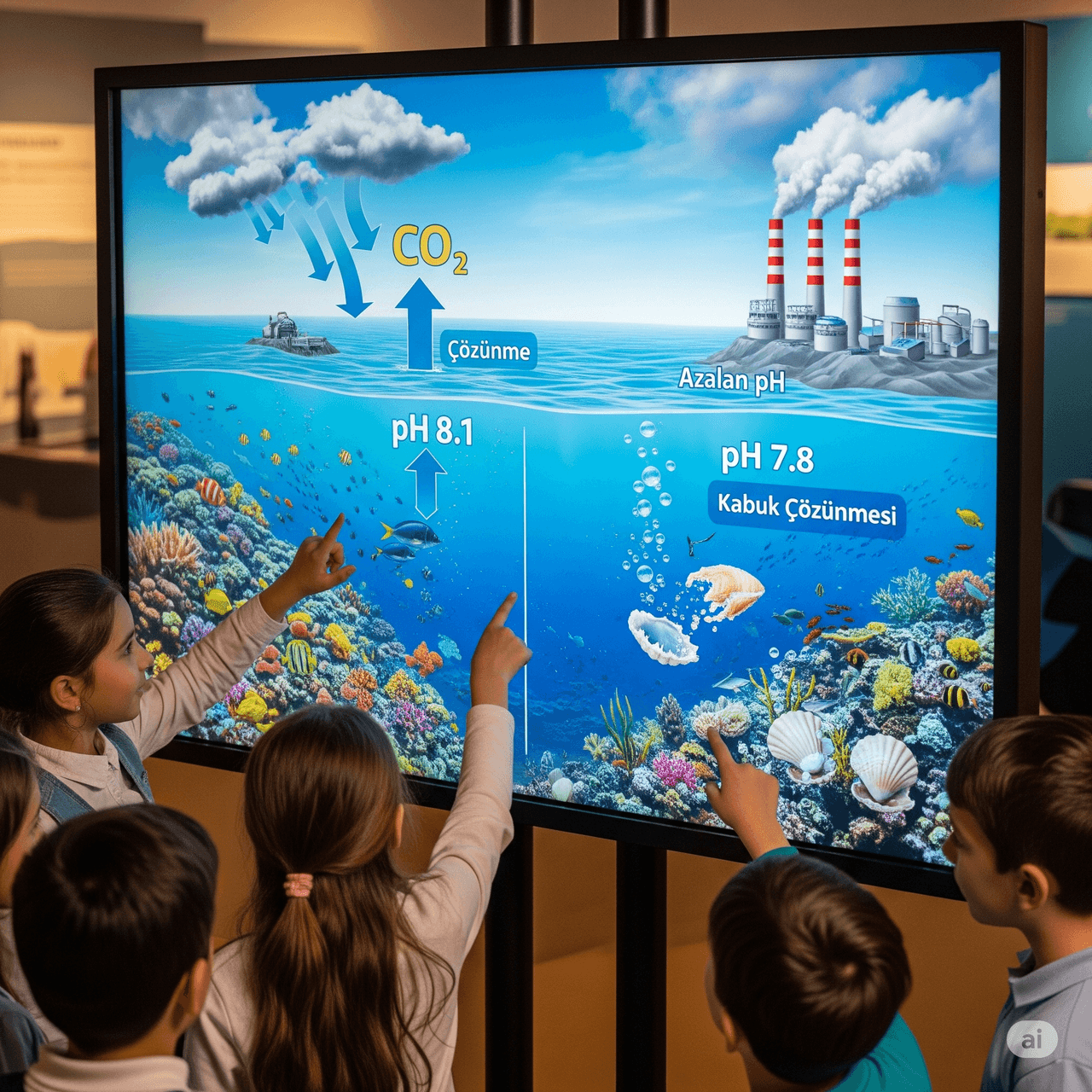
(Generated by Artificial Intelligence.)
Why Does It Happen?
Humans burn coal, oil and natural gas to produce energy. This releases large amounts of CO₂ into the atmosphere. A significant portion of this emitted gas is absorbed by the oceans. Normally, oceans play a protective role for life, but when too much CO₂ enters the water, the balance is disrupted and the water’s acidity increases.
Effects on Marine Life
Ocean acidification puts many marine organisms in difficulty. Shell-forming organisms such as oysters, sea urchins and mussels struggle to build their shells. Corals cannot form their skeletons and become weakened. This affects the entire marine ecosystem, as many fish and other species depend on coral reefs for habitat.
Effects on Humans
Changes in the ocean affect not only living organisms but also people. Fisheries may decline and food sources from the sea could be threatened. Tourism may also suffer, as coral reefs are vital both for their beauty and for supporting marine life.
Solutions
The best way to slow ocean acidification is to reduce the amount of CO₂ released into the atmosphere. Using cleaner energy sources, protecting forests and choosing environmentally friendly transportation methods can help. This way, the oceans can remain healthier.
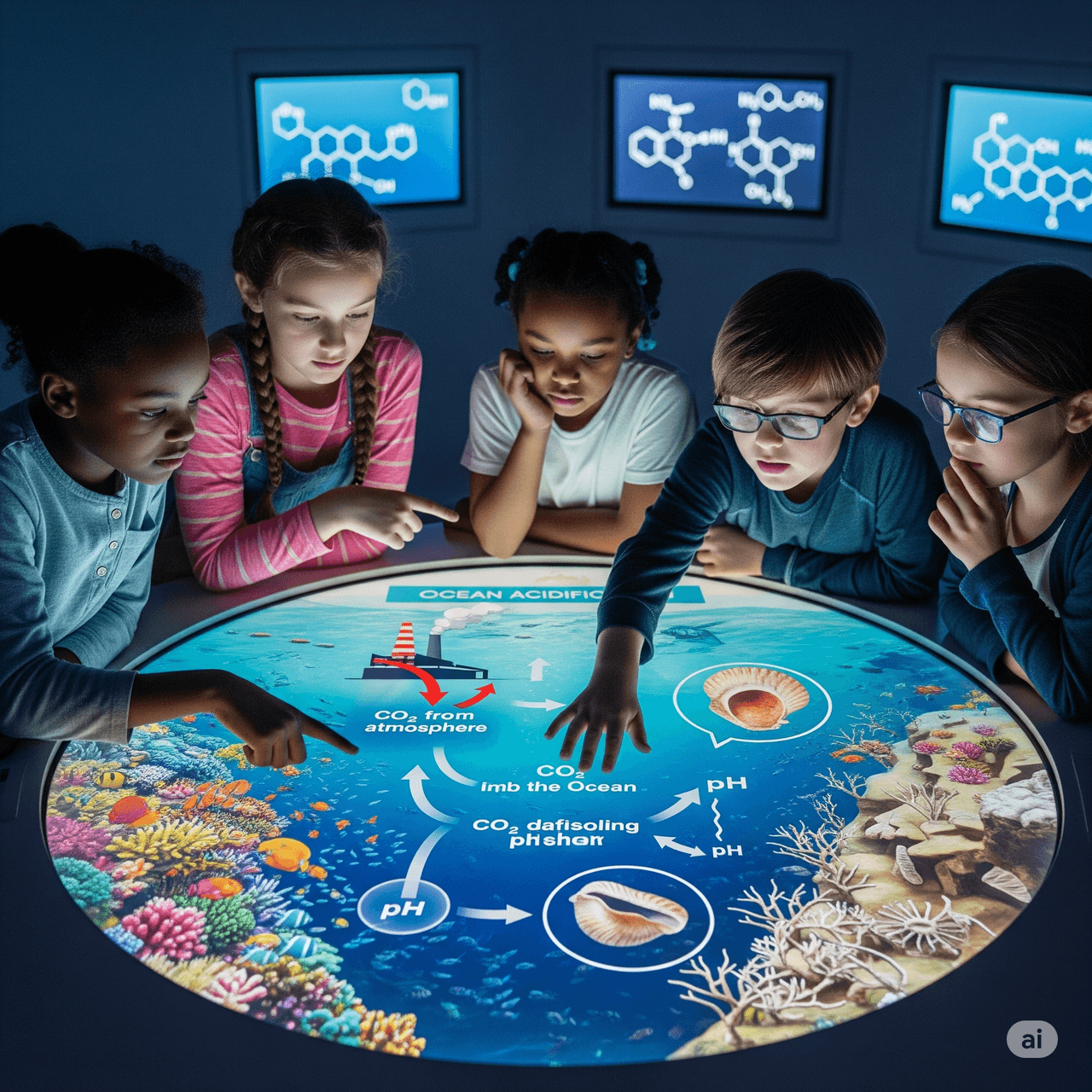
(Generated by Artificial Intelligence.)
Oceans are like the heart of our planet. Without them, life would be far more difficult. Keeping the oceans healthy is essential for the future of both marine life and humans. Therefore, protecting them is the responsibility of us all.


