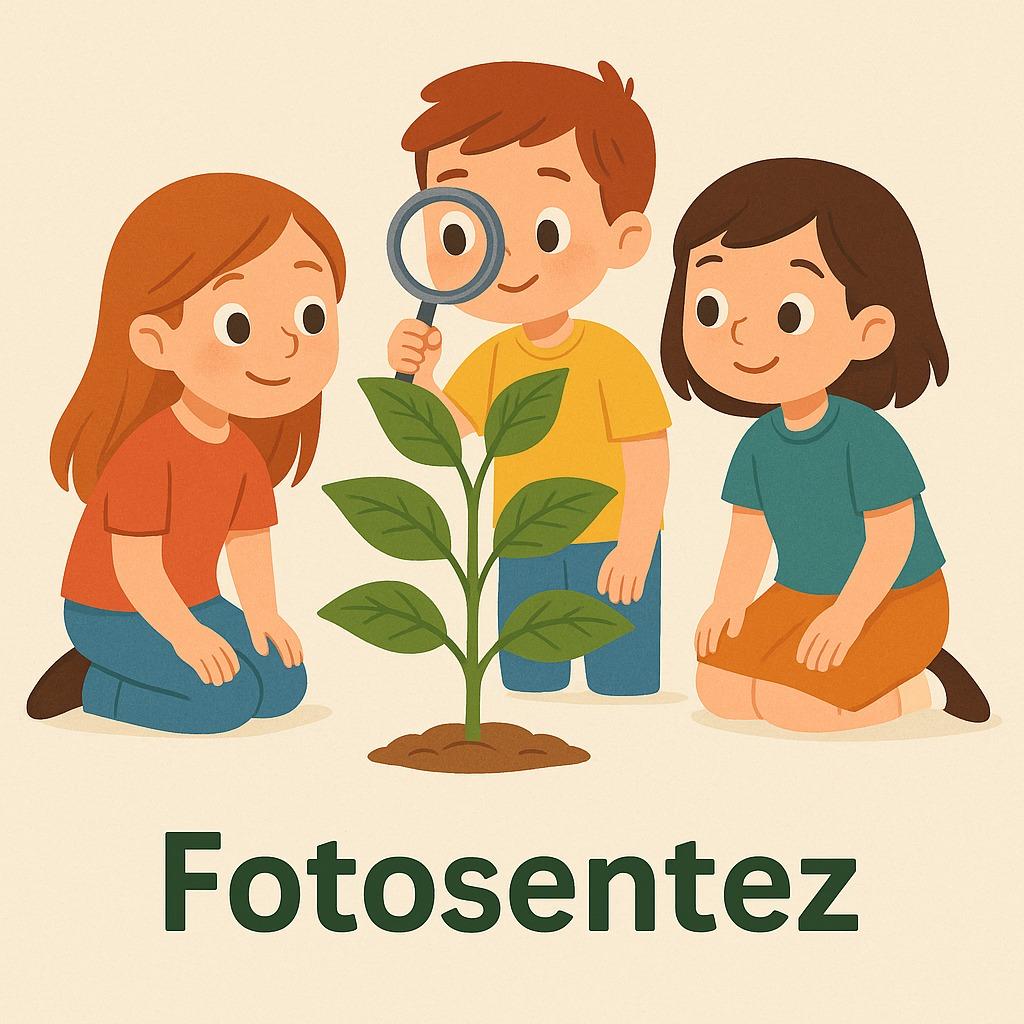




What Is Photosynthesis?
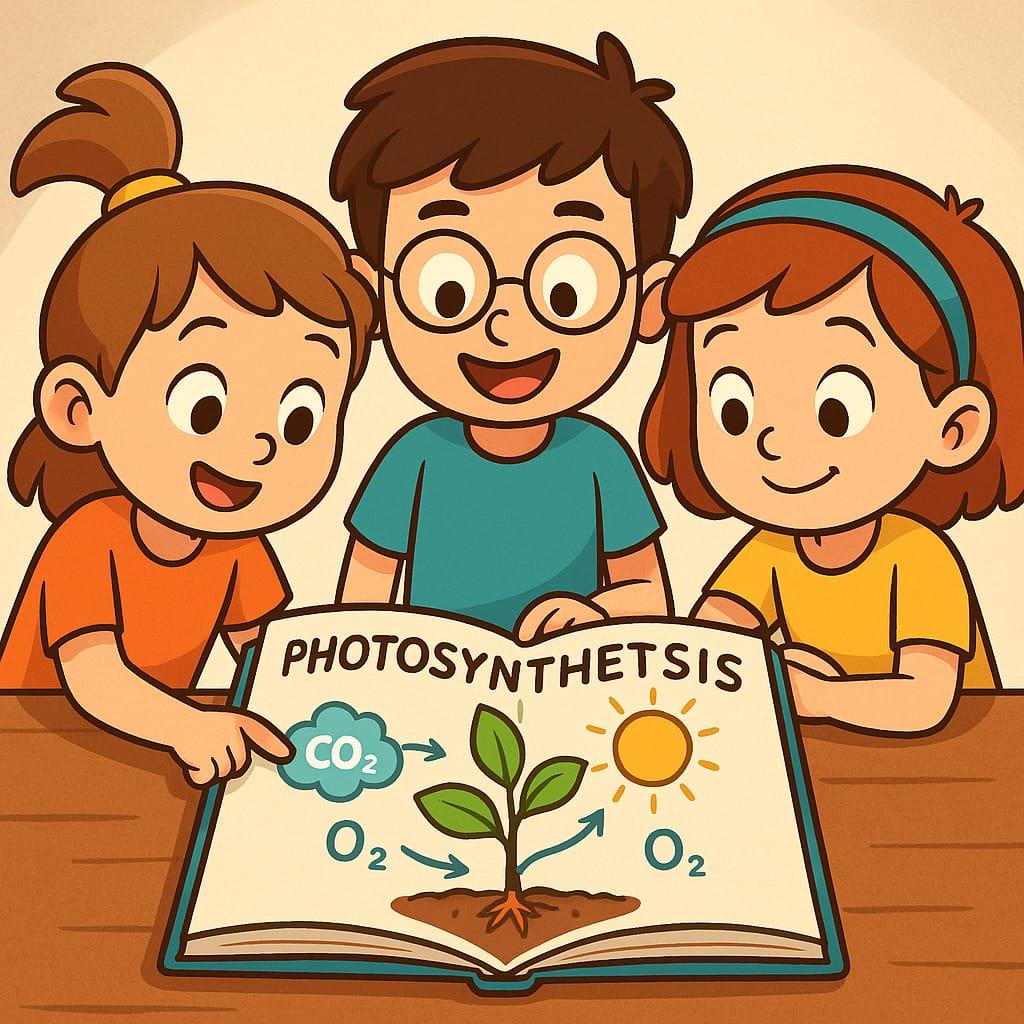
Photosynthesis is the process by which plants, certain algae, and bacteria produce food using sunlight. These organisms combine carbon dioxide (CO₂) from the air and water (H₂O) absorbed from the soil, using sunlight to produce glucose (sugar) and oxygen (O₂).

Visual Explaining the Photosynthesis Cycle. (Generated by Artificial Intelligence.)
What Is the Purpose of Photosynthesis?
The purpose of photosynthesis is to produce the food glucose that the plant needs. This glucose provides energy for the plant’s growth and survival. At the same time, oxygen is released into the environment, supporting the survival of other living organisms.
Where Does Photosynthesis Occur?
Photosynthesis occurs in the green parts of the plant, primarily in the leaves, because leaves contain cellular organelles called chloroplasts. Inside these organelles is chlorophyll (the green pigment). Chlorophyll captures sunlight to initiate photosynthesis.
Conditions Required for Photosynthesis
Four essential elements are required for photosynthesis:
Sunlight
Water (H₂O)
Carbon dioxide (CO₂)
Chlorophyll (the green pigment)
If any of these conditions are absent, photosynthesis cannot occur.
Chemical Equation of Photosynthesis
We can represent the process of photosynthesis with the following formula:
6CO₂ + 6H₂O + Light Energy → C₆H₁₂O₆ + 6O₂
This shows that six molecules of carbon dioxide and six molecules of water, using sunlight, combine to produce one molecule of glucose and six molecules of oxygen.

Visual Illustrating the Photosynthesis Process. (Generated by Artificial Intelligence.)
Stages of Photosynthesis
Light-Dependent Reactions
This stage occurs only in the presence of light. Chlorophyll absorbs sunlight, and this energy splits water molecules. As a result, oxygen is released.
Light-Independent Reactions (Calvin Cycle)
This stage can continue even in the absence of light. In this phase, carbon dioxide is converted into glucose using energy stored during the light-dependent reactions.
Organisms That Perform Photosynthesis
Green plants: Both seed-bearing and non-seed-bearing plants.
Algae: Small aquatic organisms.
Cyanobacteria: Certain microscopic organisms.
Children Studying the Concept of Photosynthesis. (Generated by Artificial Intelligence.)
Importance of Photosynthesis
Oxygen production: Essential for organisms that respire.
Food production: Plants produce their own food, and animals rely on this food for sustenance.
Ecological balance: Photosynthesis reduces atmospheric carbon dioxide and helps maintain the balance of gases in nature.
Parts of Plants Where Photosynthesis Does Not Occur
Photosynthesis does not occur in parts of the plant that lack chlorophyll. For example:
- Roots
- Flowers
- Woody stems
Difference Between Photosynthesis and Respiration
Photosynthesis occurs during the day and produces energy.
Respiration occurs both day and night and consumes energy.
During photosynthesis, oxygen is produced; during respiration, oxygen is consumed.