



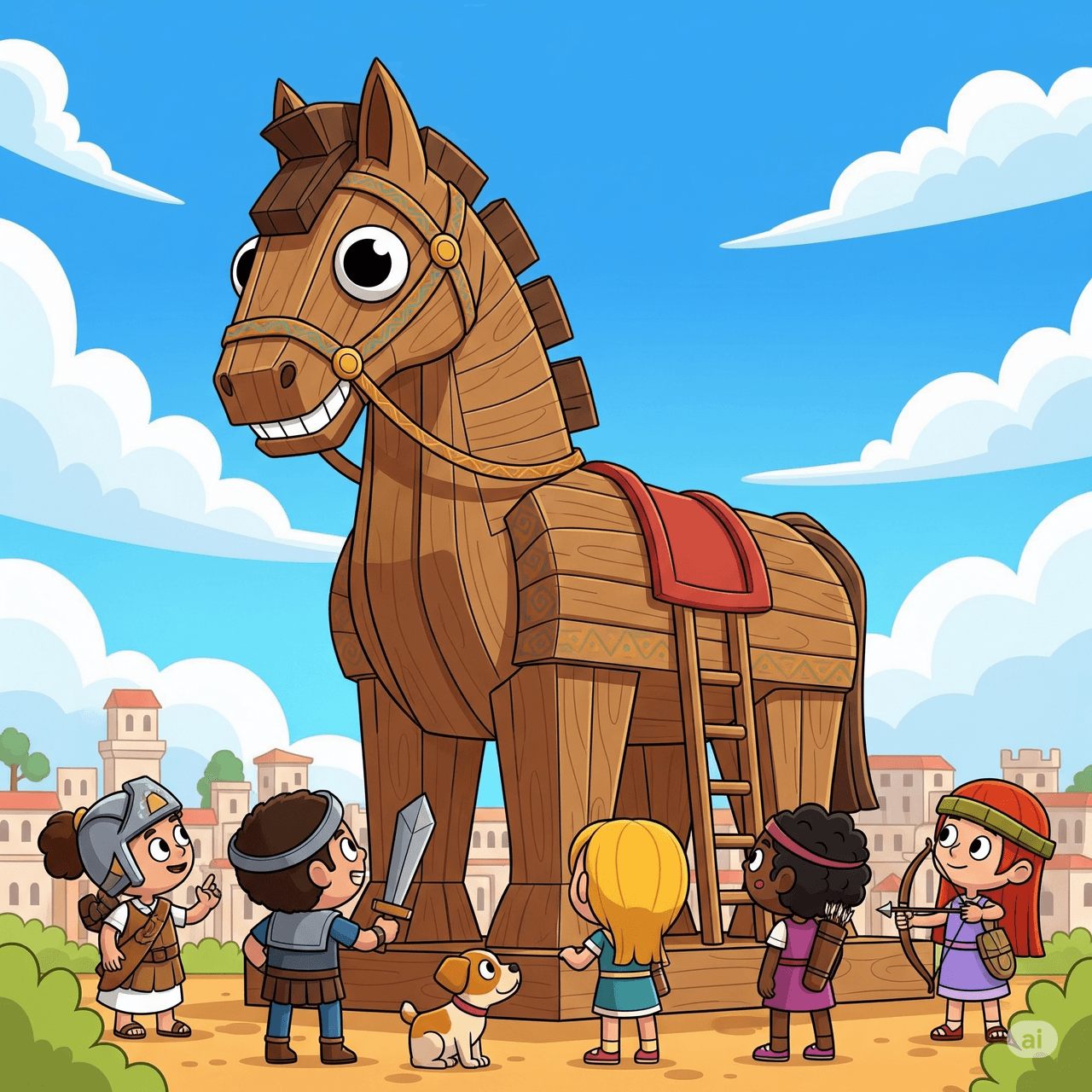

What is the Iliad Epic?
The Iliad is an epic poem written by the ancient Greek poet Homer. It recounts a portion of the Trojan War and portrays the world of its heroes and the gods. This work, rich in mythological elements, holds a significant place in Greek culture.
(Image generated by artificial intelligence.)
Gods and Humans
In the Iliad, gods such as Hera, Athena, and Aphrodite influence human fate. Conflicts among the goddesses can even affect the course of the human war. This dynamic invites reflection on the relationship between free will and destiny.
Fate and Free Will
In the epic, some events are shaped by divine intervention, yet humans also make their own choices. Thus, although fate is significant, the heroes are still capable of acting freely.
The Beauty Contest Among the Goddesses
At the beginning of the Iliad, there is an event known as the Beauty Contest. The three goddesses Hera, Athena, and Aphrodite argue over who is the most beautiful. This incident is a pivotal moment that leads to the outbreak of the Trojan War.
The Emotions of the Goddesses Like Real Humans
The interactions between Hera, Athena, and Aphrodite resemble the behavior of children at play. They sometimes make sudden and emotional decisions; at other times, they strive to reach calm agreements.
Why Is It Important?
The Iliad contains both historical and mythological elements. It helps us understand Greek myths and the values of that era. Through Homer’s perspective, the distinction between the world of the gods and the world of humans is conveyed.

(Image generated by artificial intelligence.)
Why Is the Iliad Still Read Today?
Because it powerfully portrays emotions such as courage, friendship, anger, and peace. It teaches history and mythology.


