
This article was automatically translated from the original Turkish version.
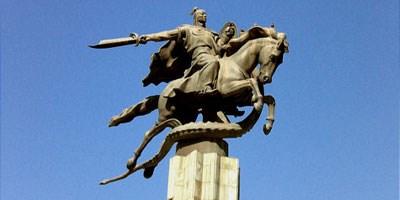
Manas Han
Mythology | Turkish | ||||||||
|---|---|---|---|---|---|---|---|---|---|
Mythology is the term given to the collective body of legendary narratives, beliefs about gods, heroes, supernatural beings, and the origins of the universe developed by societies throughout history. It derives from the Greek words "mythos" (legend, fairy tale) and "logos" (word, narrative). Myths are narratives that have shaped the cultural and religious structures of various peoples and have continued to exert influence across many fields, from art to philosophy.
Mythology has taken shape through ancient beliefs, religious rituals, heroic epics, and attempts to explain natural phenomena. Myths typically persist in a community’s collective memory as important place and are transmitted from generation to generation through oral culture.
Myths reflect the values, world worldview, and way of life of a particular society. The scientific study of mythology reveals the historical, anthropological, sociological, and psychological dimensions of myths.
Mythologies are generally classified according to specific themes.
Mythologies vary according to the geographical and cultural conditions of the societies in which they developed. Significant differences exist between Turkish and Greek mythologies:
Mythology has left profound influences on literature, art, philosophy, and even science. The impact of Greek mythology on Europe art is evident; artists and sculptors of the Renaissance period frequently used mythological figures. Turkish mythology has been preserved through folk literature, epics, and fairy tales up to the present day. Kutadgu Bilig, Dede Korkut Tales, and the Manas Epic are among the most important written sources of Turkish mythology.
Can, Şefik. Klasik Yunan Mitolojisi. Ötüken Neşriyat A.Ş. 19th ed. Istanbul 2020.
Yılmaz, Salih. "Türk Mitolojisinde Bilgelik Kavramı". Türk Dünyası Bilgeler Zirvesi: Gönül Sultanları Buluşması. May 26-28, 2014. 2013 Turkic World Culture Capital Agency (TDKB). Eskişehir, pp. 231-249

Manas Han
Mythology | Turkish | ||||||||
|---|---|---|---|---|---|---|---|---|---|
Types of Mythology
Differences Between Turkish and Greek Mythology
Cultural and Artistic Influences of Mythology