




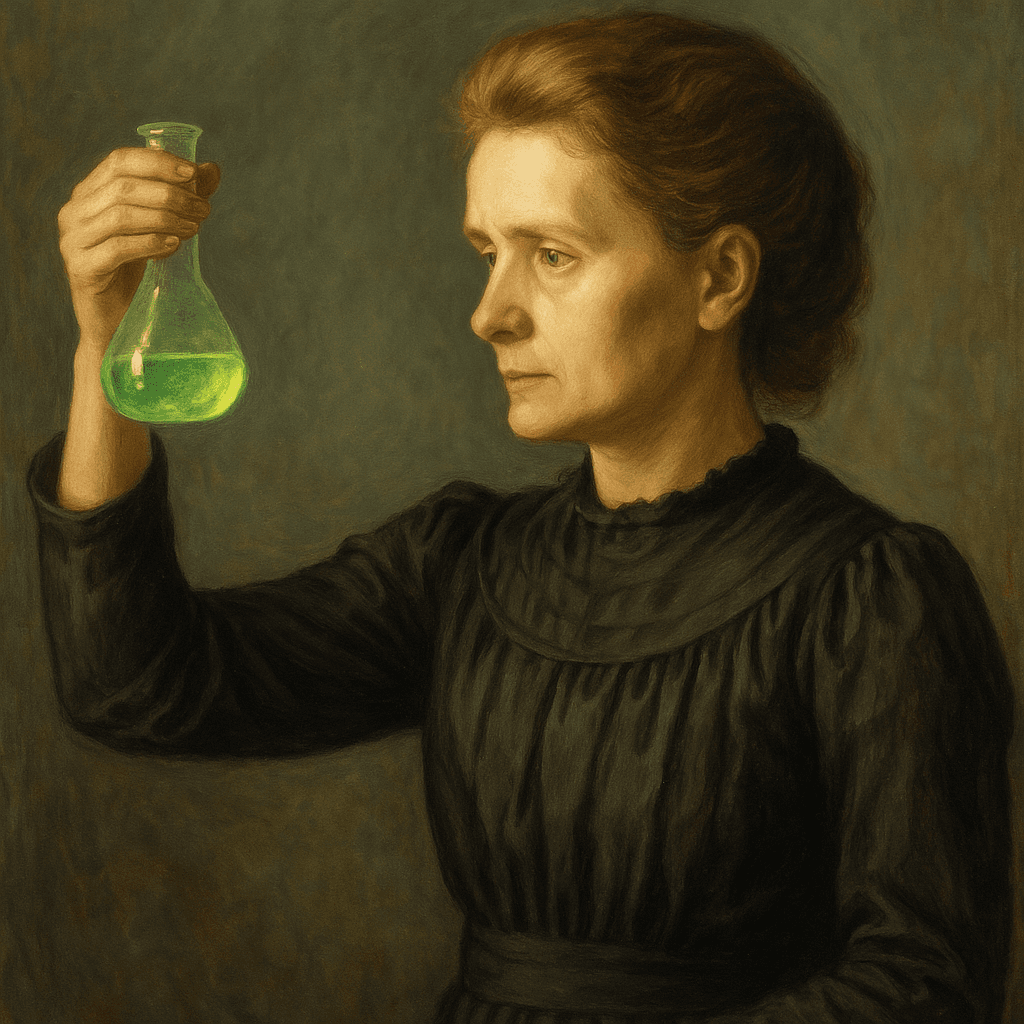
Who is Marie Curie?
Marie Curie is a female scientist who made highly significant discoveries in the scientific world. Her real name is Maria Skłodowska. She was born in 1867 in Warsaw, Poland. She later moved to France to pursue her education and studied physics and chemistry at the Sorbonne University.
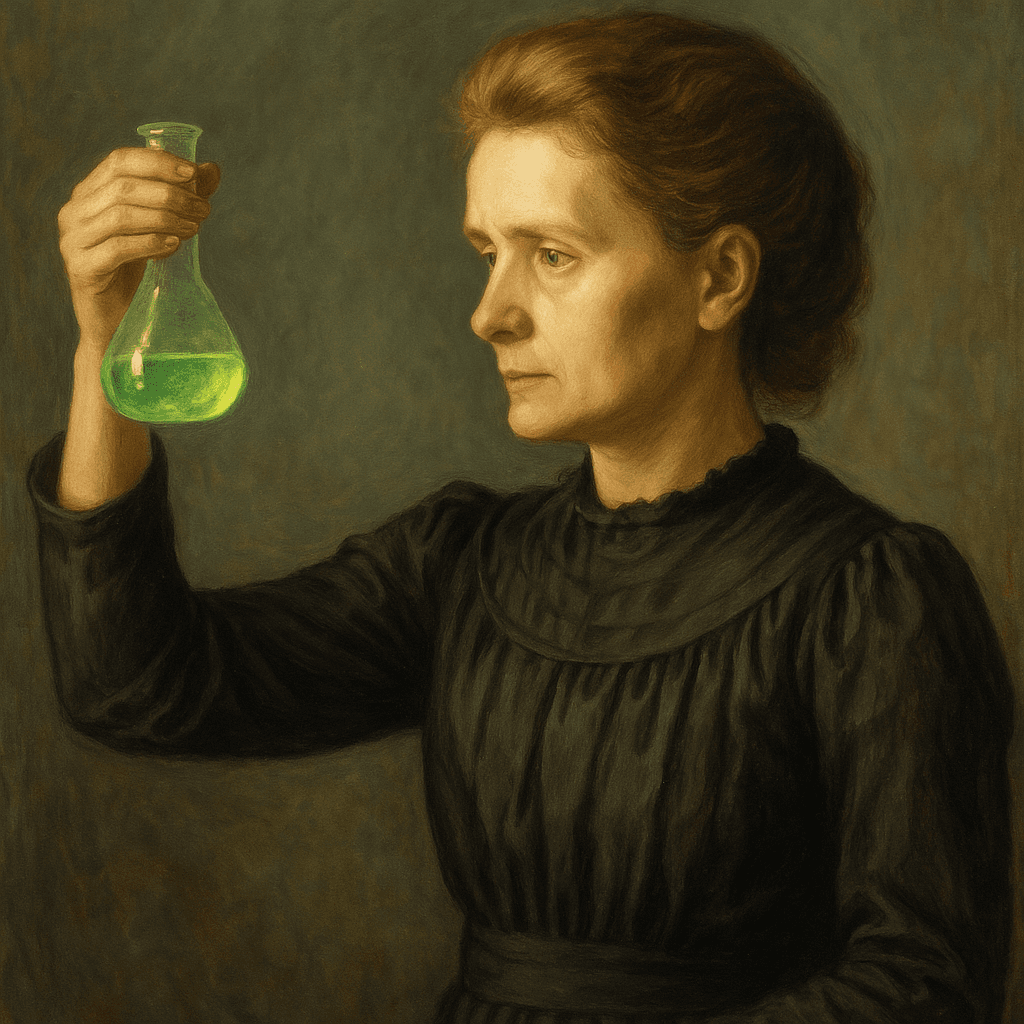
(Generated by artificial intelligence.)
🏫 Education and Challenges
At that time, women in Poland were forbidden from attending university. Marie joined the clandestine “Flying University,” which provided secret education. After moving to France, she worked tirelessly and completed her studies with top honors, thereby entering the world of science.
🔬 Contributions to Science
Marie Curie investigated a phenomenon known as “radioactivity.” Together with her husband Pierre Curie, she discovered the elements polonium and radium in 1898. These discoveries led to major advances in the treatment of diseases.
🏅 Two Nobel Prizes
Marie Curie received the Nobel Prize in Physics in 1903 and the Nobel Prize in Chemistry in 1911. She became the first woman and the only person ever to win Nobel Prizes in two different scientific fields. This secured her place in scientific history with golden letters.
🚑 Contributions During War
During World War I, Marie Curie developed mobile X-ray units to assist in treating wounded soldiers at the front lines. Thus, she worked not only for science but also for humanity.
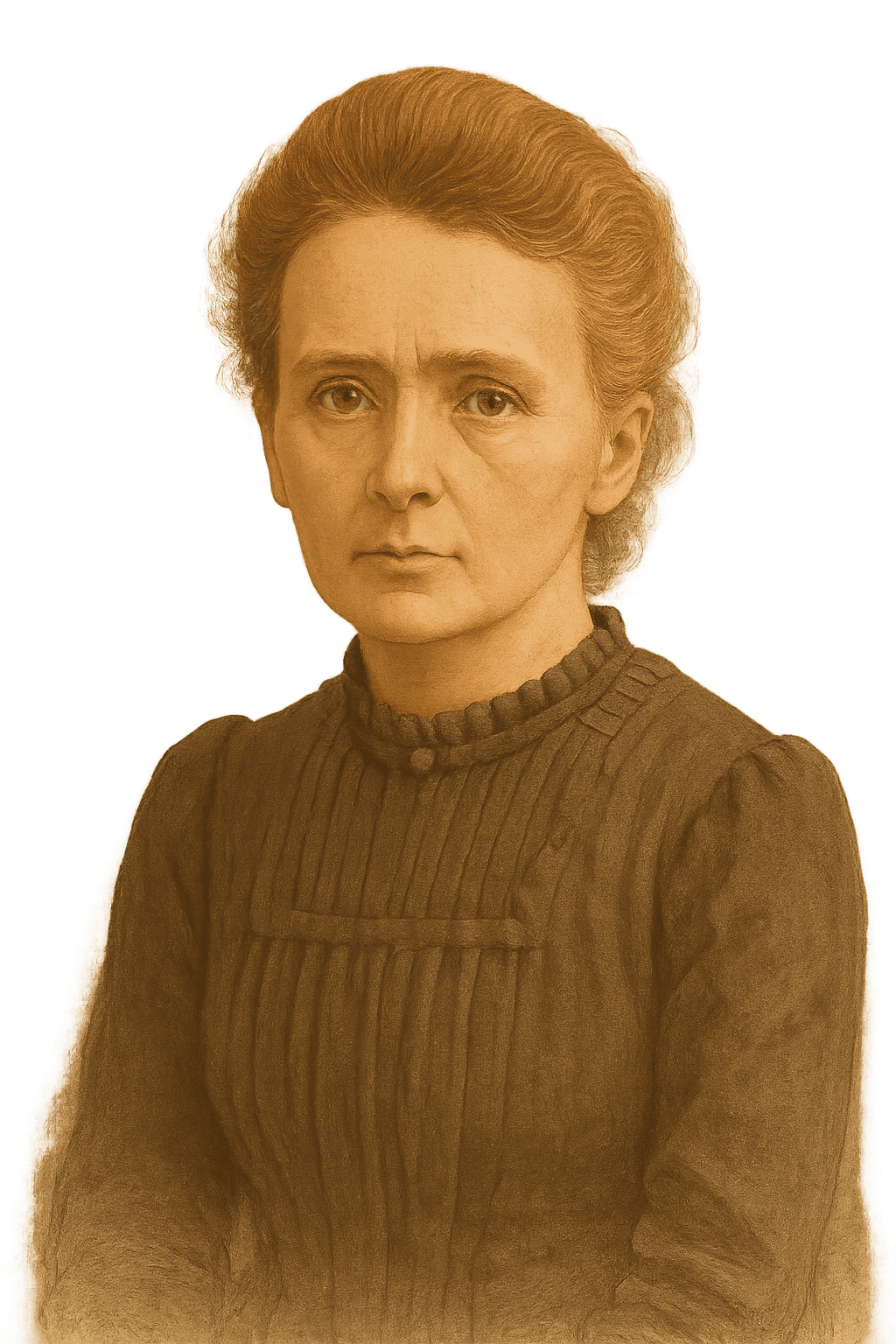
(Generated by artificial intelligence.)
🧪 Fields of Research
- Physics
- Chemistry
- Radioactivity
- Medical Technology
📚 Major Works
- Recherches sur les substances radioactives (Research on Radioactive Substances)
- Traité de radioactivité (Treatise on Radioactivity)
🌍 Impact on the Scientific World
Thanks to Marie Curie’s work, radiation therapy—now used to treat diseases such as cancer—was developed. She paved the way for women’s participation in science and trained many female scientists at the institute she founded.