
This article was automatically translated from the original Turkish version.
X-Ray
Discoverer(s) | Wilhelm Conrad Röntgen | ||||||||
|---|---|---|---|---|---|---|---|---|---|
Discovery(ies) | 1895 | ||||||||
Wavelength Range | 0.01–10 nm | ||||||||
Energy Range | 100 eV – 100 keV | ||||||||
Applications | Medicine, Industry, Aviation, Security | ||||||||
Method Type | Non-destructive Testing | ||||||||
Varieties | Soft X-ray, Hard X-ray | ||||||||
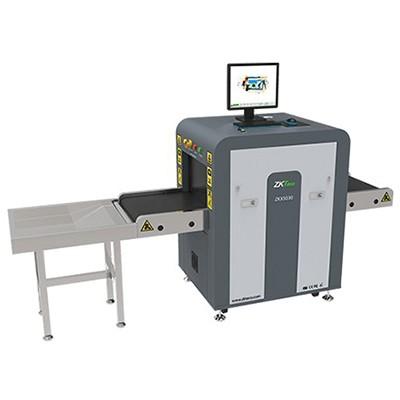
X-Ray, also known as radiography technology, is a technique that uses high-frequency electromagnetic waves to penetrate materials and visualize their internal structures. It is widely used in medicine, industry, security systems, and scientific research. X-ray radiation was discovered by Wilhelm Conrad Röntgen in 1895 and has since revolutionized numerous fields.
X-ray systems emit high-energy photons that pass through objects. Areas with lower density, such as soft tissues or materials, allow the rays to pass through, while high-density regions absorb them. This creates a contrasted image of the internal structure on a detector or film.
In Türkiye, X-ray systems are widely used in the healthcare sector. Domestic solutions for security and defense applications have also been developed by institutions such as HAVELSAN, ASELSAN, TÜBİTAK MAM, and STM. Additionally, locally produced X-ray scanners are employed in customs facilities for civil aviation and border security applications.
Accessed May 27, 2025. https://dergipark.org.tr/tr/download/article-file/1841364
Accessed May 27, 2025. https://mam.tubitak.gov.tr/tr/icerik/test-analiz-hizmetleri
Ministry of Health of the Republic of Turkey, General Directorate of Public Health. *Kanser Kontrol Programı*. Ankara: Ministry of Health of the Republic of Turkey, August 17, 2021. https://hsgm.saglik.gov.tr/depo/birimler/kanser-db/Dokumanlar/Raporlar/17.Agustos_2021_Kanser_Kontrol_Programi_versiyon-1.pdf.
TÜBİTAK Marmara Araştırma Merkezi. "Test ve Analiz Hizmetleri." TÜBİTAK MAM Resmî Sitesi, 2021.
Yıldız, A. "Tersanelerdeki Radyografi Uygulamaları ve Risk Değerlendirmesi." Teknik Bilimler Dergisi 18, no. 3 (2020): 45–59.

X-Ray
Discoverer(s) | Wilhelm Conrad Röntgen | ||||||||
|---|---|---|---|---|---|---|---|---|---|
Discovery(ies) | 1895 | ||||||||
Wavelength Range | 0.01–10 nm | ||||||||
Energy Range | 100 eV – 100 keV | ||||||||
Applications | Medicine, Industry, Aviation, Security | ||||||||
Method Type | Non-destructive Testing | ||||||||
Varieties | Soft X-ray, Hard X-ray | ||||||||
Working Principle
Applications
Medical Applications
Industrial Applications
Security and Defense
Advantages
Disadvantages
X-Ray Technology in Türkiye