



Why Are Planets Round?
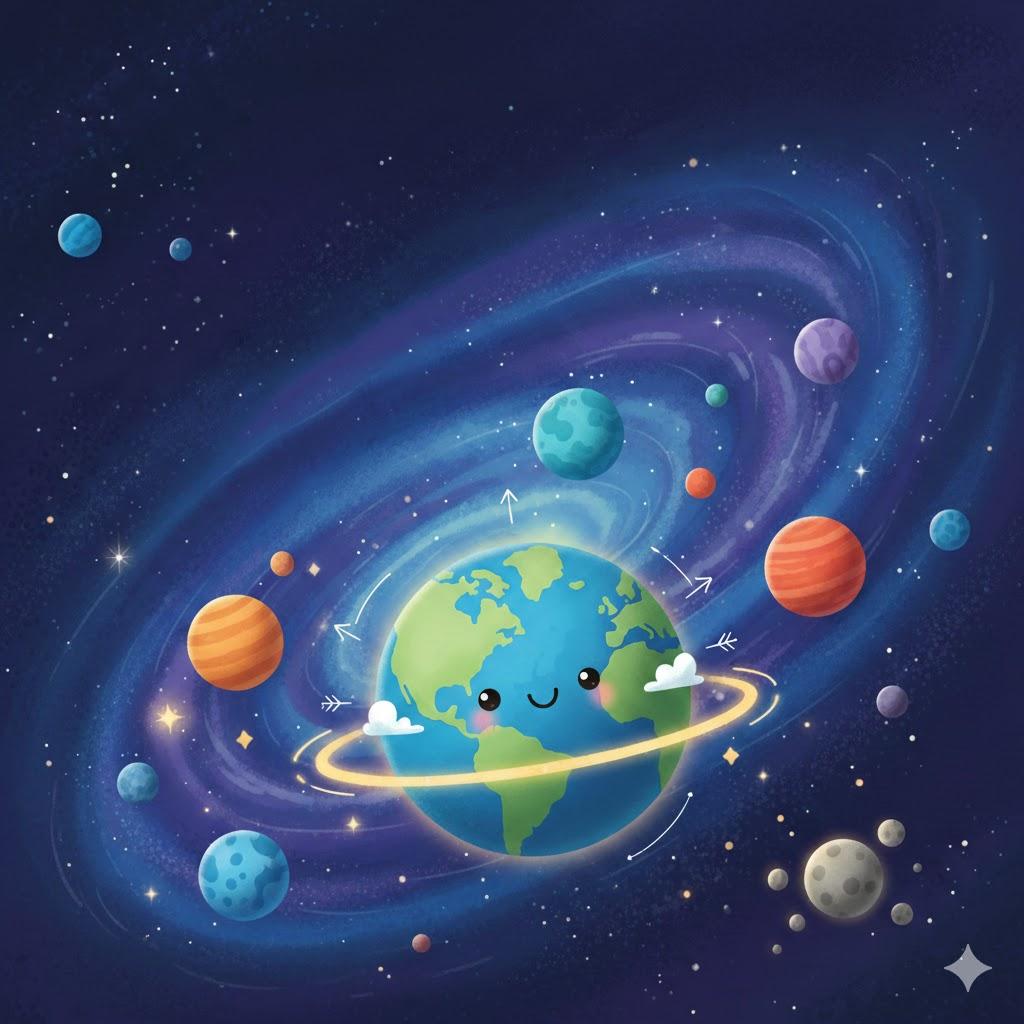
Güneş Sistemi’nde bulunan sekiz gezegen; boyutları, yapıları ve Güneş’e uzaklıkları bakımından birbirinden farklı olsa da hepsi temel olarak yuvarlak bir şekle sahiptir. Gezegenlerin bu ortak şeklinin arkasında yatan temel neden, uzaydaki en temel kuvvetlerden biri olan kütle çekimidir.

Yapay Zeka ile Oluşturulmuştur.
Gravity and the Process of Spherical Formation
The formation of planets begins when materials such as rock, dust and gas in the vacuum of space collide and clump together. When this accumulation reaches a certain size, the force known as gravity comes into play. Gravity is a force that holds matter together in space and pulls everything toward the center.
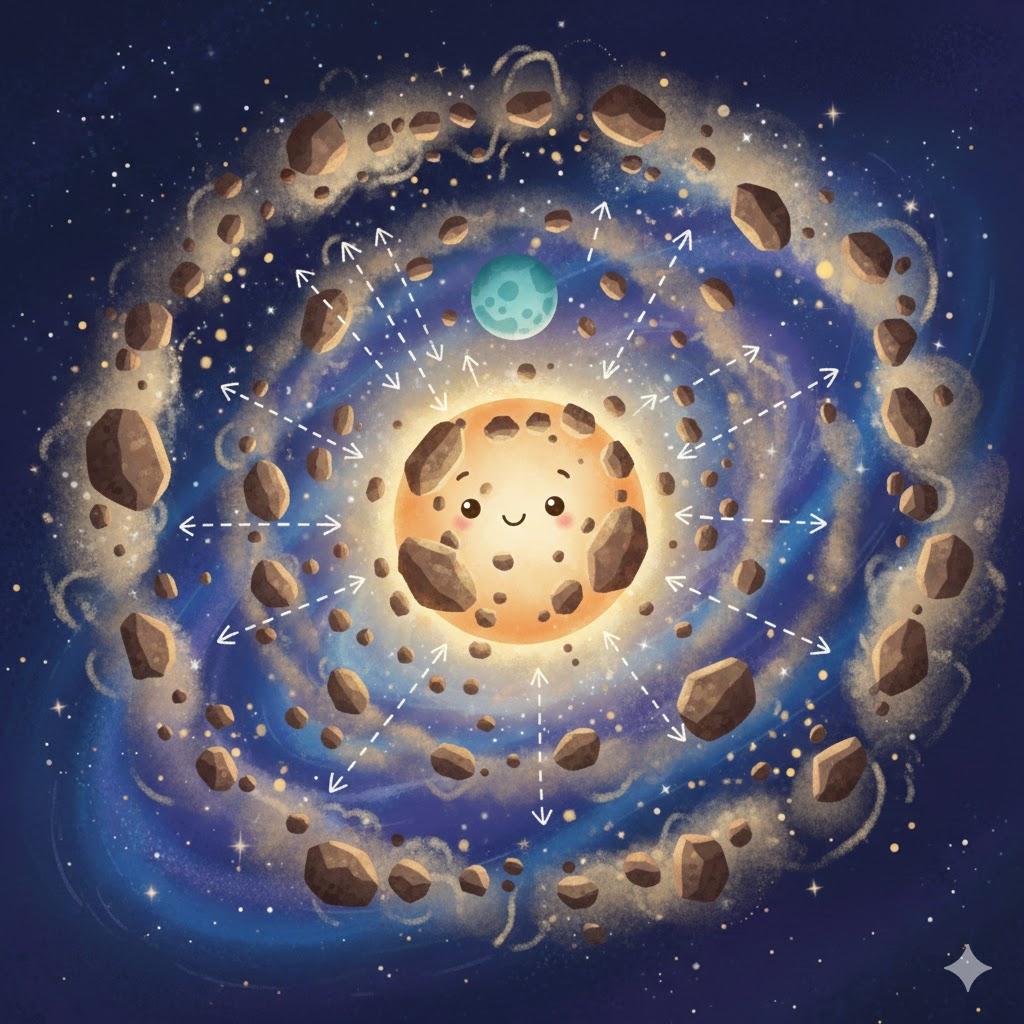
A planet’s gravity pulls equally from all directions toward its center, much like the spokes of a bicycle wheel pull the rim inward. This uniform gravitational pull shapes the planet into a three-dimensional circle: a sphere (like a ball).
Yapay Zeka ile Oluşturulmuştur.
Why Are Some Celestial Bodies Not Spherical?
Most small celestial bodies in the Solar System, such as some asteroids, are not spherical. This is because their mass is too low. When mass is insufficient, the resulting gravitational force is not strong enough to overcome the material’s structural rigidity and pull the body into a spherical shape.

Yapay Zeka ile Oluşturulmuştur.
Sphere or Oblate Spheroid?
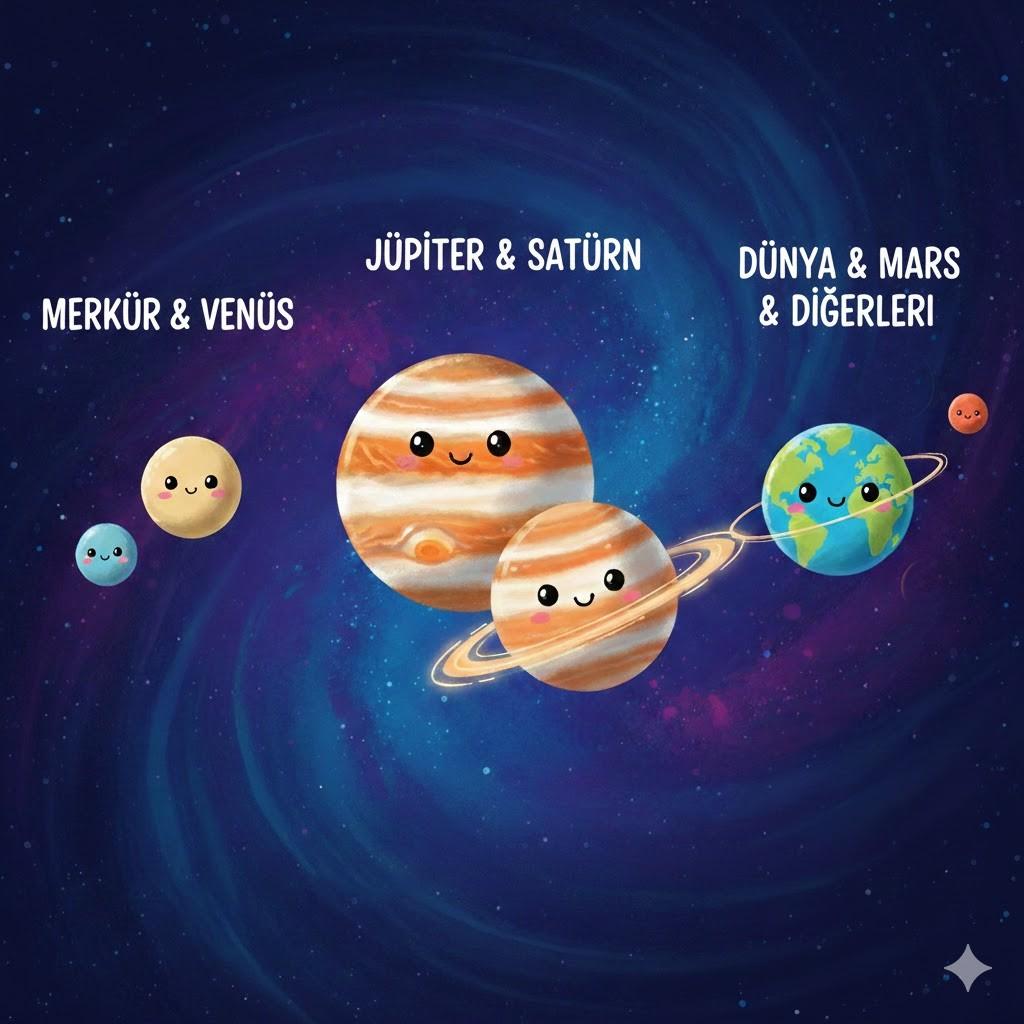
None of the planets are perfect spheres. The degree to which a planet is spherical depends on its rotation speed.
- Mercury and Venus: They rotate slowly around their axes, so they are nearly perfect spheres.
- Jupiter and Saturn: These gas giants rotate very rapidly. Their high rotation speeds cause material at the equator to bulge outward due to centrifugal force. This makes their midsections appear thicker and more swollen. Saturn is 10.7 percent thicker at the equator than at the poles, and Jupiter is 6.9 percent thicker. Their shapes resemble a basketball being sat upon.
- Earth and Mars: These two planets are smaller than the gas giants and rotate more slowly, so they are very close to spherical. Earth is 0.3 percent thicker at the equator and Mars is 0.6 percent thicker; since both differences are less than 1 percent, they are easily considered spherical.
- Uranus and Neptune: These planets fall in between; Uranus is 2.3 percent thicker at the equator and Neptune is 1.7 percent thicker.
Yapay Zeka ile Oluşturulmuştur.