



Why Does Soap Foam?
Last Updated: 12/01/2025
Share
Soap foams because soap molecules reduce the surface tension of water; this allows bubbles (small air pockets) to form between water and air.
The Two Ends of the Molecule – What Is Soap?
- One end of a soap molecule loves water (hydrophilic, from “hydro-=water” and “-philic=loves”), while the other end repels water (hydrophobic), meaning “water-avoiding”.
- When water and air meet, this unique structure helps the water spread out like a thin film and traps air, creating foam.

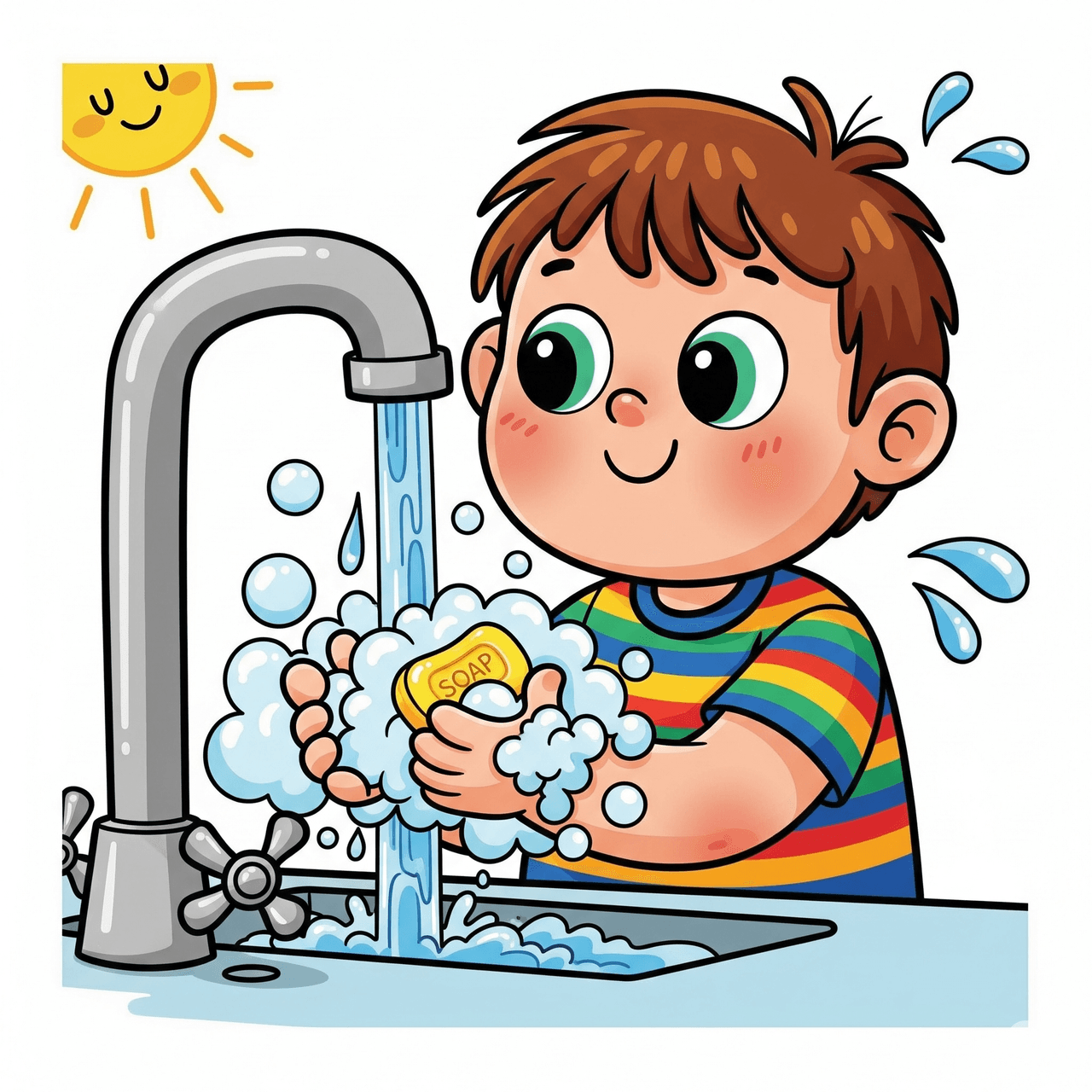
(Generated by artificial intelligence)
Reduction of Surface Tension – How Is Foam Made Persistent?
- The surface of pure water is taut, like a rubber sheet (high surface tension). Soap reduces this tension, allowing thin water films (bubble membranes) to last longer. This is how the foams we see are formed.
“How Is It Formed?”
- Thanks to soap’s two-ended structure, a foam (a thin film) forms between water and air. This film reduces surface tension and transforms into bubbles that do not burst easily.

(Generated by artificial intelligence)
“Why Do Some Soaps Foam More?”
- Special foaming agents such as sodium lauryl sulfate (SLS), used in dishwashing or shower gels, enhance foaming power. These chemicals further reduce the surface tension of soap.
- Natural soaps generally produce less foam; however, certain oils like coconut oil can give soap greater foaming properties.
“Why Does Foam Appear White?”
- Soap foam consists of air trapped between extremely thin water films. These structures scatter light in many directions, making it impossible to perceive any color, so the foam always appears white.