




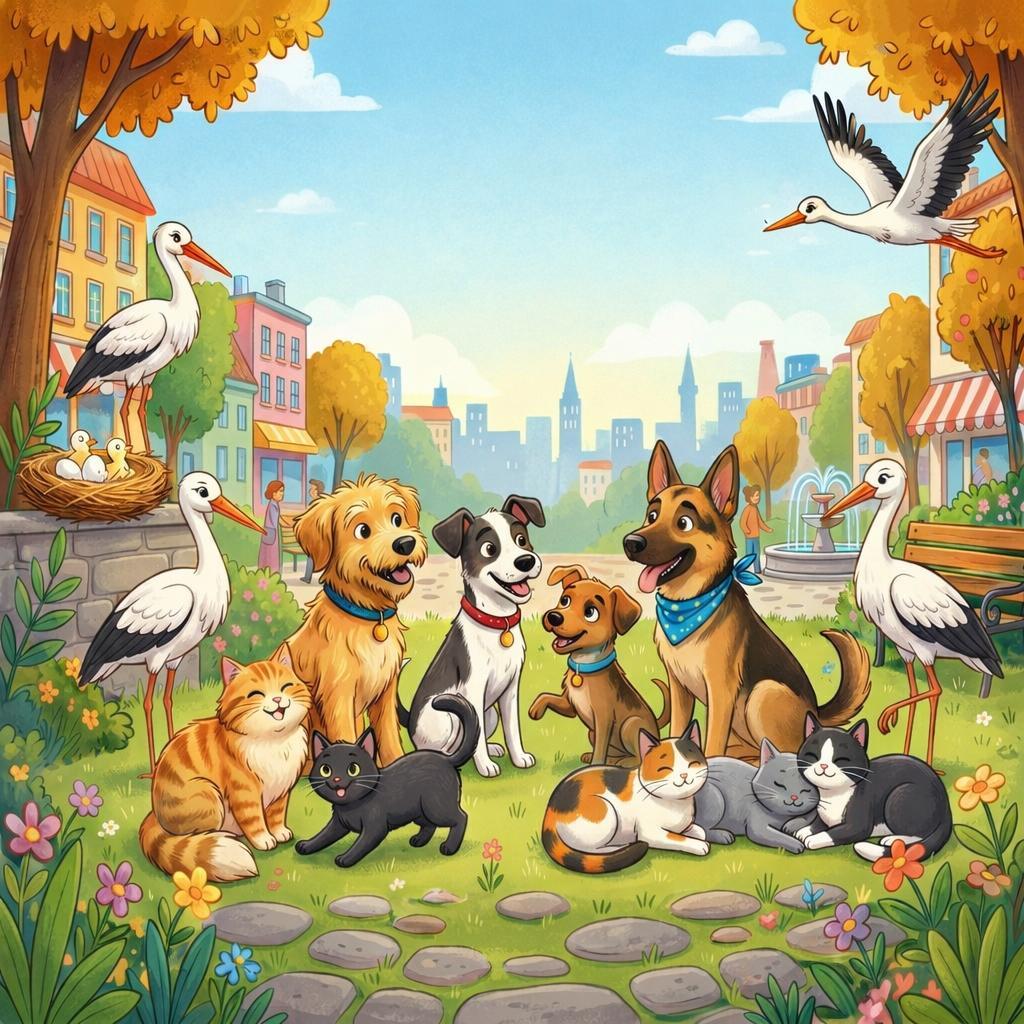
World Street Animals Day
Stray animals are our loyal neighbors whom we encounter every day in our neighborhoods, parks, or on the way to school. To improve their living conditions and raise awareness about them, every year April 4 is observed as World Stray Animals Day.

Young people caring for stray animals (Image generated by artificial intelligence).
⌛Time Travel: The History of World Stray Animals Day
The idea of observing a special day for stray animals worldwide is relatively new; this meaningful day was first established in 2010 when over a hundred organizations came together at a conference in the Netherlands. However, in our culture, the tradition of caring for our street companions dates back hundreds of years before this, to the charitable systems established by our ancestors.
🐱What Are Stray Animals?
When we think of stray animals, our minds immediately turn to the cheerful cats and dogs of our neighborhoods. But they are not the only ones; any domestic animal that has been lost or, sadly, abandoned by its owners on the streets is also considered a stray animal. They can appear anywhere, from the busiest city avenues to the quietest villages.

Stray cats (Image generated by artificial intelligence).
🌙Compassion for Stray Animals in Turkish-Islamic Civilization
In earlier times, our ancestors viewed animals as “the trust of God” and held them in great respect as “living communities”. This love was so profound that they established special foundations for their care.
🕊️Bird Houses: Small stone cottages were built on the walls of mosques and palaces to protect birds from storms and cold. These structures were both works of art and architectural expressions of compassion.

Bird houses in the Ottoman era (Image generated by artificial intelligence).
📜Foundation Deeds: Some philanthropists left money to butchers and bakers after their deaths to ensure the feeding of stray animals.
🌹Sultans’ Sensitivity: Sultan Bayezid II officially ordered bread to be provided for dogs around mosques and rice and millet for birds. Sultan Süleyman the Magnificent appointed special attendants to care for an old, homeless horse and allocated daily funds for its food.
🍗Mancacılar: In the past, there were officials called “mancacı” who sold liver and meat pieces on the streets specifically for cats and dogs; the public would buy from these vendors to feed the animals and earn spiritual merit.
🔍Today’s Situation: How Can We Help Them?
Many acts of kindness and responsibility can be undertaken to help stray animals. The following steps can improve their living conditions:
- Providing Food and Shelter: Leaving a bowl of water and food near doorsteps is the most basic form of assistance. This support is vital, especially during snowfall when finding food becomes difficult. Covering shivering animals with blankets or providing warm shelters protected from the wind can be life-saving.

A child building a shelter and feeding stray cats in their neighborhood with their family (Image generated by artificial intelligence).
- Adopting Instead of Buying: When seeking to acquire a new pet, shelters should be the first choice. Animals in shelters are vaccinated, treated, and identified with microchips.
- Building Shelters: We can construct bird houses and shelters for cats and dogs in suitable locations around our homes, schools, or neighborhoods. Regularly maintaining their cleanliness and ensuring a steady supply of water and food keeps our friends safe.
- Volunteering and Raising Awareness: Actively participating as a volunteer in civil society organizations or associations that help animals is a great opportunity to show compassion. We can also raise awareness among those around us by informing them about the challenges stray animals face.
- Drawing Inspiration from Historical Examples: We can carry forward the culture of compassion from our past. For instance, in Ottoman times, merchants in Bursa pooled money to hire special attendants to care for injured and needy animals. We too can create similar mutual aid networks for our neighborhood friends.

A girl thinking about stray animals while reading a book with her family (Image generated by artificial intelligence).