



Zeugma Ancient City
What Is Zeugma?
Zeugma is an ancient city where people lived, traded, entertained themselves, and practiced art thousands of years ago. The word “Zeugma” comes from Greek and means “bridge” or “connection.” This name was not given without reason! The city was built on the banks of the Euphrates River at a crucial crossing point. Thanks to the people, caravans, and soldiers passing through, the city became very wealthy.

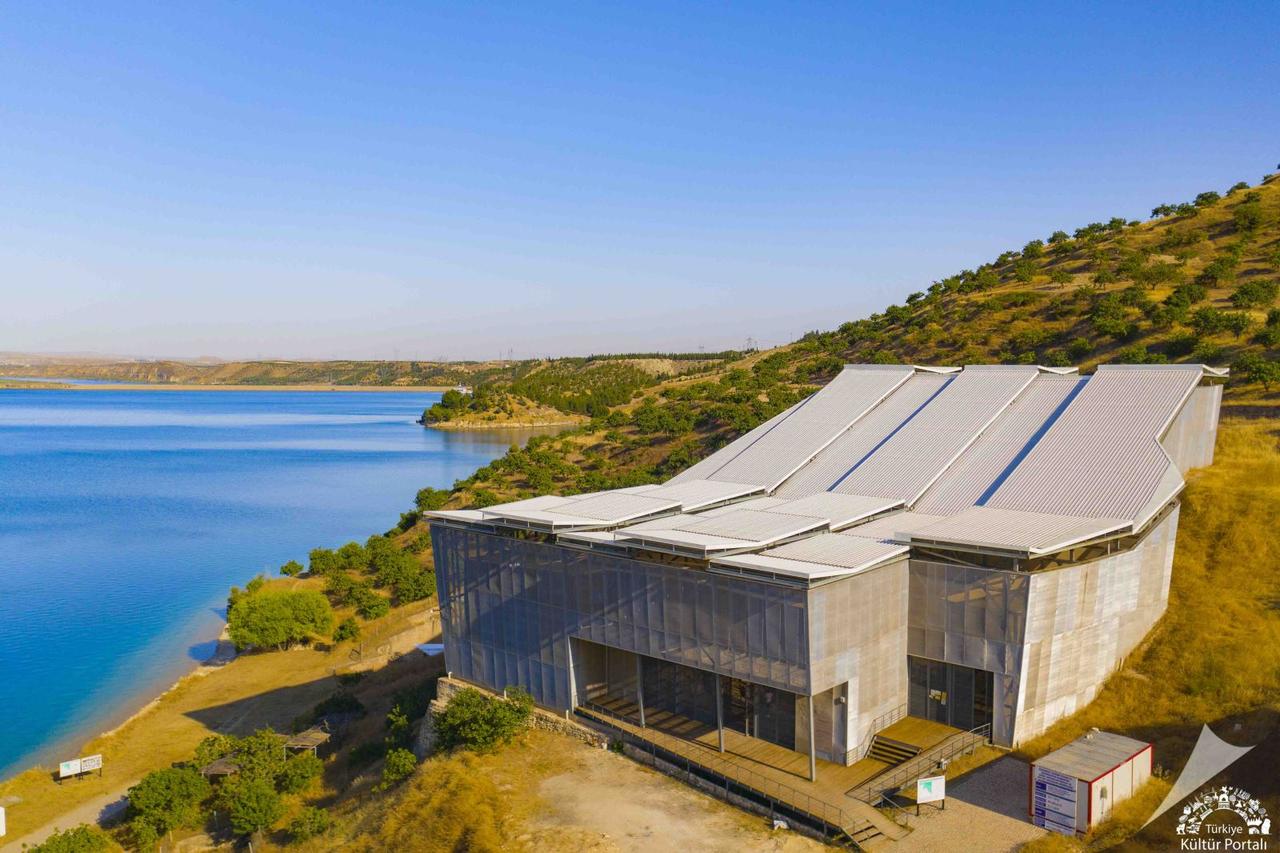
Excavation Site of the Ancient City of Zeugma (Türkiye Culture Portal)
🛡️ Who Lived There?
Throughout history, many different peoples have lived in Zeugma. First, the Seleucids, who came from the army of Alexander the Great, founded the city. Later, it came under Roman control. During the Roman period, Zeugma experienced its golden age. Its streets were paved with marble, and it featured large theaters, baths, and fountains.
🏺 Houses, Gardens, and Mosaics
One of the most astonishing features of Zeugma is the decorative artwork inside its homes. Wealthy sections of these houses contain mosaics—large images made by assembling small colored stones. These images often depict mythological stories.
The most famous mosaic is the Gypsy Girl Mosaic. Her eyes are so captivating that no matter from which angle you look, you feel as if she is gazing directly at you! For this reason, she is also called “the Mona Lisa of Zeugma.”

Gypsy Girl Mosaic (Ministry of Industry and Technology Development Gallery, Republic of Türkiye)
🌊 What Lies Beneath Zeugma?
When the Birecik Dam was constructed on the Euphrates River, a large part of the Ancient City of Zeugma was submerged underwater. However, before the area flooded, archaeologists conducted rapid excavations and recovered numerous mosaics, statues, and artifacts. These historical treasures are now displayed at the Gaziantep Zeugma Mosaic Museum.
🏛️ Zeugma Mosaic Museum
This museum is one of the largest in the world dedicated to mosaics. It houses hundreds of square meters of mosaics, columns, statues, and everyday objects from ancient life. As you walk through the museum, you can feel as if you are strolling through an ancient Roman city!

Mosaic of Oceanus and Tethys (Ministry of Industry and Technology Development Gallery, Republic of Türkiye