



Chinstrap Penguin
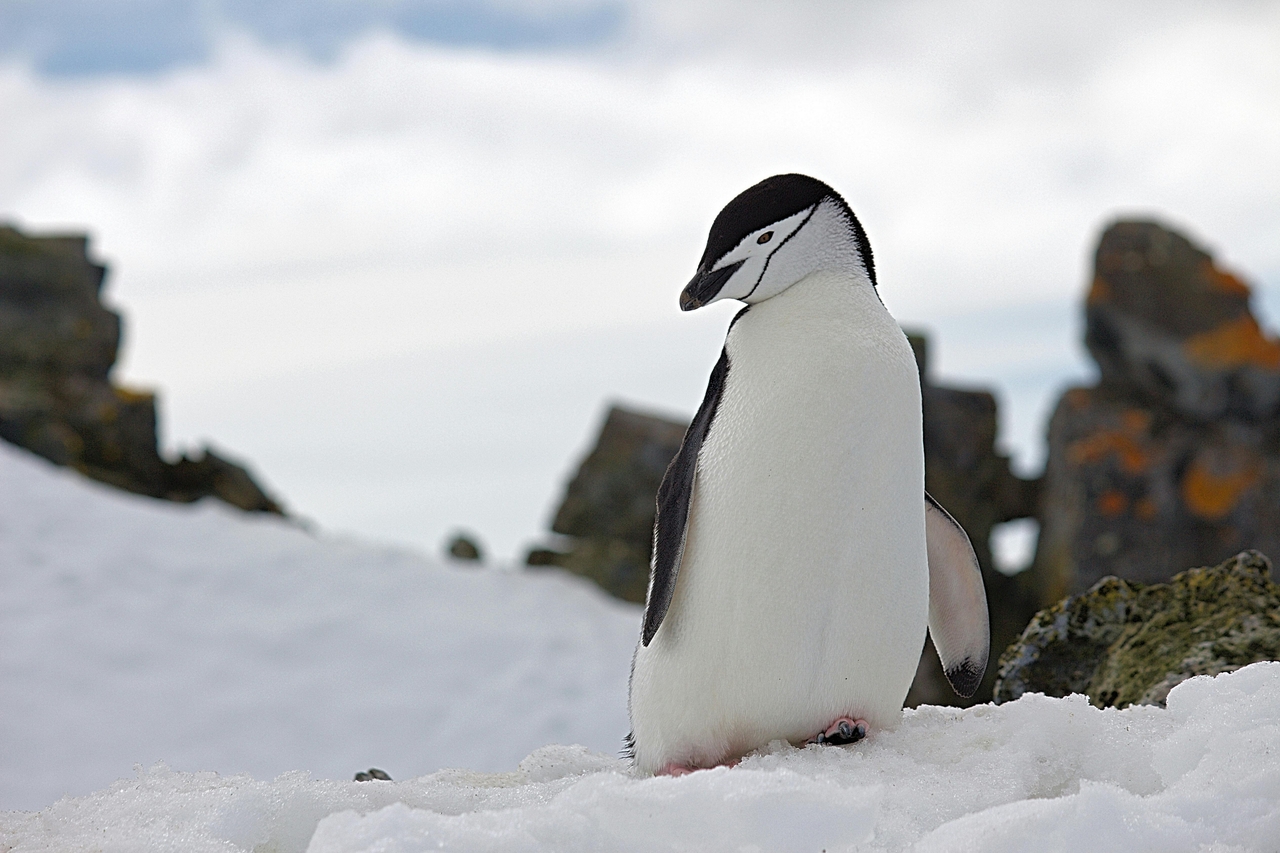
The chinstrap penguin, also known as the ringed penguin (Pygoscelis antarcticus), is a species belonging to the family Spheniscidae. It is a robust and striking seabird found around Antarctica. The most distinctive feature that sets it apart from other penguin species is a thin black band that runs under its chin.

Penguin Walking Along the Shore (Pexels)
What Are Its Colors?
The plumage of chinstrap penguins is highly characteristic. Their backs are dark black, while their undersides are entirely white.
A thin black stripe runs beneath the chin, giving the impression of a beard. For this reason, they are also called bearded penguins.
Their faces and upper heads are black, while their cheeks are white. The beak is typically a dark color close to black, and their feet are a pale pink shade.

Chinstrap Penguins (Unsplash)
How Large Do They Grow?
Chinstrap penguins range in height from an average of 68 to 76 cm. Their weight typically falls between 3 and 6 kilograms. These measurements may vary slightly among adults depending on their feeding condition and habitat.
How Long Do They Live?
The average lifespan of chinstrap penguins in the wild is 15 to 20 years. However, some individuals may live longer under favorable conditions. Harsh weather, food shortages, and predators are the main factors that shorten their lifespan.

Chinstrap Penguin Family (Pixabay)
What Do They Eat?
Chinstrap penguins feed on marine organisms. Their primary food sources are krill, small crustaceans, fish, and occasionally plankton. Krill is especially their most preferred food.
Where Do They Live?
Chinstrap penguins primarily inhabit coastal areas and islands around Antarctica. They are also common in regions such as South Georgia, the South Sandwich Islands, and the Shetland Islands. Their habitats generally consist of ice-free shores and rocky coastlines, where they form colonies during the breeding season.
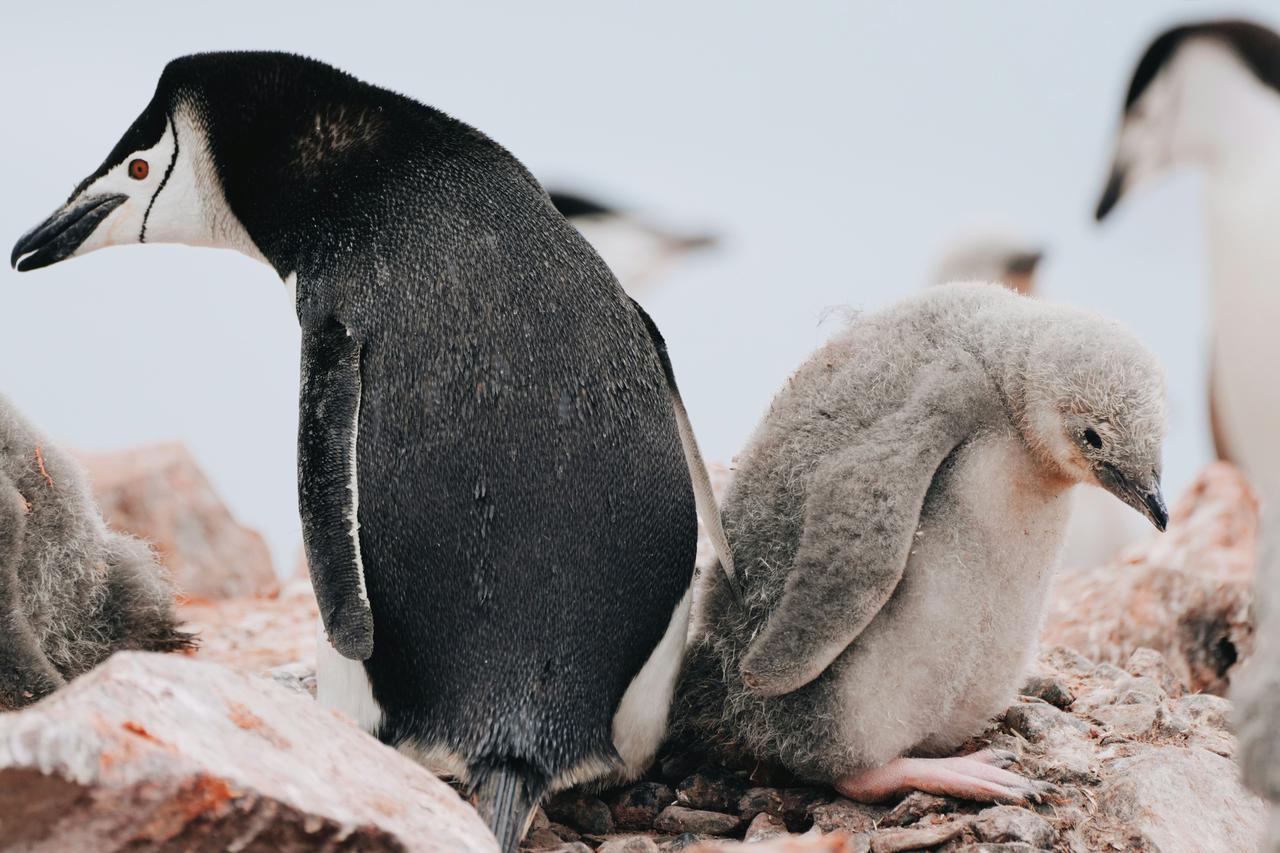
Chinstrap Penguin Family (Unsplash)
Conservation Status
Chinstrap penguins are classified by the International Union for Conservation of Nature (IUCN) as “Least Concern.” This indicates that the species generally has healthy population levels. However, climate change and the reduction of sea ice are considered potential threats that could negatively affect their habitats in the future.